Kenneth Harrison
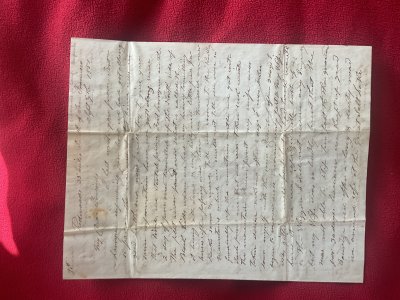
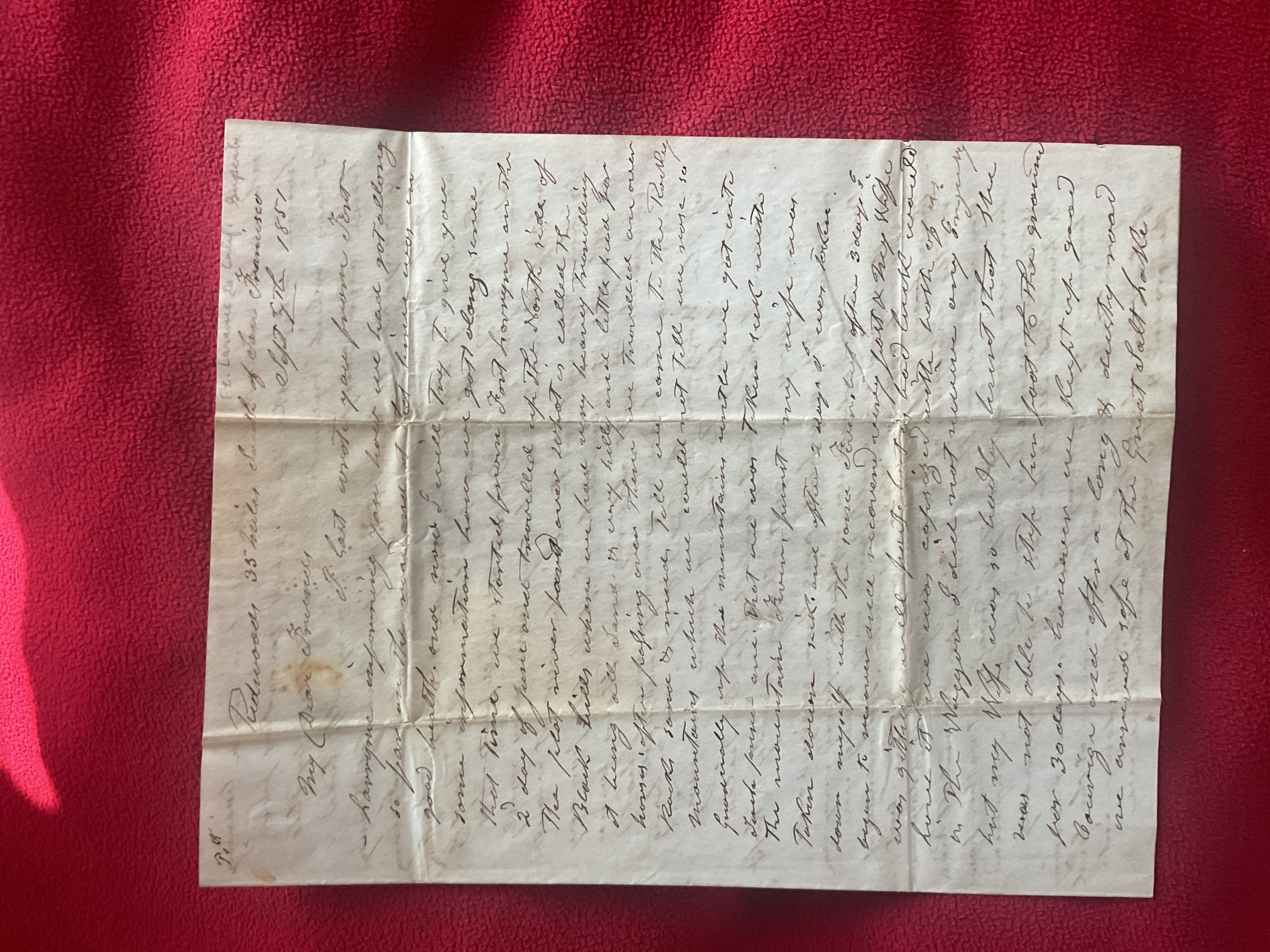
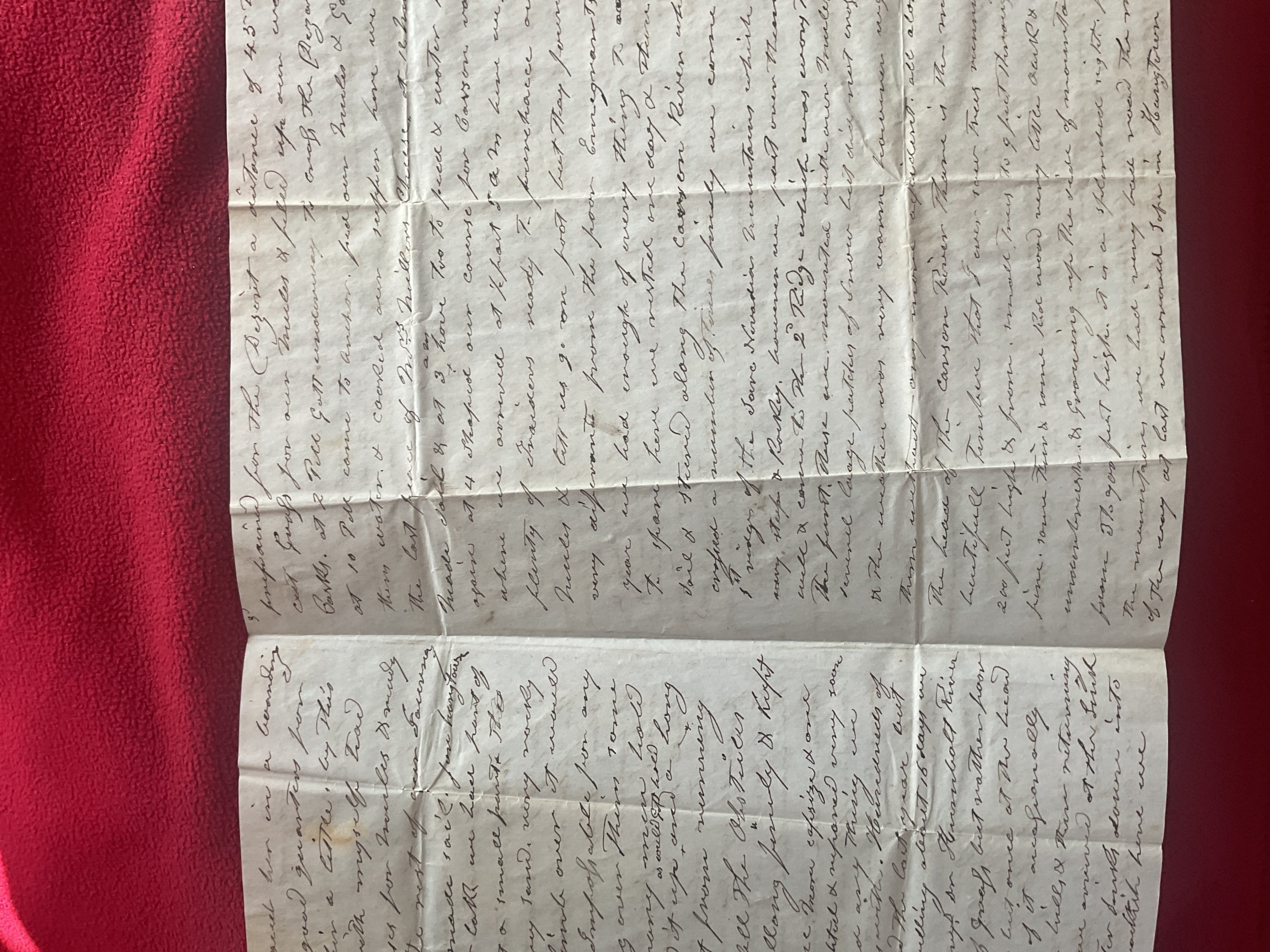
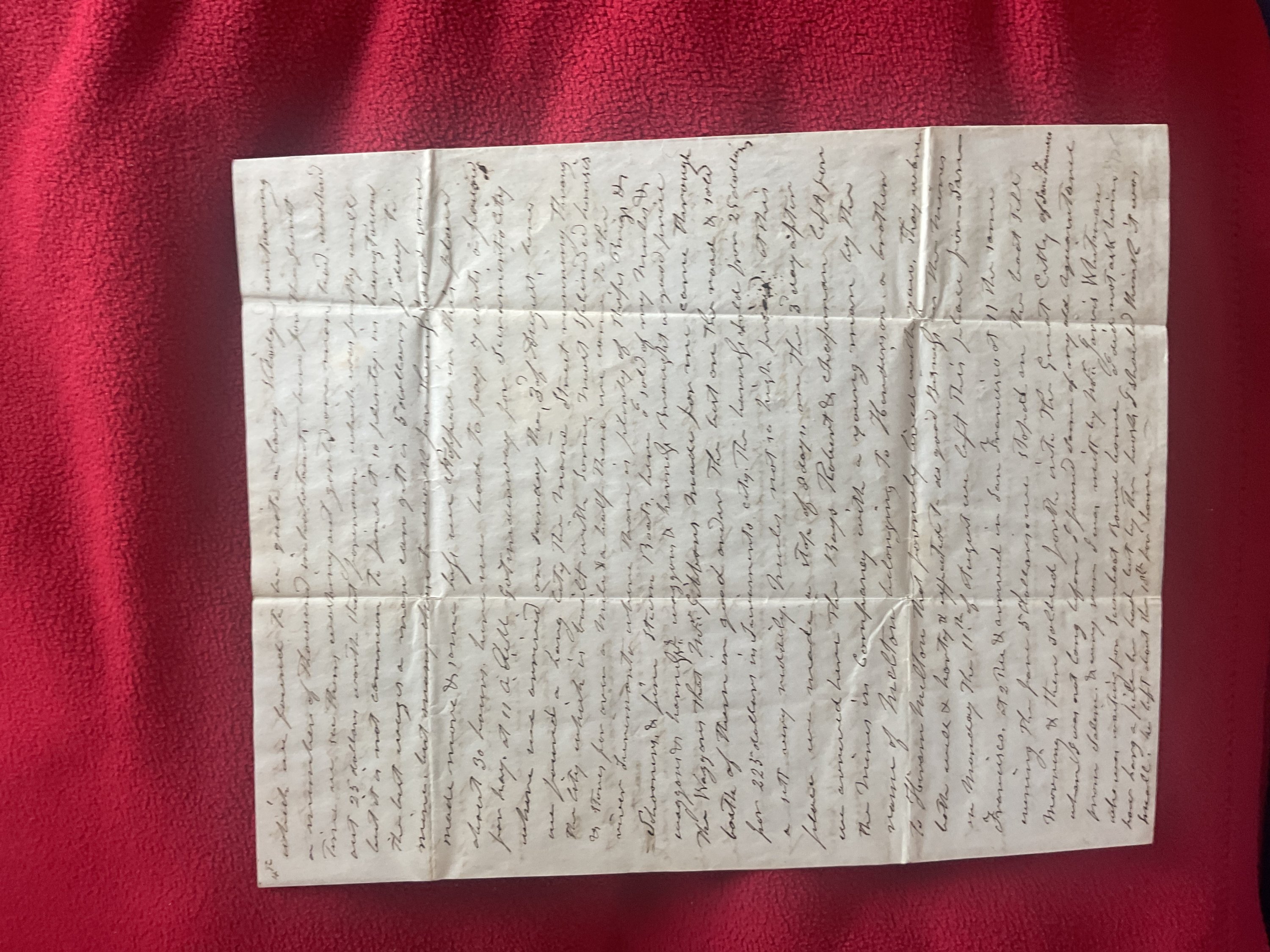
Fantastic overland letter from California describing wagon train trip Great detailed writing sadly lacks final page
$675
Item Details
Great read with interesting observations sadly we will not know who wrote it as the last page about SF and with the signature is missing
Here is an example of writing from letter
“immediately placed my wife in a local boarding house, where she secured comfortable quarters for five days. This rest allowed her to finish writing a letter. By this time, our traveling company—along with myself—had exchanged all of our oxen teams for hardier pack mules, and we got our equipment ready for the remainder of the journey.
On the 27th of June, we "made sail" and set out for Hangtown. After leaving the Great Salt Lake, we found parts of the road to be fairly good, though a few sections were incredibly bad. Outside of the main trail, we faced heavy sand, rocky terrain, and long mountain ridges to climb. It seemed almost impossible for any animal to pull a load over them. In some areas, we had to have a large group of men hold the wagons upright manually, using a long rope anchored high up on the slopes to keep them from rolling down too fast. Despite all of these obstacles in our path, we got along beautifully and maintained our health.
Along the way, we broke an iron wagon axle-tree, but we righted and repaired it very quickly. We were able to find everything we needed to fix the wagons right on the side of the trail. The road was a literal wilderness of scattered pieces and equipment left behind by the massive wave of emigrants from the previous year, though most of it was destroyed.
After traveling for about six days, we reached the Mary's River (also known as the Humboldt River). Here we found plenty of grass for the animals, but rather poor, low-quality water. We only crossed the main head of this river once, traveling alongside it and occasionally detouring out into the hills before returning to the riverbed. We eventually arrived at the Humboldt Sink, where the river famously vanishes completely into the ground. The water there is incredibly bitter, brackish, and thick with lime.”
Kenneth Harrison

Kenneth Harrison
P O Box 2553
Sausalito, Ca, 94966
United States
Phone: 415 320 4911
Specialities
Western Americana, Mauscripts, Photography
More Information
Booth 19
Shipping and Returns
We do not ship internationally. Domestic shipments will be by USPO Priority or Express mail or FedEx. Payments accepted are Check or PayPal. Items can be returned if not as described for 30 days.Open Times
will generally be checking email 11:00 AM EDT to 11:00 PM EDTAdditional Information
Please Order using email [email protected] call if needed