Pied Oxen Printers
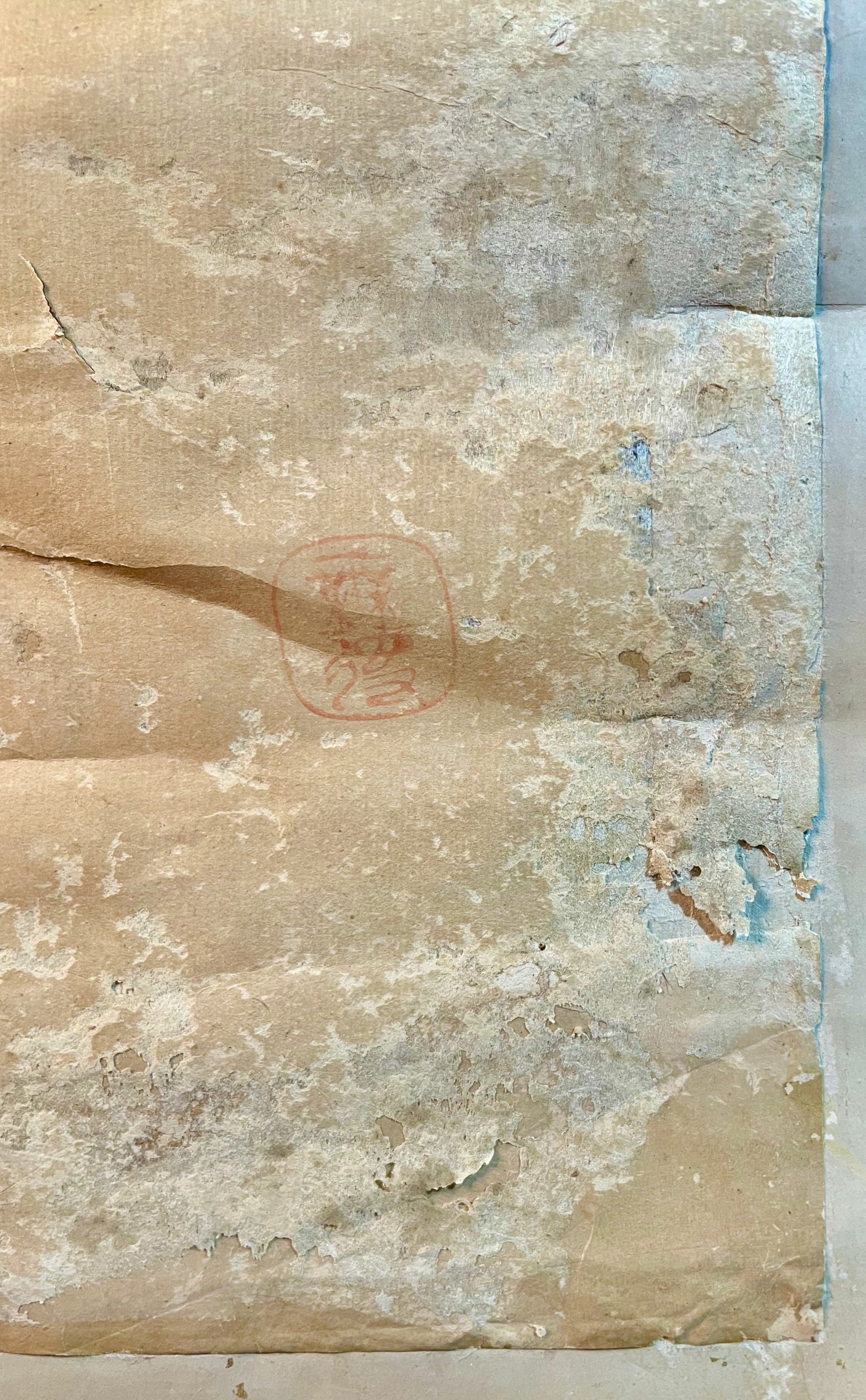
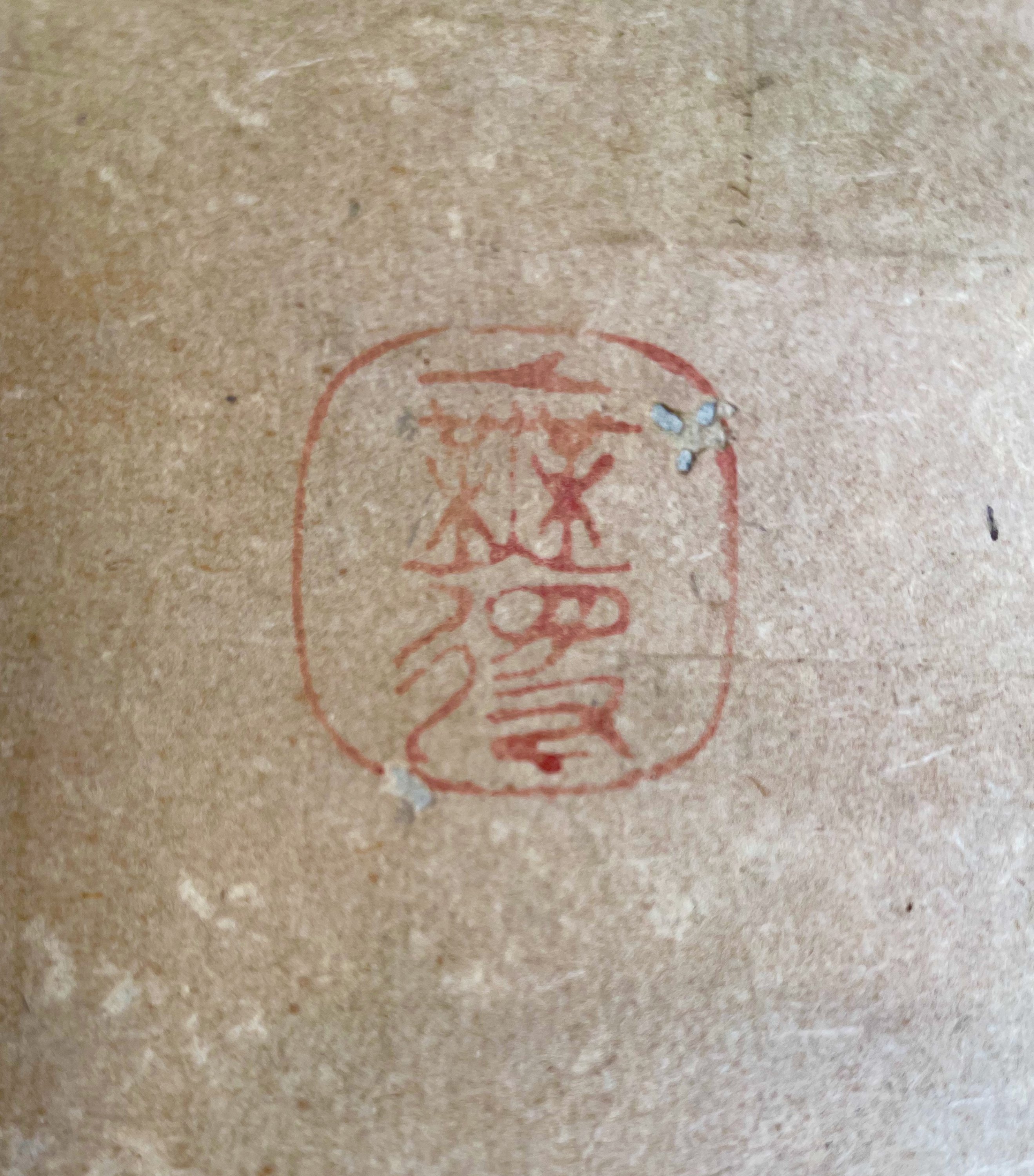
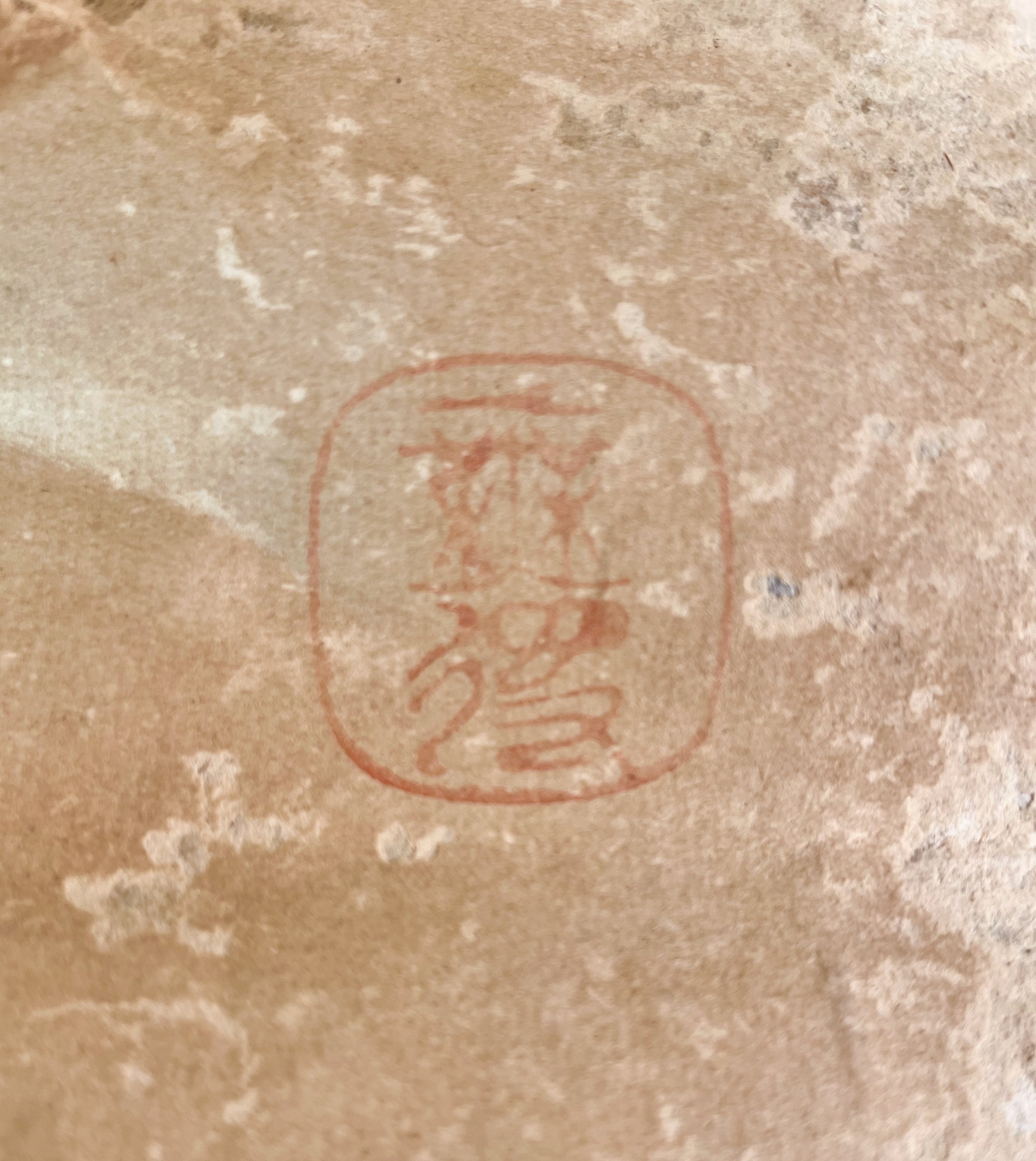
As yet unread Japanese artist's seal
Japanese sumi-e ink and watercolor paintings on paper
A quintessential theme of Japanese painting
$450
Item Details
c. 1800s
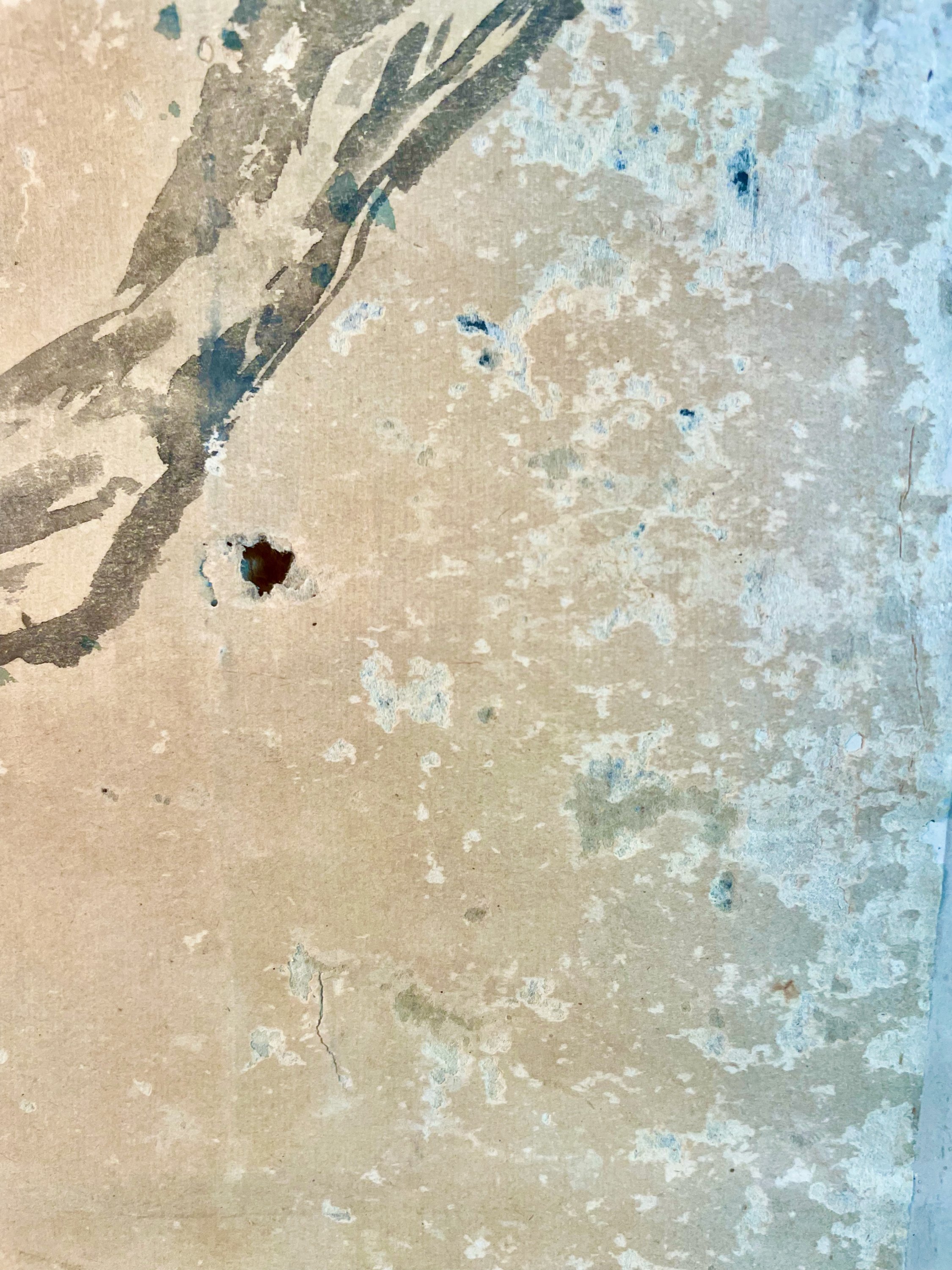
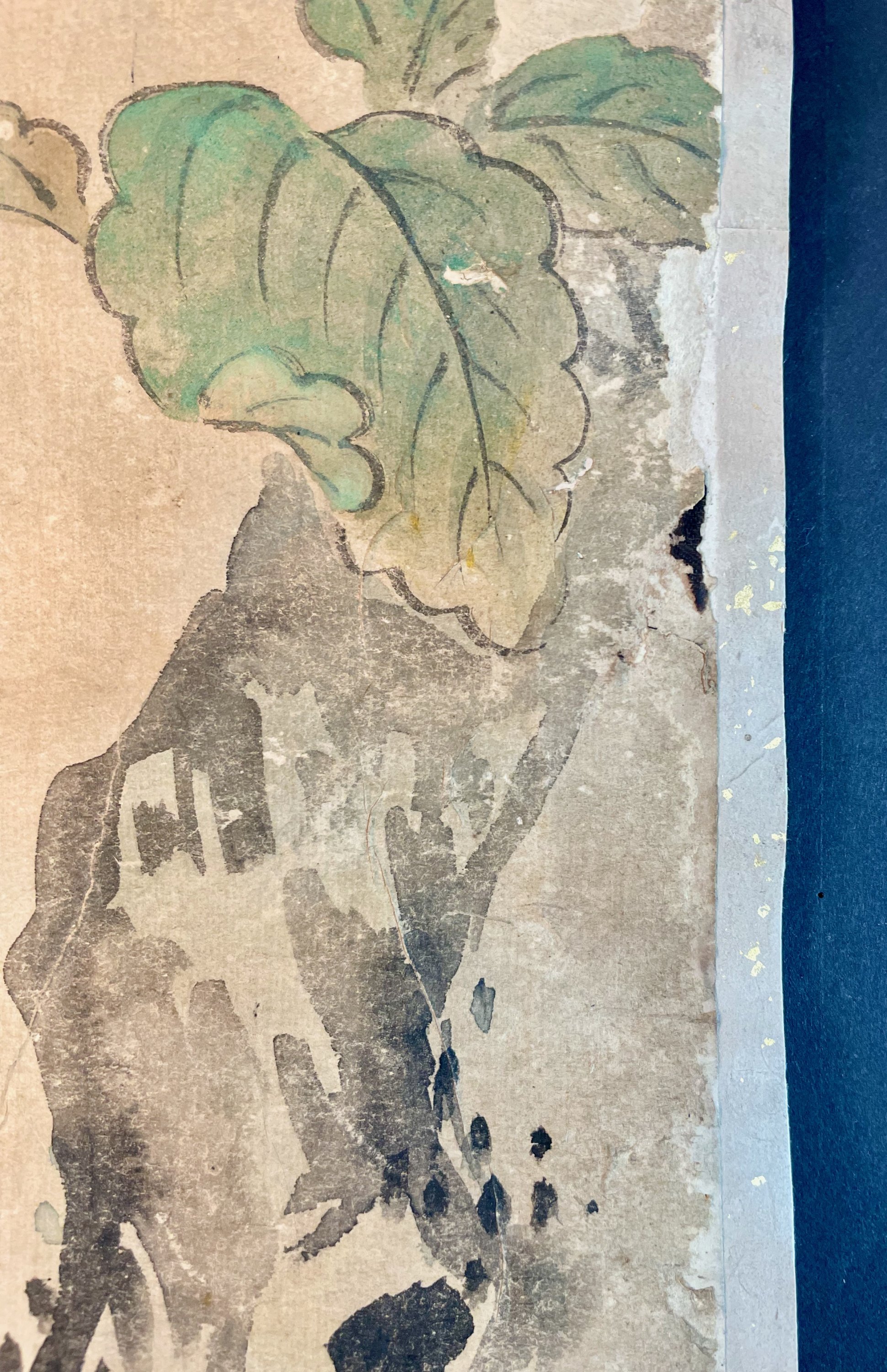
Wear and tear; restorations. Wabi-sabi. Mekuri.
Incorporating and editing information from various interned searches:
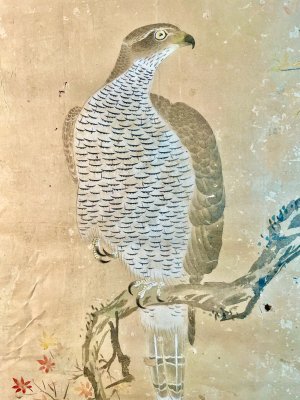
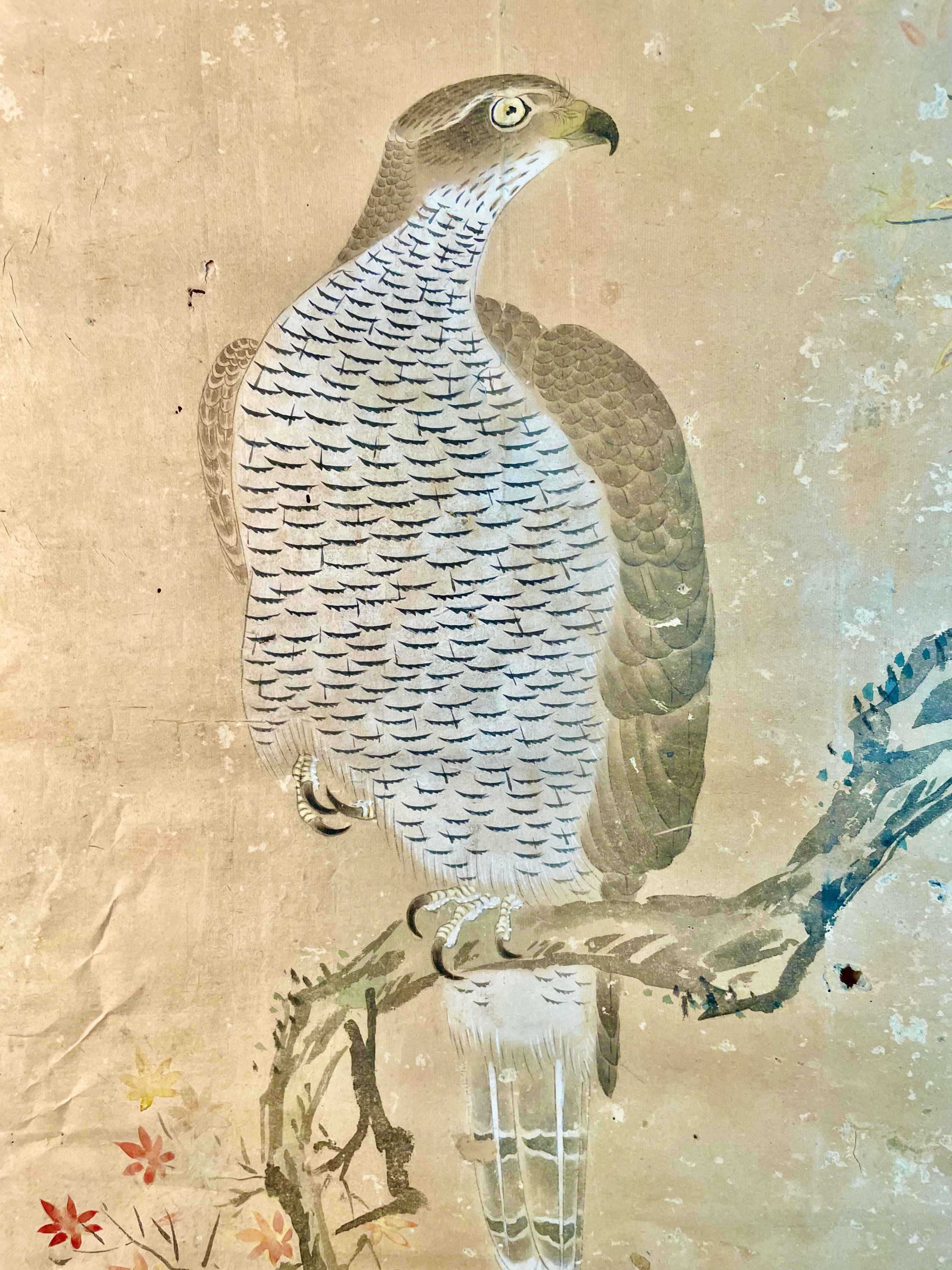
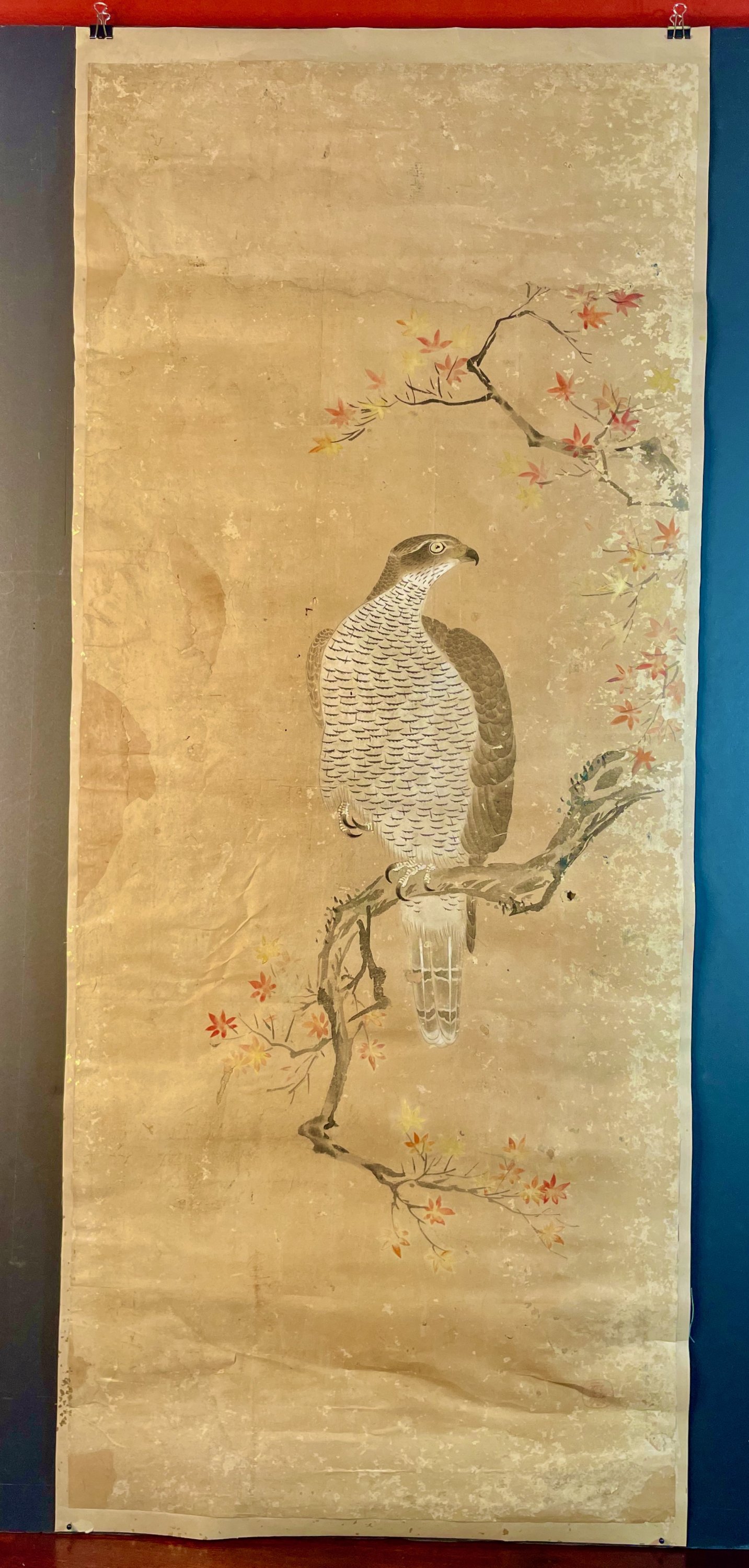
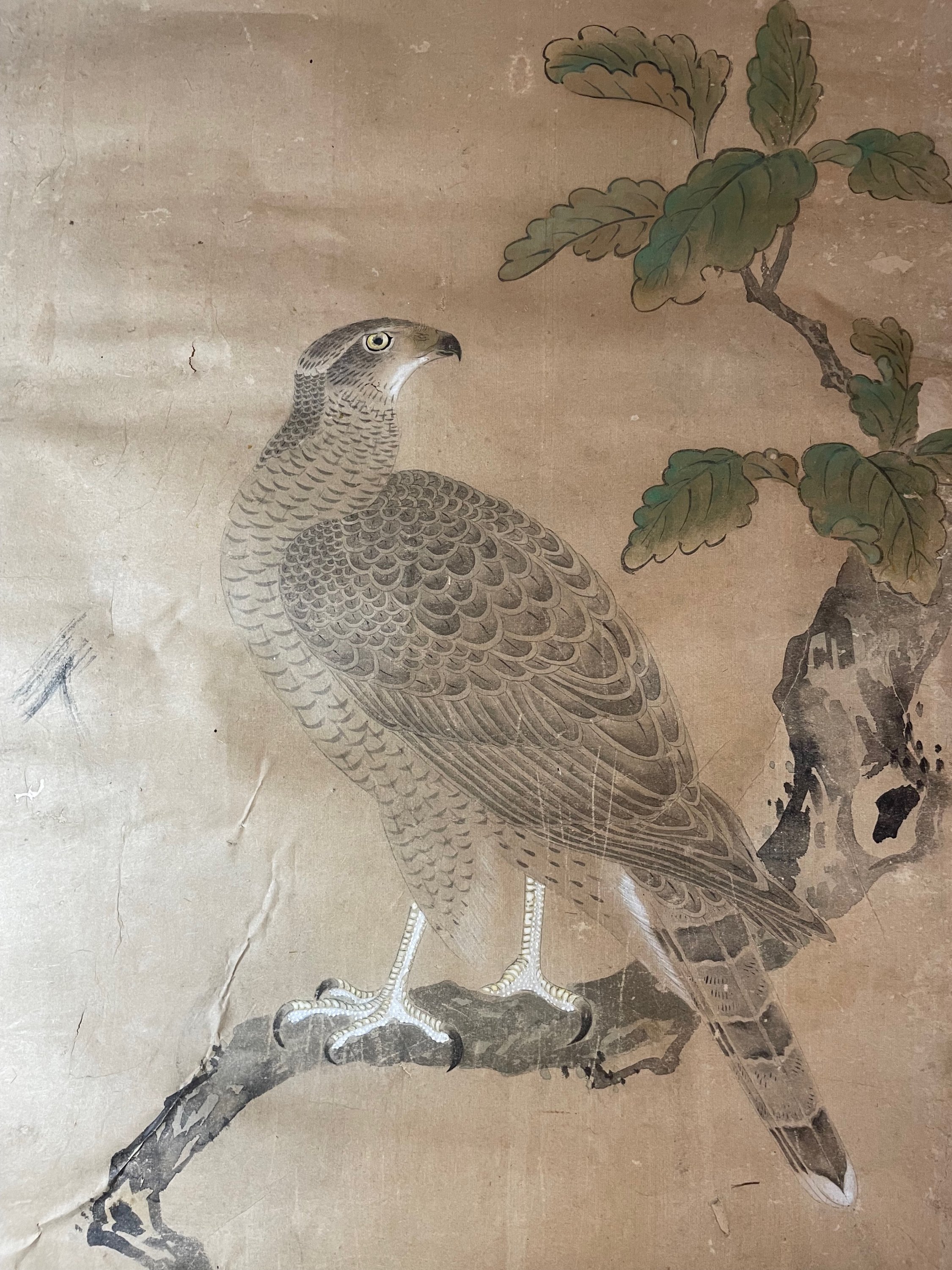
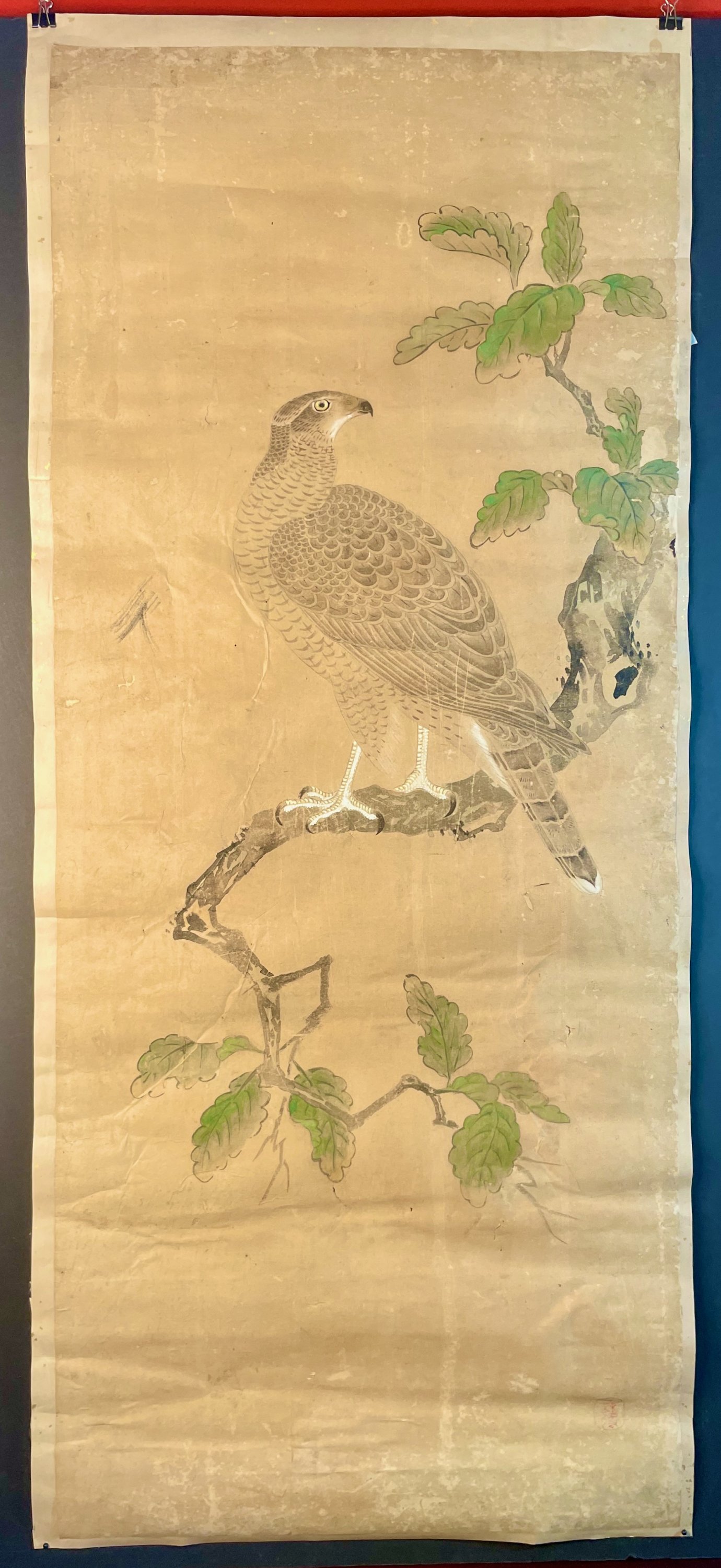
Offered here is a pair of Japanese Sumi-e ink and watercolor paintings on paper depicting detailed, keen-eyed falcons (or goshawks) with feathered patterning perched upright on a gnarled branch, in the tradition of Edo-period bird-and-flower compositions. The style is the classical Japanese realism and naturalism characteristic of the 18th-century Edo period.
Size: Second of two: 20.625 x 49.75 inches. First of two: 21.25 x 49 inches.
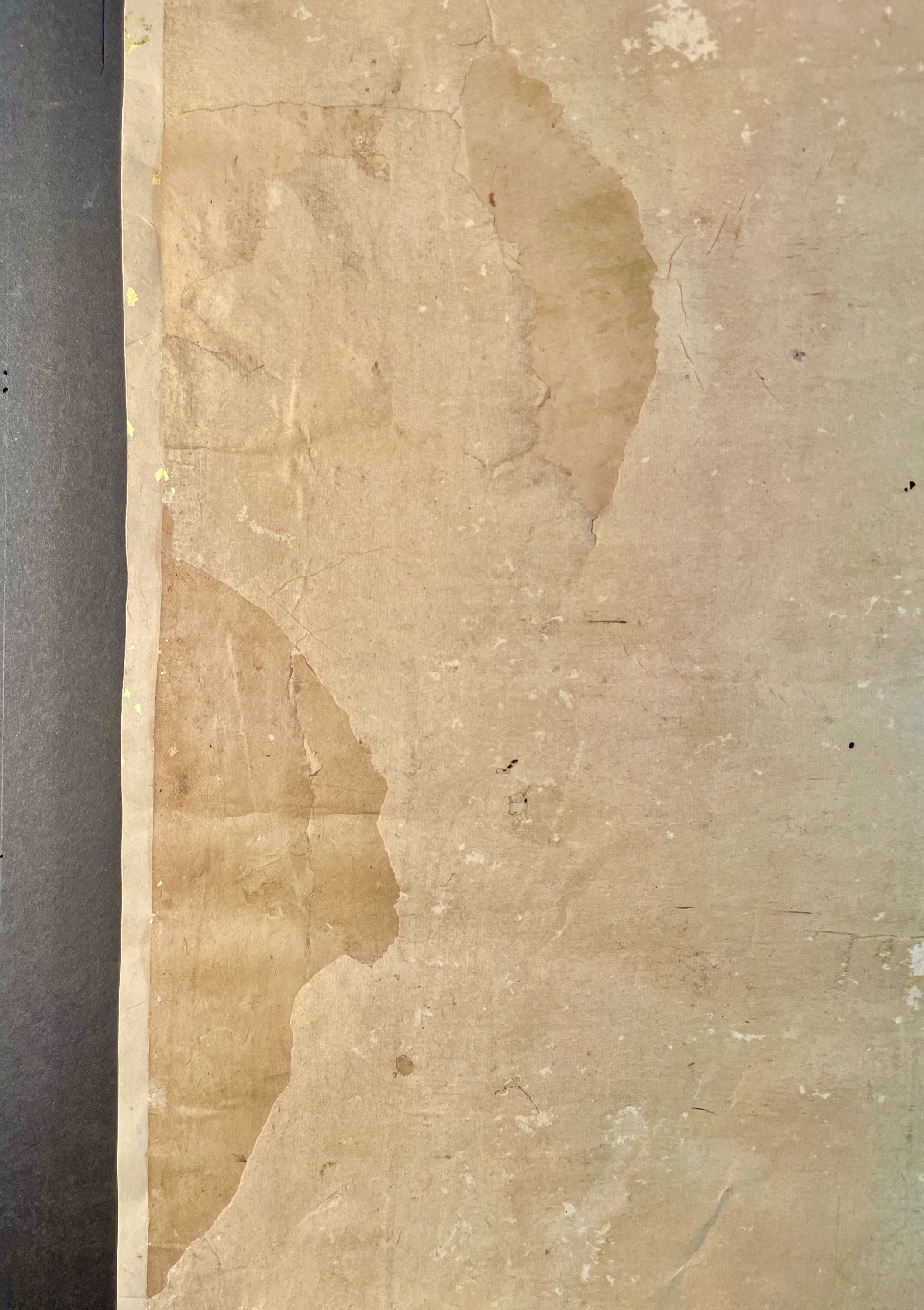
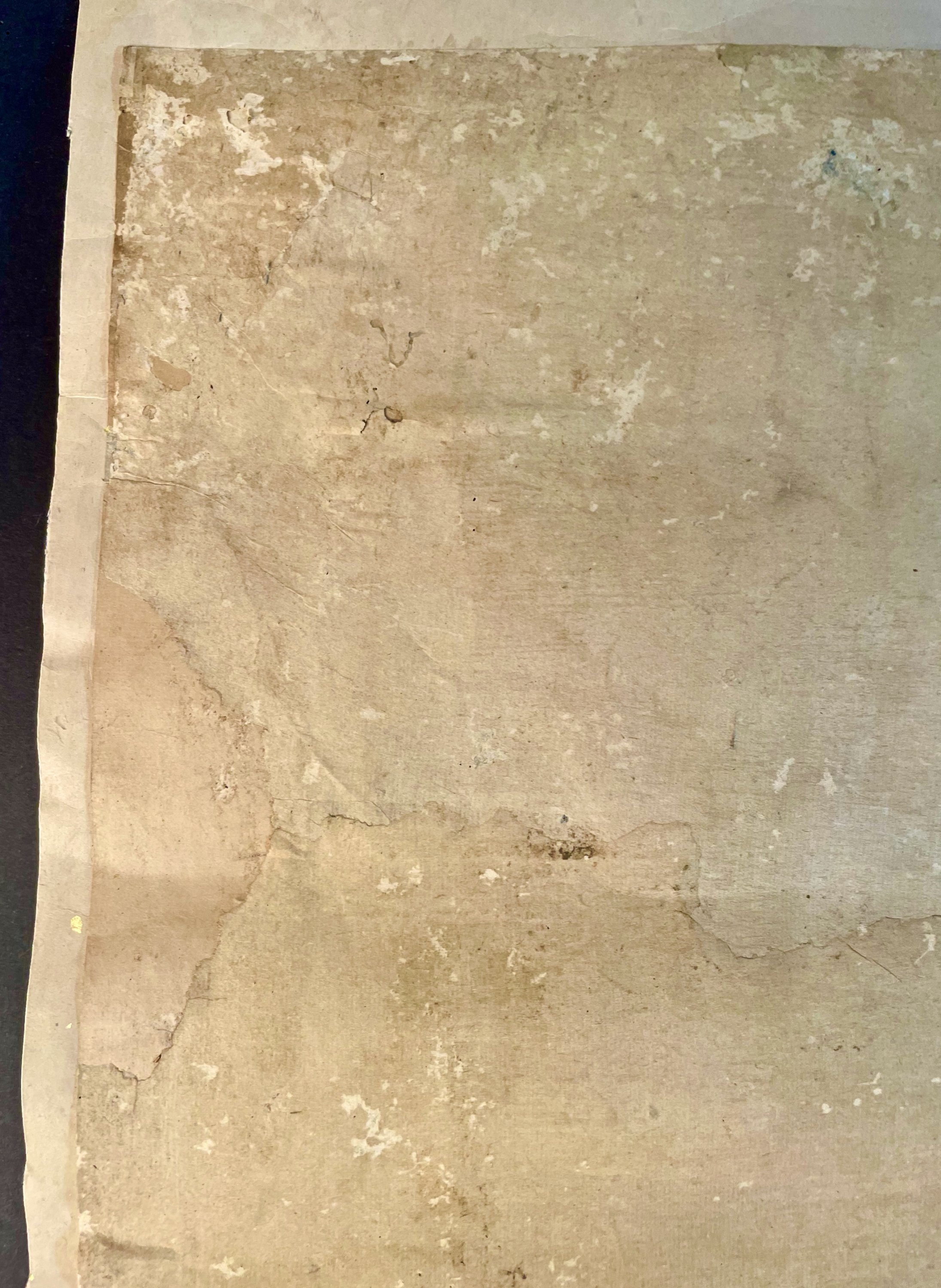
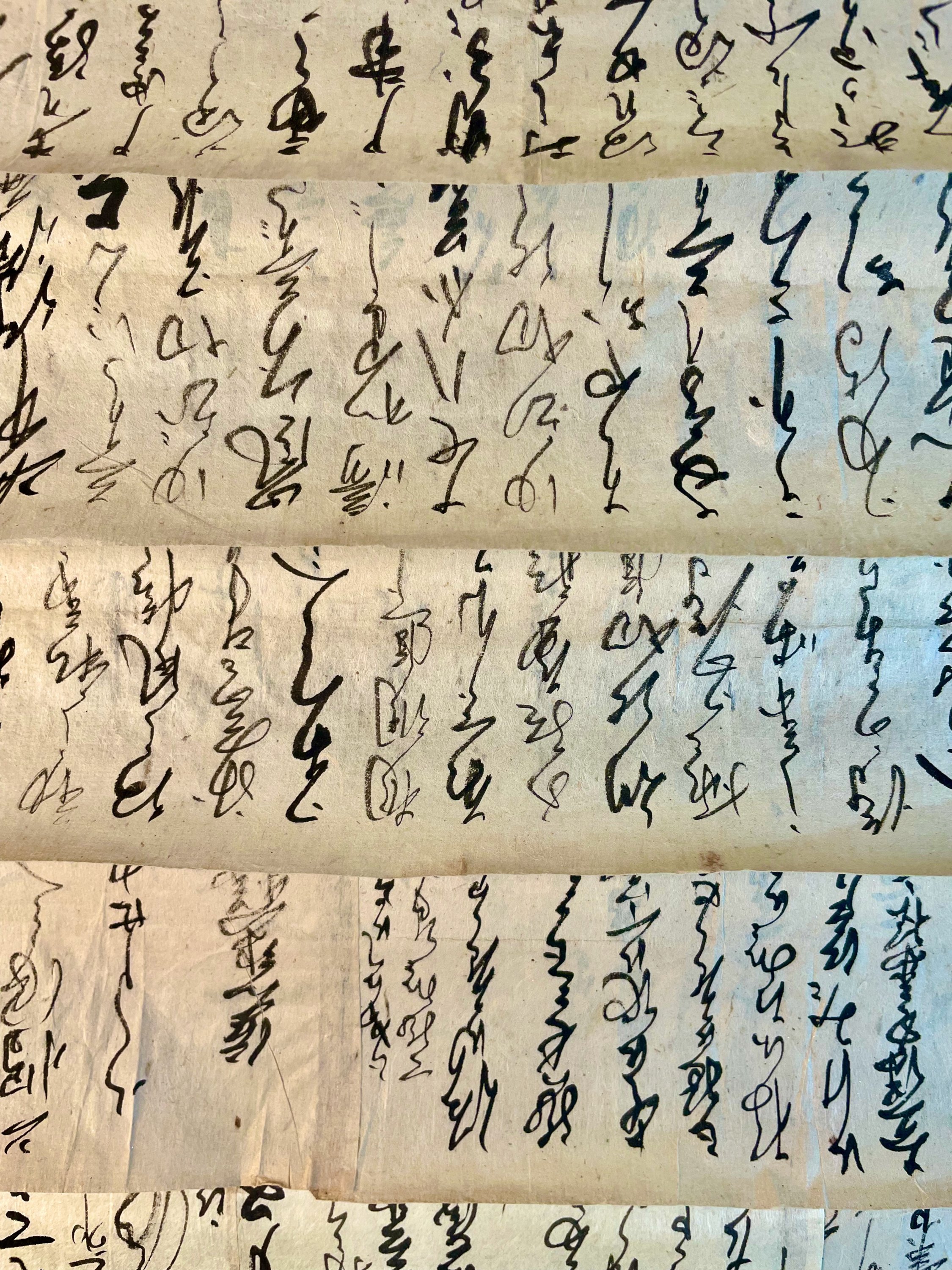
Condition: See images. Remnants of silk mounting. Layers of original antique manuscript papers on the verso. Surface abrasions, marginal tears and various paper restorations. The central painted figures are intact and in good condition. Arguably, these are examples of Wabi Sabi—the Japanese aesthetic of finding beauty and harmony in the imperfect, impermanent, and incomplete.
In Japanese art, paintings of hawks and falcons—known as taka-ga (hawk pictures)—gained immense popularity during the Muromachi and Edo periods (14th to 19th centuries). Hawks were deeply revered by the samurai and the military ruling class. They symbolized bravery, fierce focus, martial prowess, and authority. Pairing the powerful bird with a sturdy tree branch emphasizes strength, endurance, and longevity.
This particular style of painting—characterized by meticulously detailed ink-and-wash brushwork to capture the texture of the feathers, a sharp gaze, and strong talons—was popularized by prominent artist lineages—as those originating in the Kano School— specializing in birds of prey.
Their fearsome beauty and predatory features sharp beaks, keen eyes, long curving talons with an intense expression seen in the face of each bird, made them metaphors of martial training and the warrior spirit.
Falconry hunting with hawks bred in the countryside was practiced in Japan from ancient times. As a sport it is thought to have come to Japan from China as early as the fourth century. During the Edo Period, it was patronized by the Shogunate, and an official master falconer was appointed. It also became popular among warriors, and many paintings of falcons and prized hawks with their solemn and majestic appearance came to be created in large numbers from the late Muromachi Period onwards.
The paintings are mainly done in black ink with some polychrome details set on a paper grounds.
In the context of Japanese art and mounting, this pair of paintings is an example of “mekuri,” which in relation to folding screens can describe a painted paper or silk panel that was likely removed from an old folding screen during restoration or salvage.
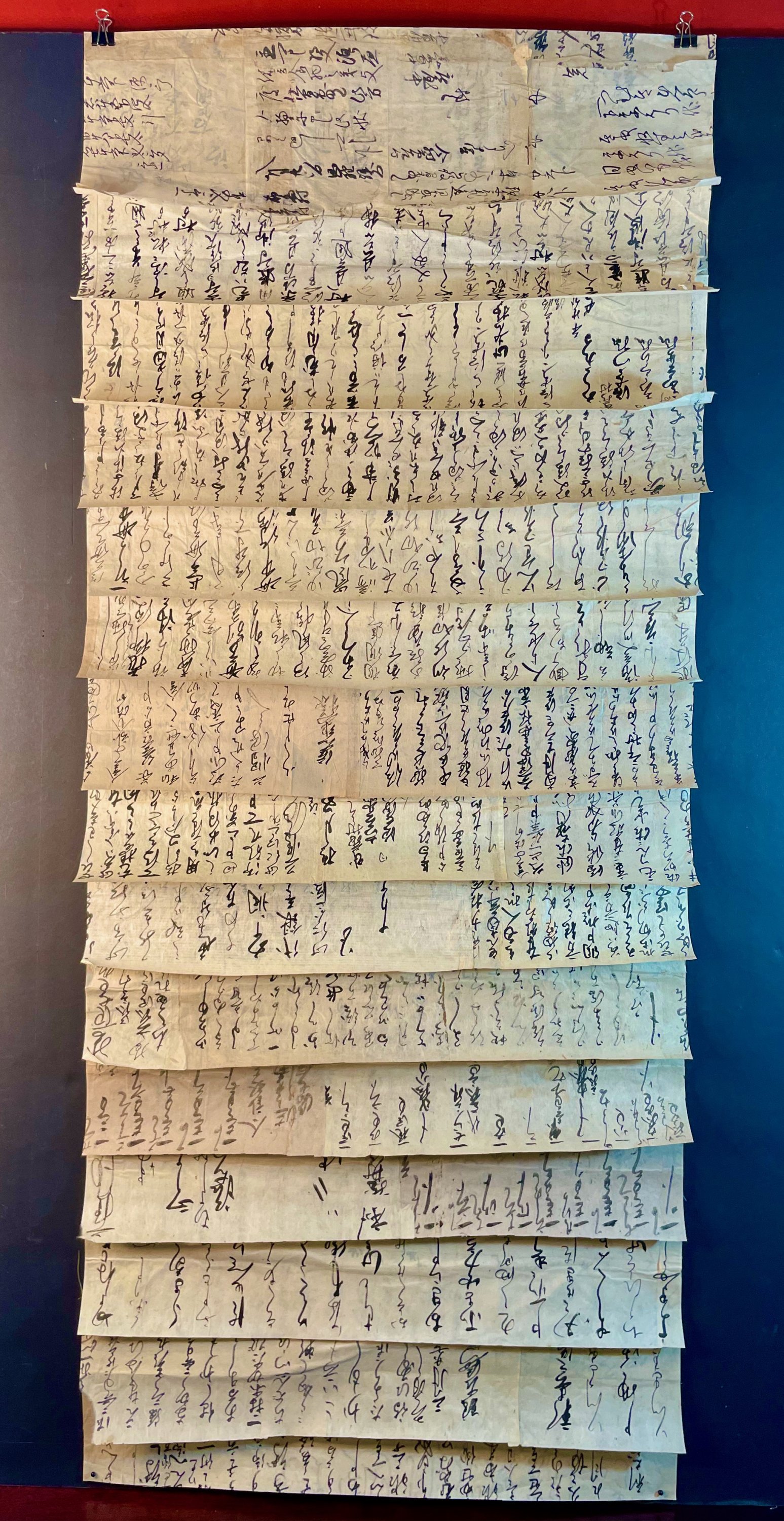
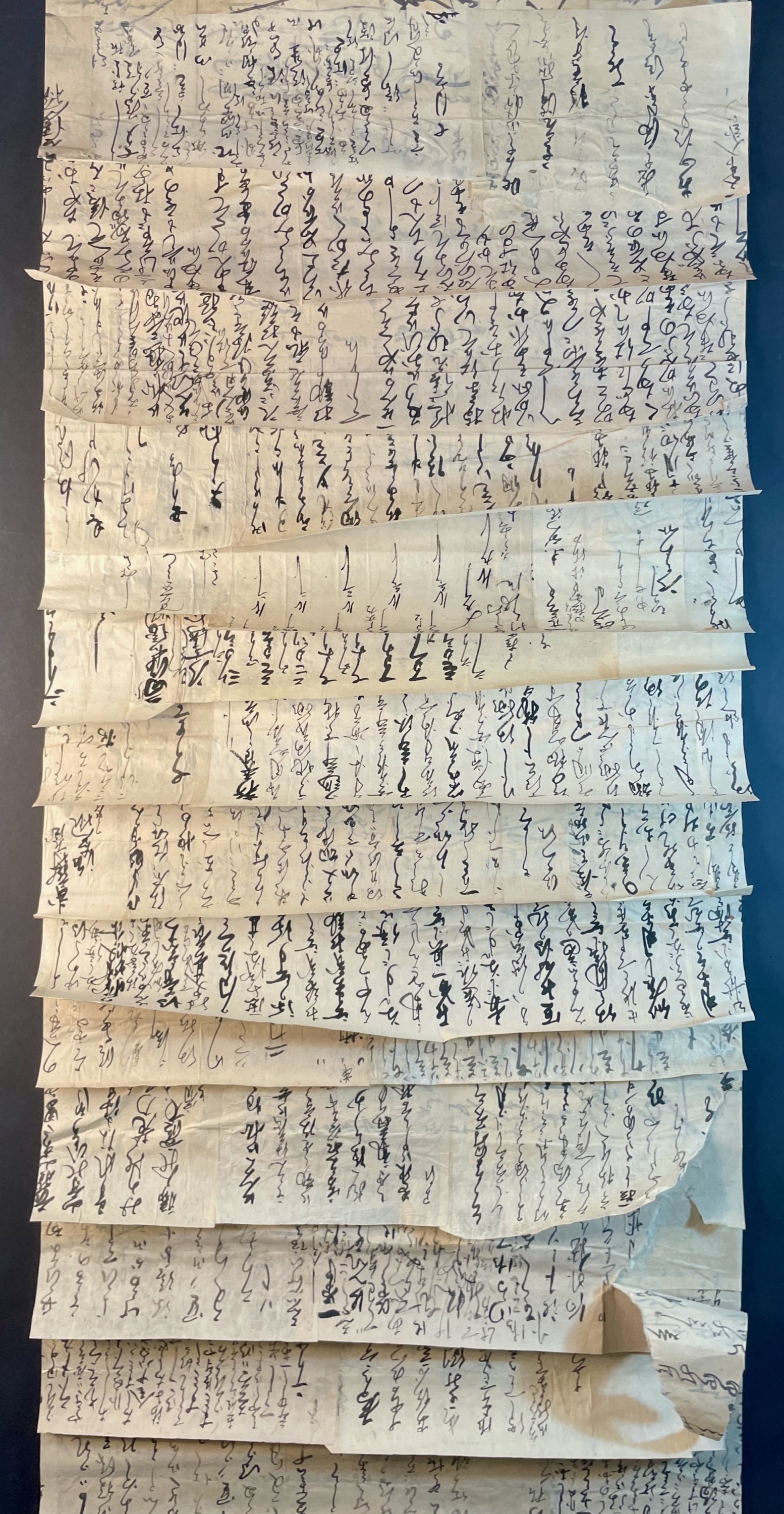
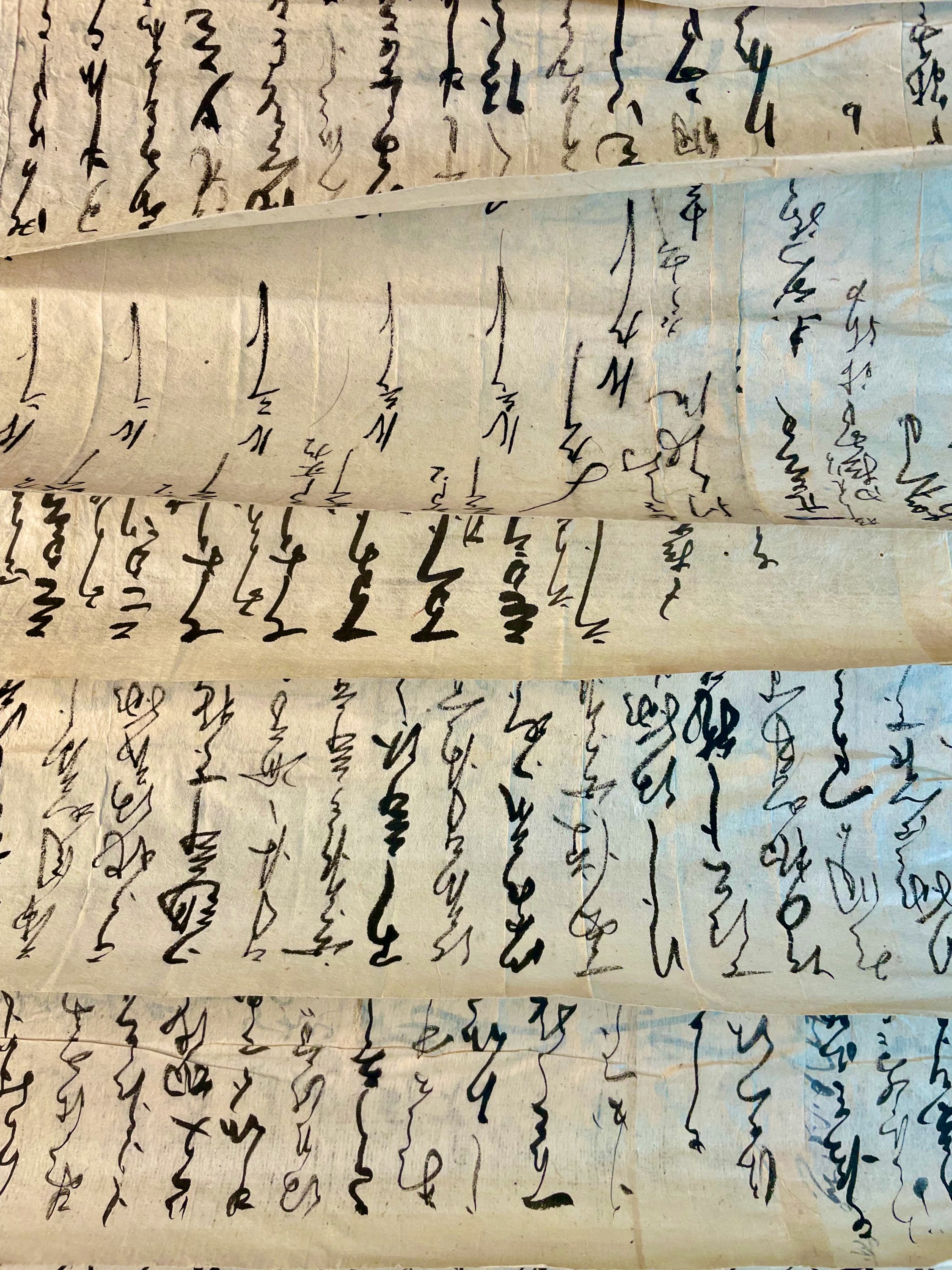
The images of the verso show that the backs were constructed using recycled old documents written in Japanese cursive calligraphy. In traditional Japanese scroll making, multiple layers of paper are pasted together on the reverse side of the painting to give the silk or primary paper strength, elasticity and weight.
Instead of using blank, expensive handmade paper for the hidden inner layers, scroll mounters regularly reused discarded documents, letters, accounting logs, or local records. These hidden documents can be valuable to historians, as they contain everyday records that would otherwise have been lost.
The text of these documents is written in highly fluid brush-and-ink cursive style. The vertical columns, faint grid lines, and regular accounting-style entries suggest these papers may be personal correspondence, ledger records, or official local registry notices.
Shipping: Cost of USPS Priority mailing will be added to buyer's invoice.
Pied Oxen Printers

David Sellers
24 East Prospect Street
Hopewell, Nj, 08525
United States
Cell: 609-468-8437
Featured Catalogue
Specialities
Book Arts, Fine Press, Typography
More Information
Booth 21
Shipping and Returns
UPS, FedEx; all items guaranteed as described; returns accepted with exceptions (non-US buyers); payments by wire transfer, bank check or other by prior arrangement.Open Times
By appointment.