Zephyr Used & Rare Books
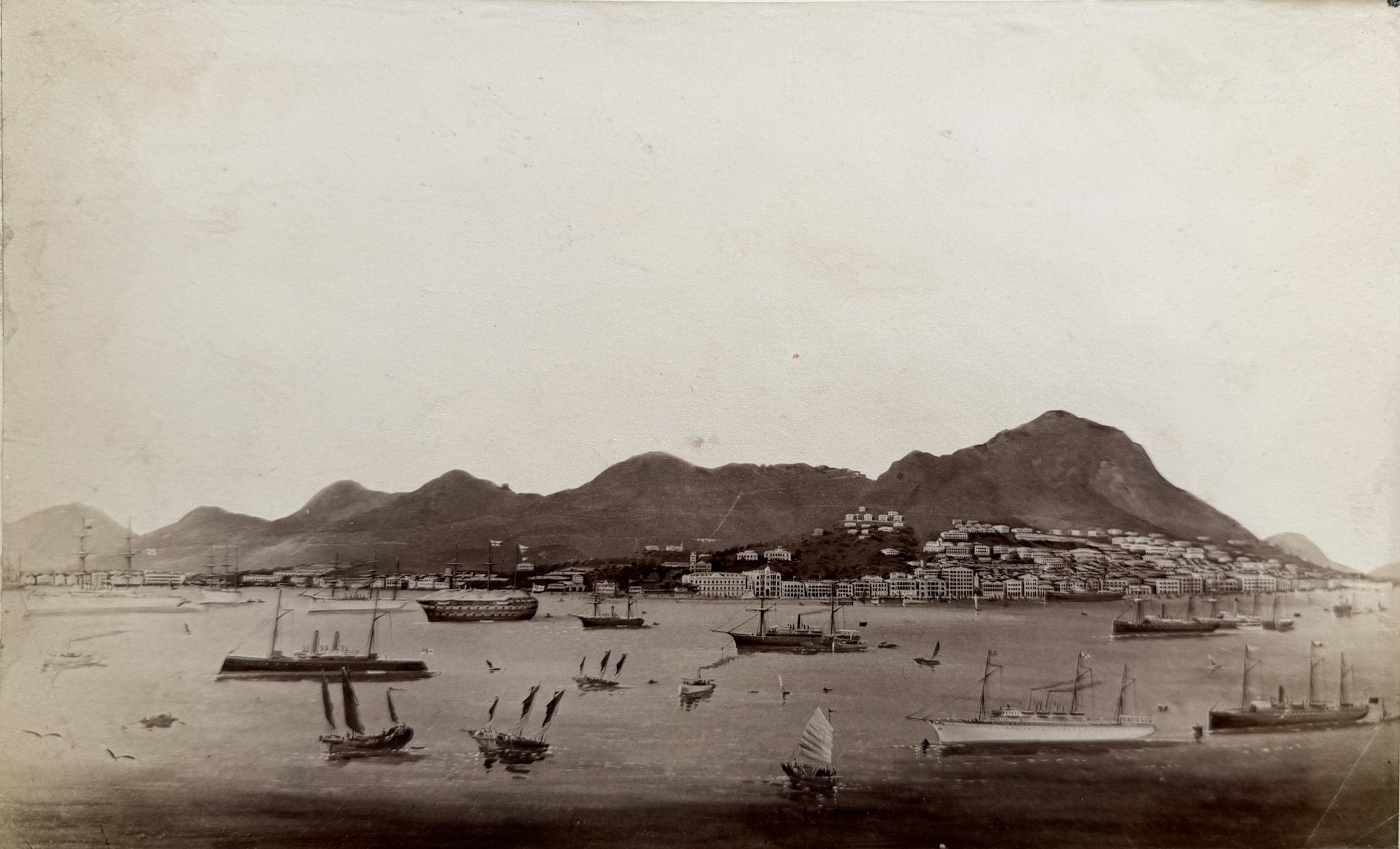
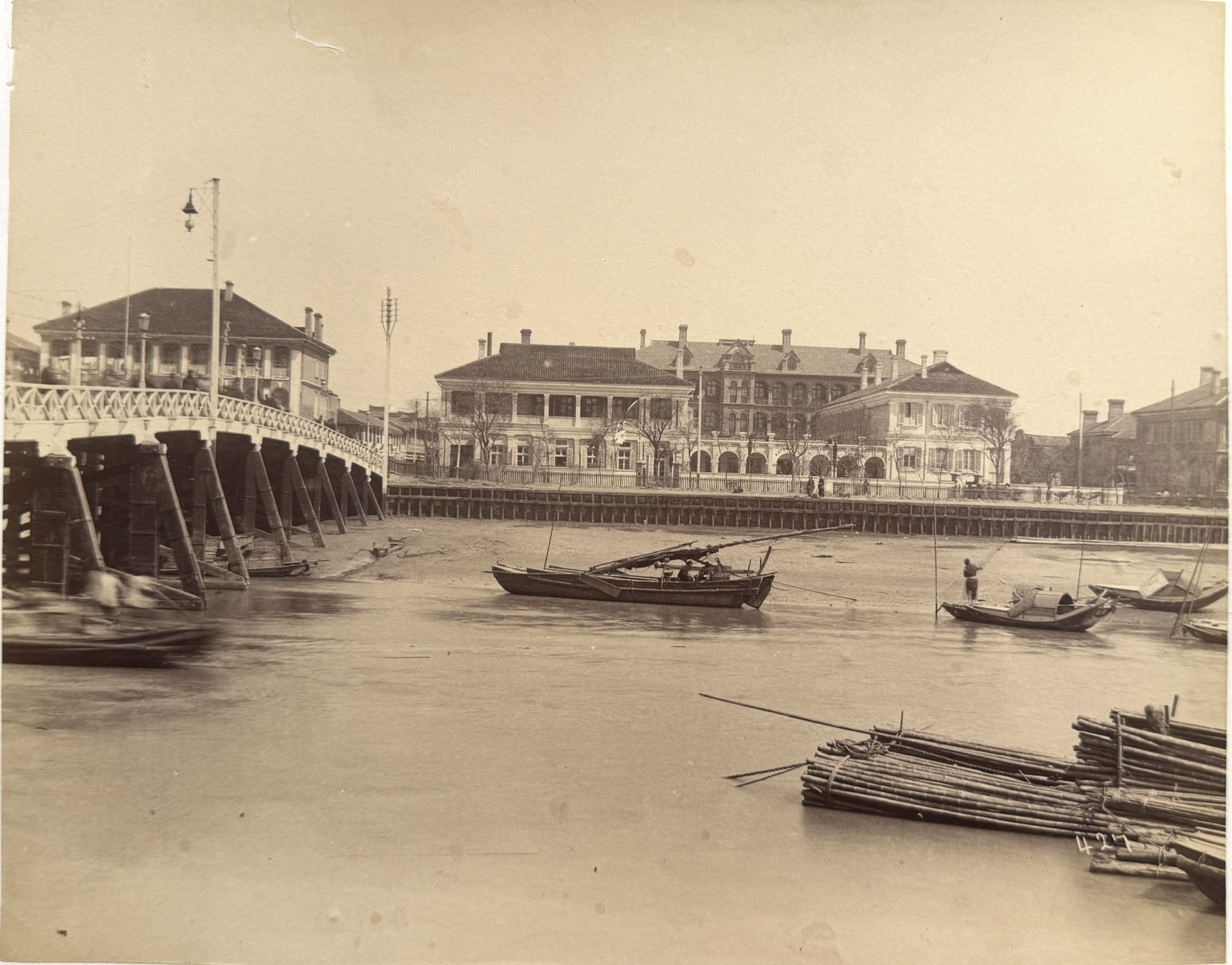
64770 [ASIA -- CHINA, HONG KONG, VIETNAM & JAPAN -- PHOTO ALBUM].
[An exceptional Asia souvenir export lacquer photograph album filled with 41 large hand- albumen images, five of which are hand coloured, including street scenes, occupational photos, harbour photos,
others documenting “flower boats” in Canton, China, temples, and more also presenting the diversity of Victorian Hong Kong architecture and scenery, Canton, China, Saigon, and Meiji-era Japan].
$4,500
Item Details
[Yokohama & Tokyo, Japan, Hong Kong, Canton, China, Saigon, Vietnam]:, [AFONG, Lai, WEGENER, Otto, GSELL, Emile, FLOYD, William Pryor, BEATO, Felice, FARSARI, Adolfo (photographers)],, ca. 1875-1893]., Hardcover
N/A, VG
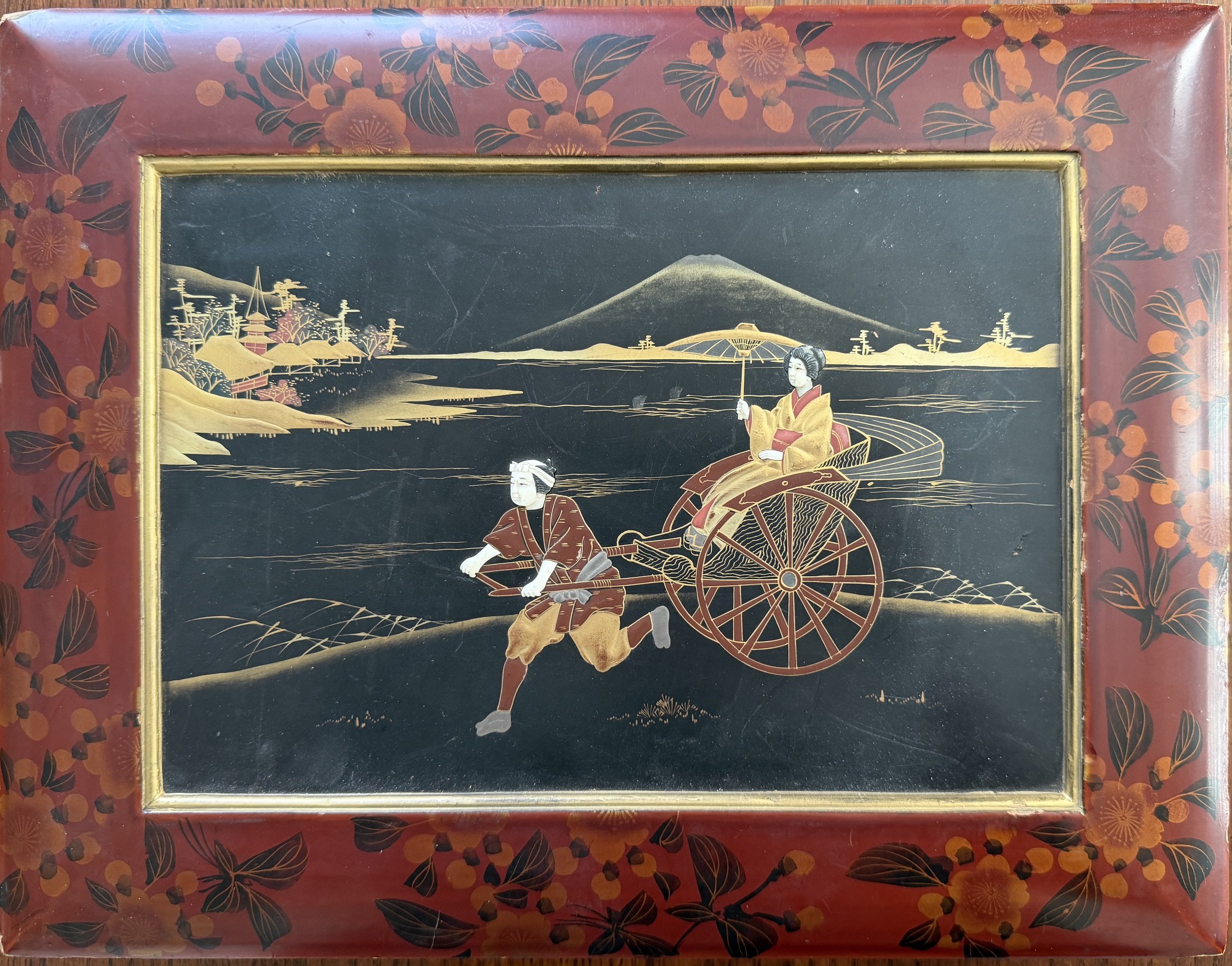
Thick Oblong folio. 14.5 x 10.75 x 2.25 in. [50 pp (unpaginated)], on thick cream-coloured boards, each mounted with white silk hinge at gutter margin, w/ 41 tipped-in albumen photos, sixed from 6 x 8 in. up to 8.5 x 11 in., 5 of which are hand-coloured, many w/ photographer’s annotated caption w/in the negative at lower fore-edge frequently with image inventory number, many w/ manuscript in pencil captions. Beautiful beveled lacquer boards, Mother-of-Pearl & bone inset panel on black laccquer on front cover depicting Rickshaw drive pulling Japanese Geisha w/ Mount Fuji in background, a.e.g. (rebacked w/ maroon-coloured calf, minor edgewear, minor curving to textblock, a couple images w/ minor creasing from mounting, 1 w/ very minor tear), still an excellent exemplar, with the nearly all the photographs retaining bright strong contrast.
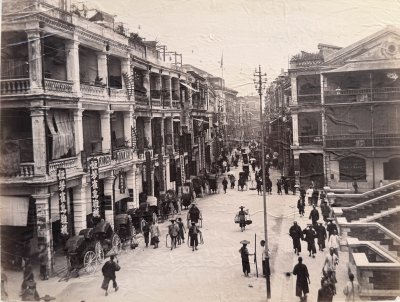
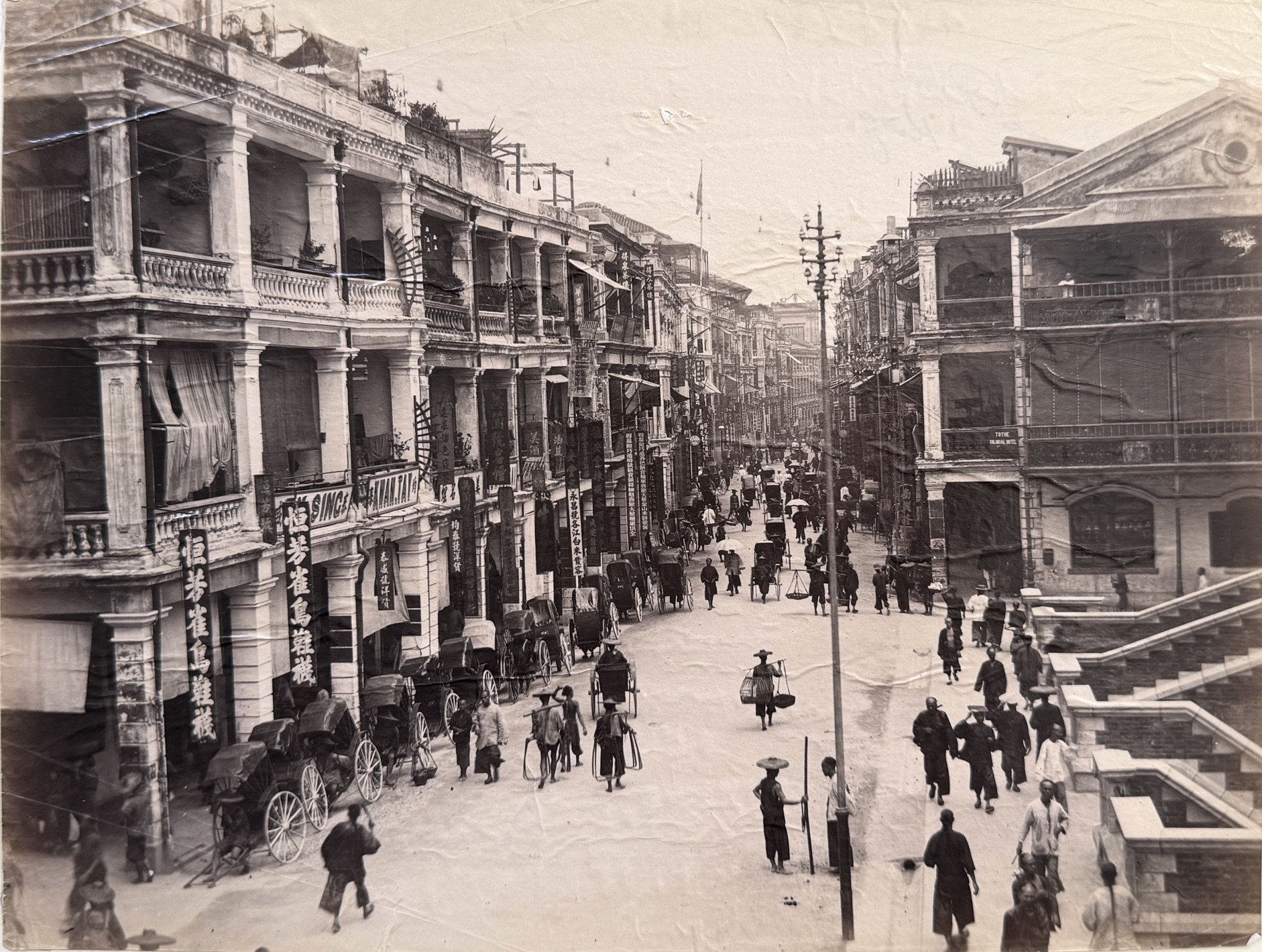
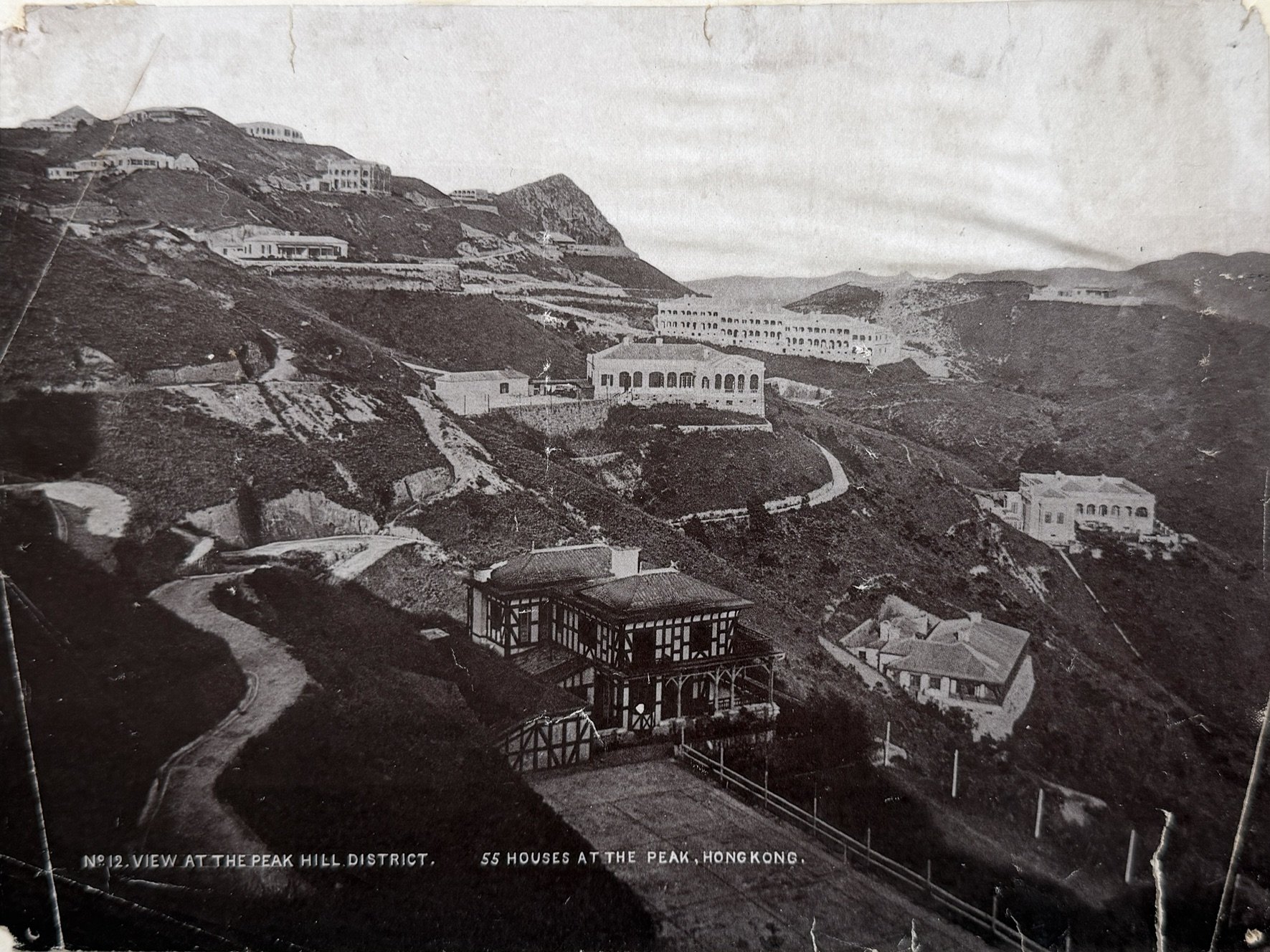
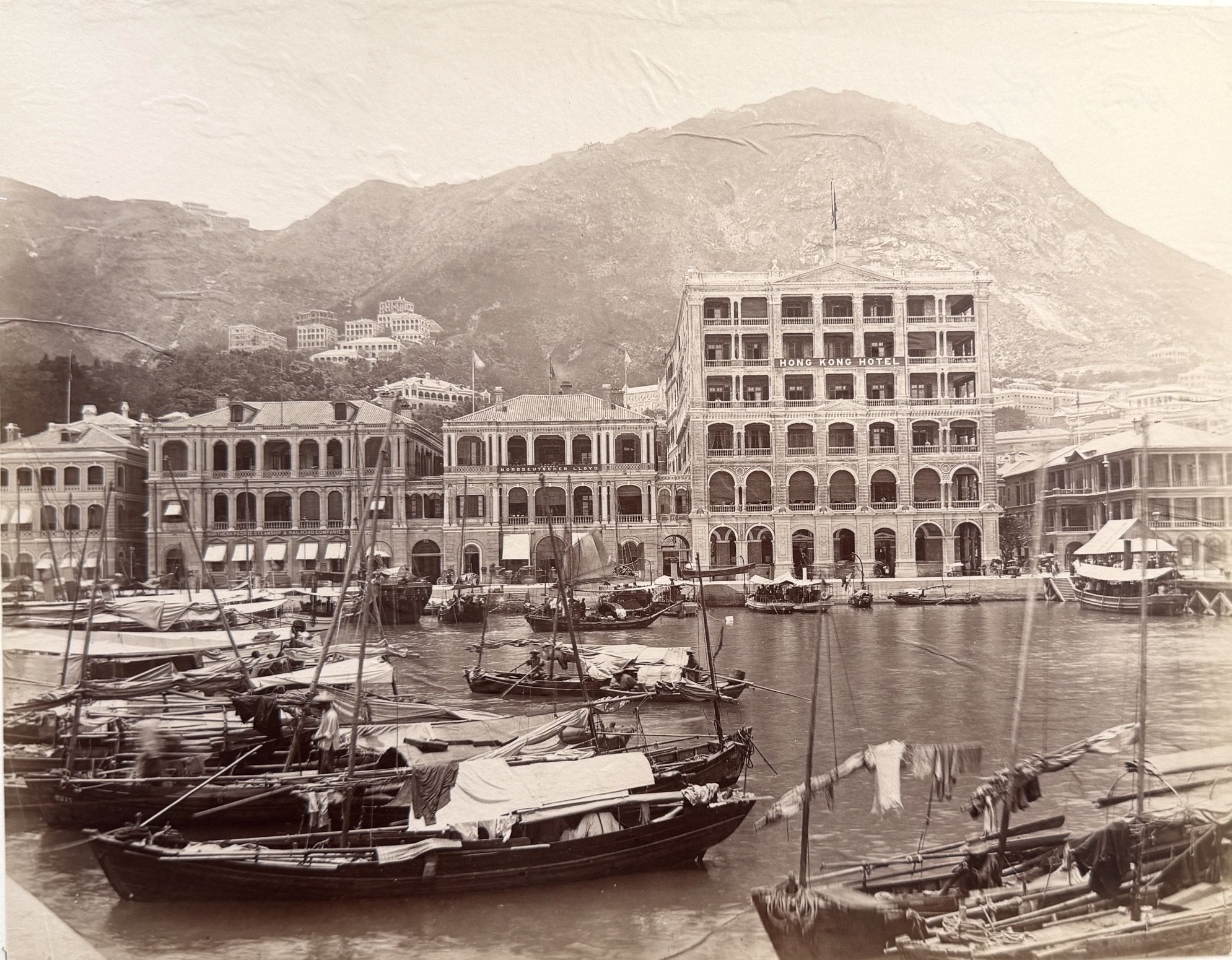
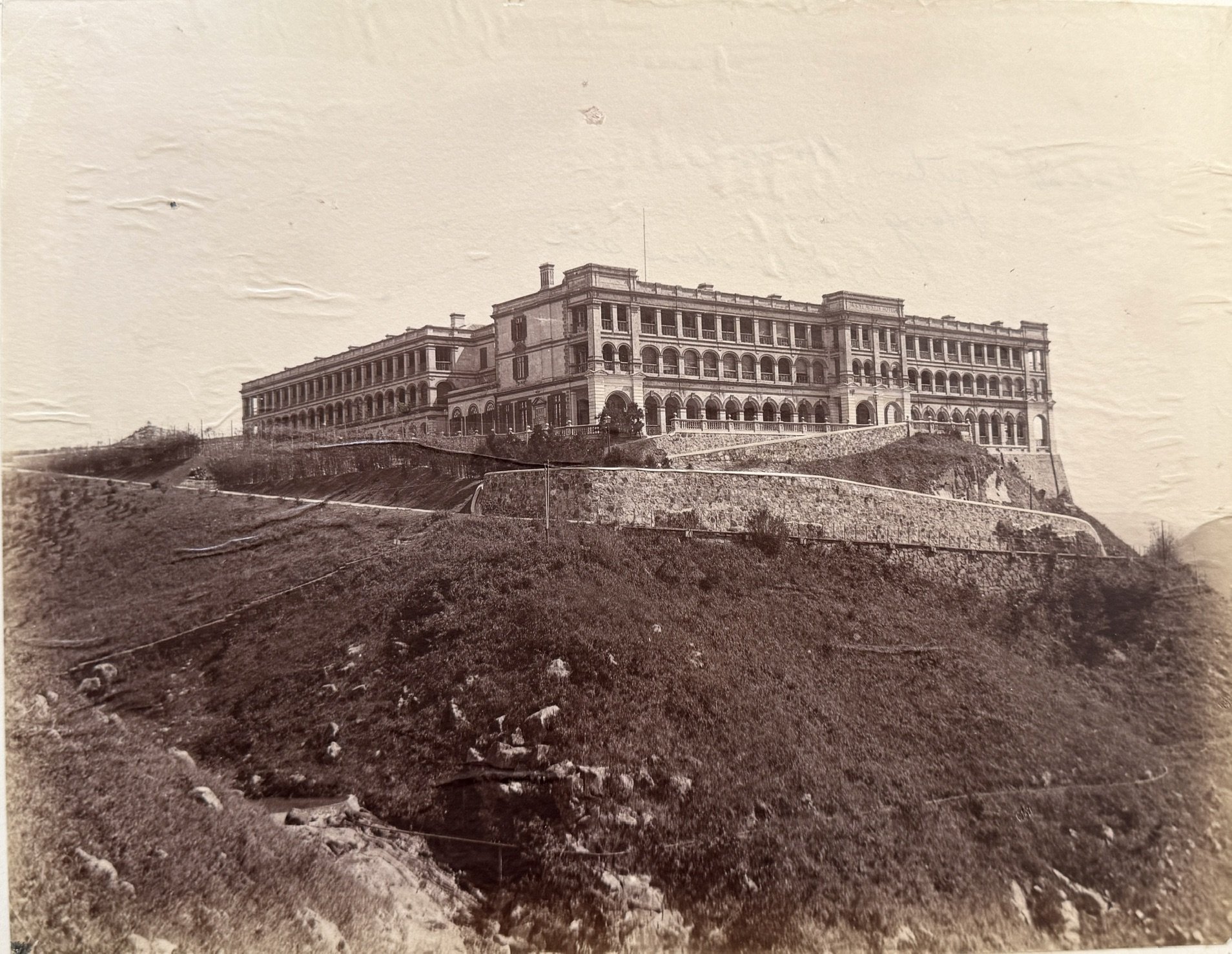
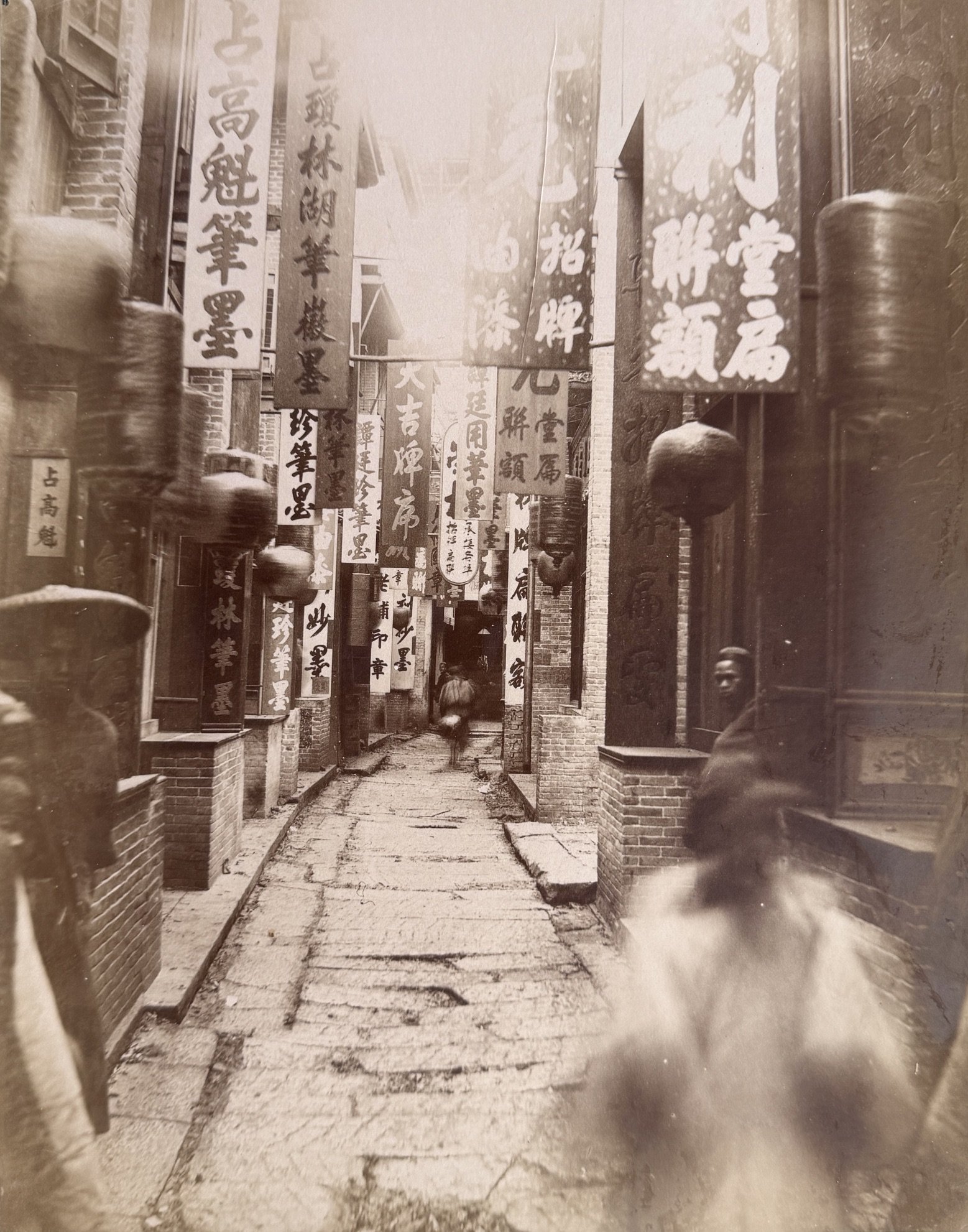
This superb Asian Souvenir Export photo album filled with large albumen prints offers a vivid representation of people, life, and the architectural landscape of Victorian-Era Hong Kong, Saigon in French Indochina (Vietnam), Canton (Guangzhou), China, and Meiji-era Japan. Fifteen of the photographs depict scenes and life in and around Hong Kong, with several of the photos by famed Chinese photographer Lai Afong (1839-1890), including a view of Happy Valley, the Public Gardens, the Peak Hill District with 55 houses at the Peak, Cemetery, and another view of the public gardens with harbour in the background by William Pryor Floyd (1834-c.1900), a prolific British Commercial Photographer. One of the Hong Kong photographs depicts the Mount Austin Hotel which was built above the Victoria Gap, opened in 1891 and was named after Colonial Secretary John Gardiner Austin, and operated for just a short time, converted by 1897 into the Mount Austin Barracks. Another Hong Kong photo, depicts the six-story expansion completed in 1893 to the Hong Kong Hotel facing Victoria Harbor on Queen’s Road, which included a private ferry launch for guests. The last Hong Kong photo is a striking street scene by Lai Afong.
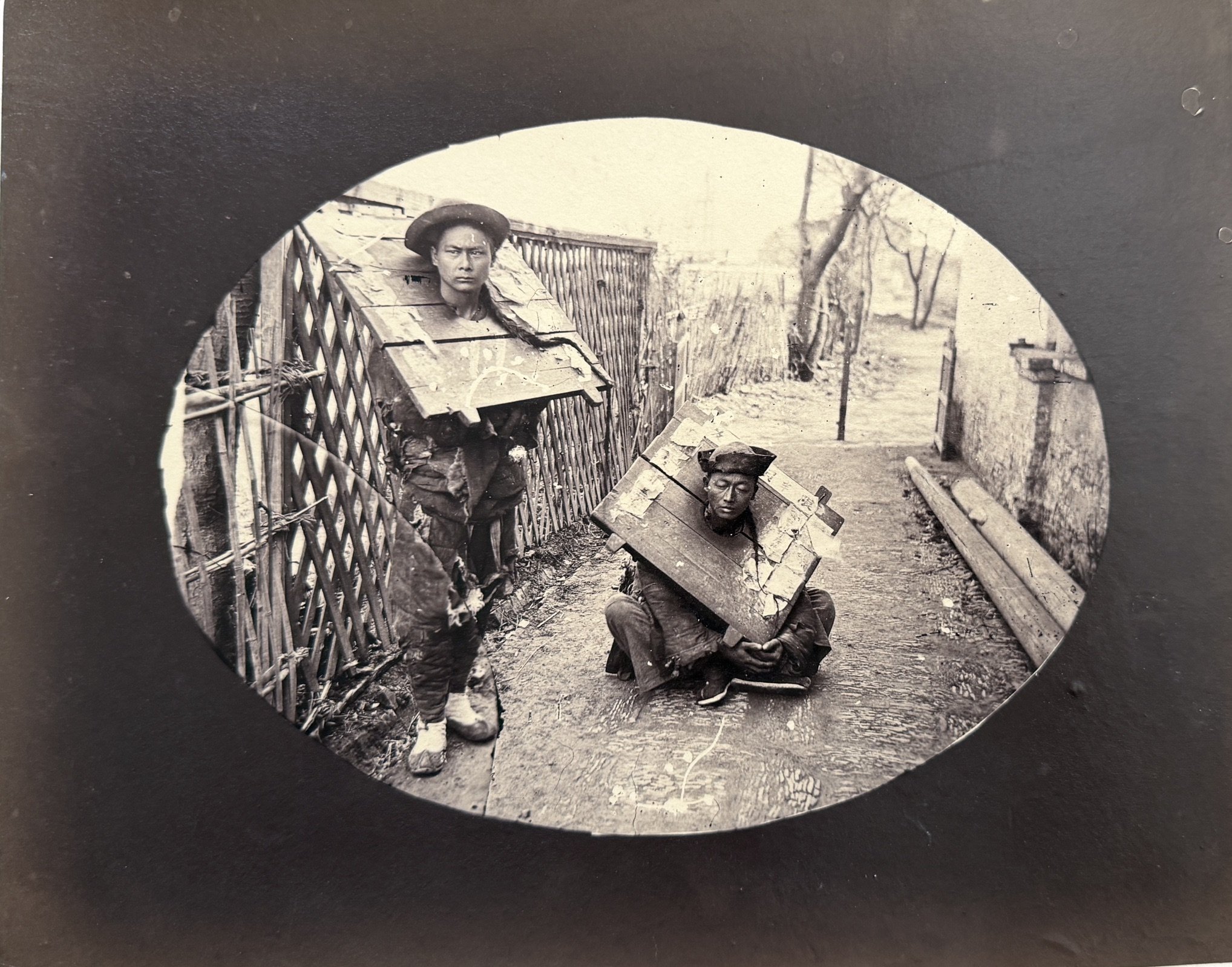
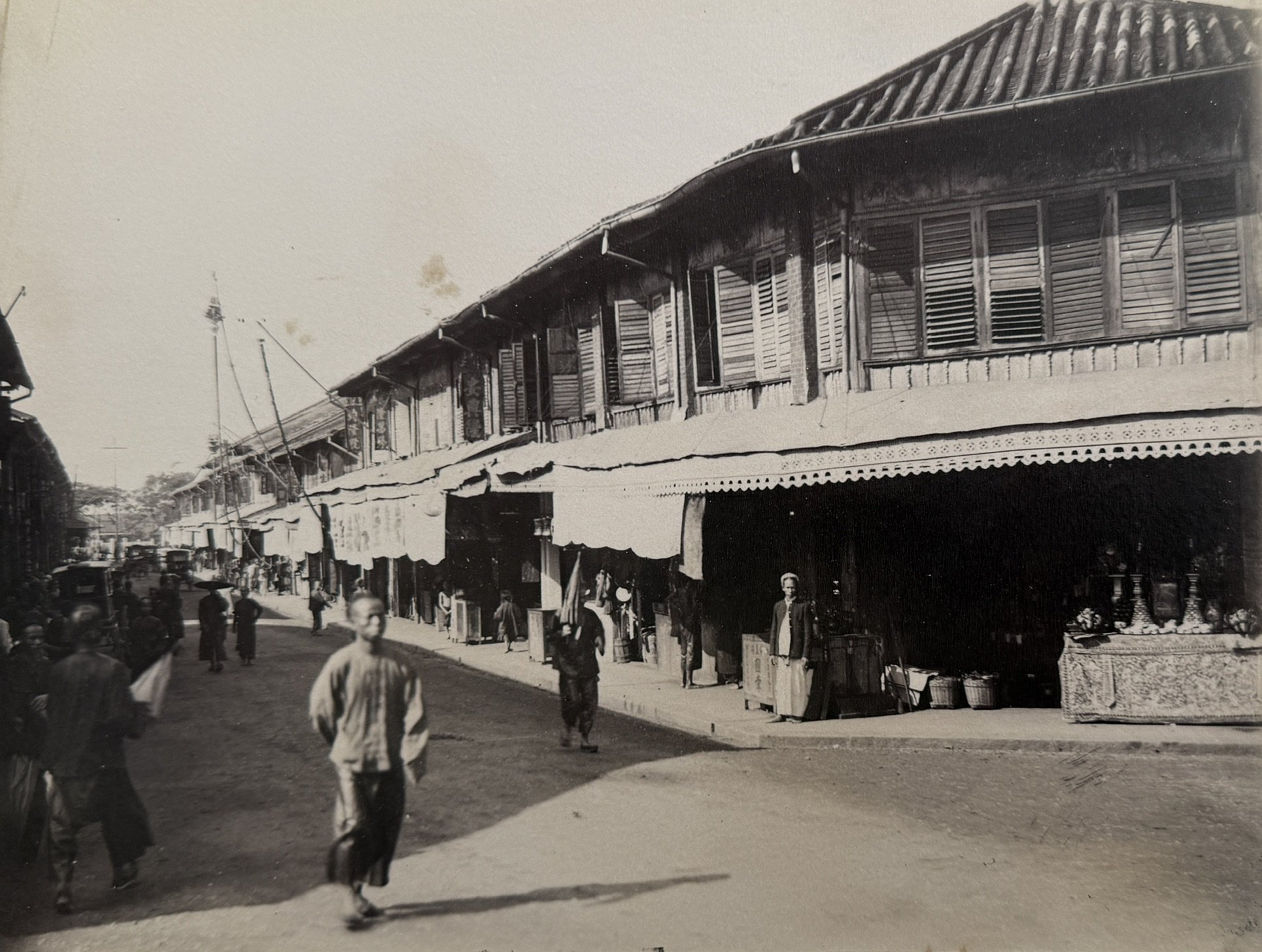
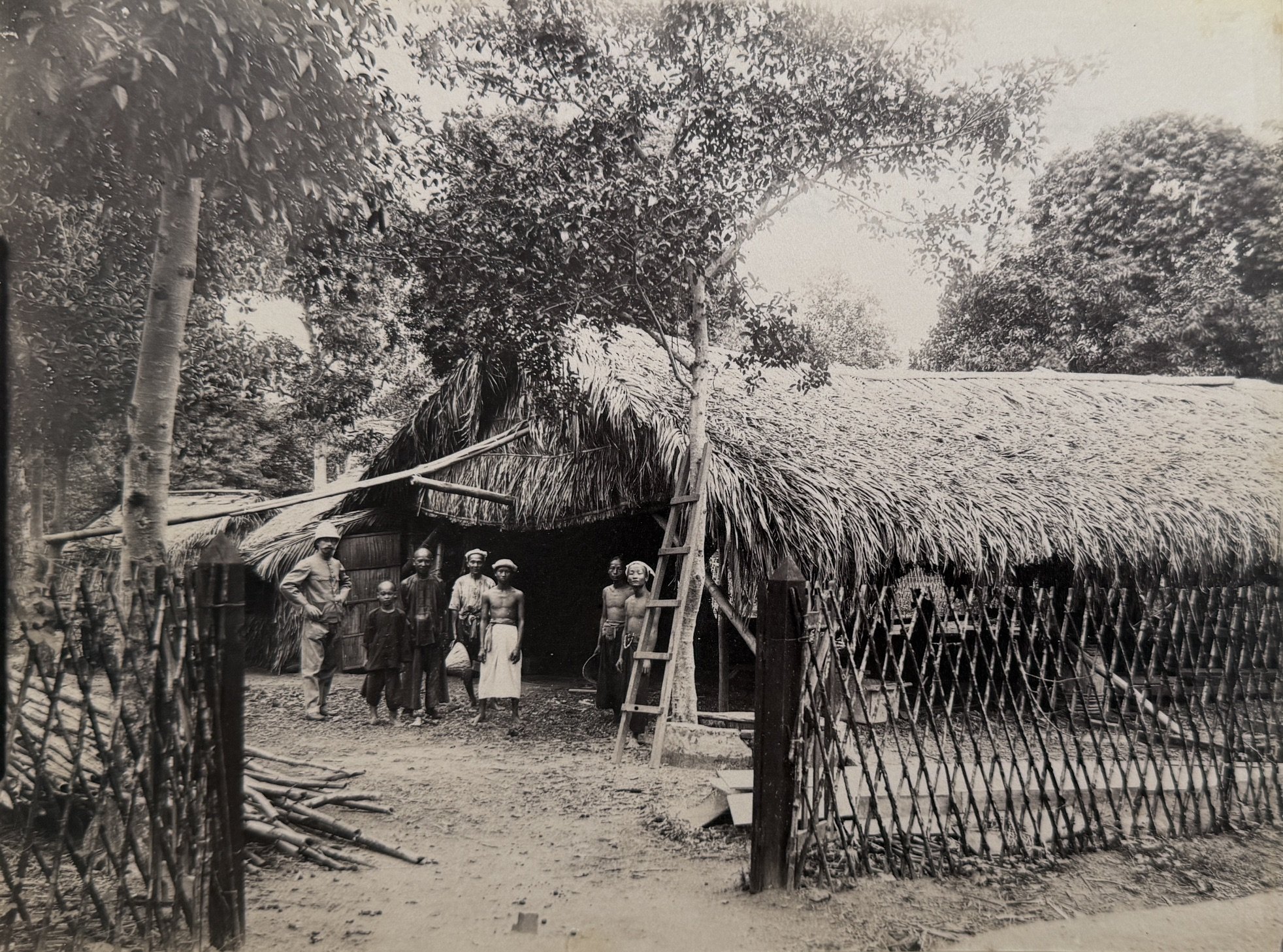
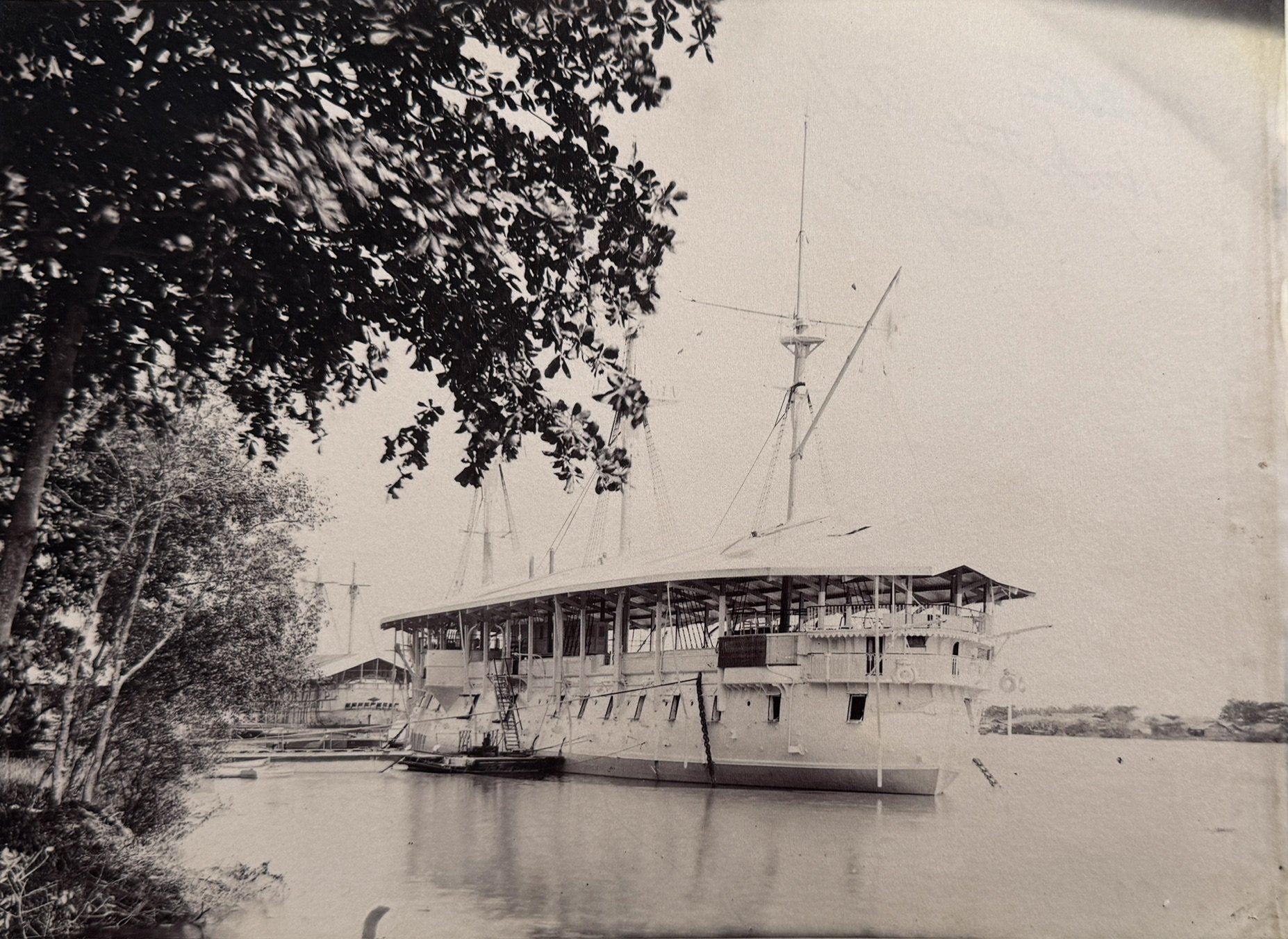
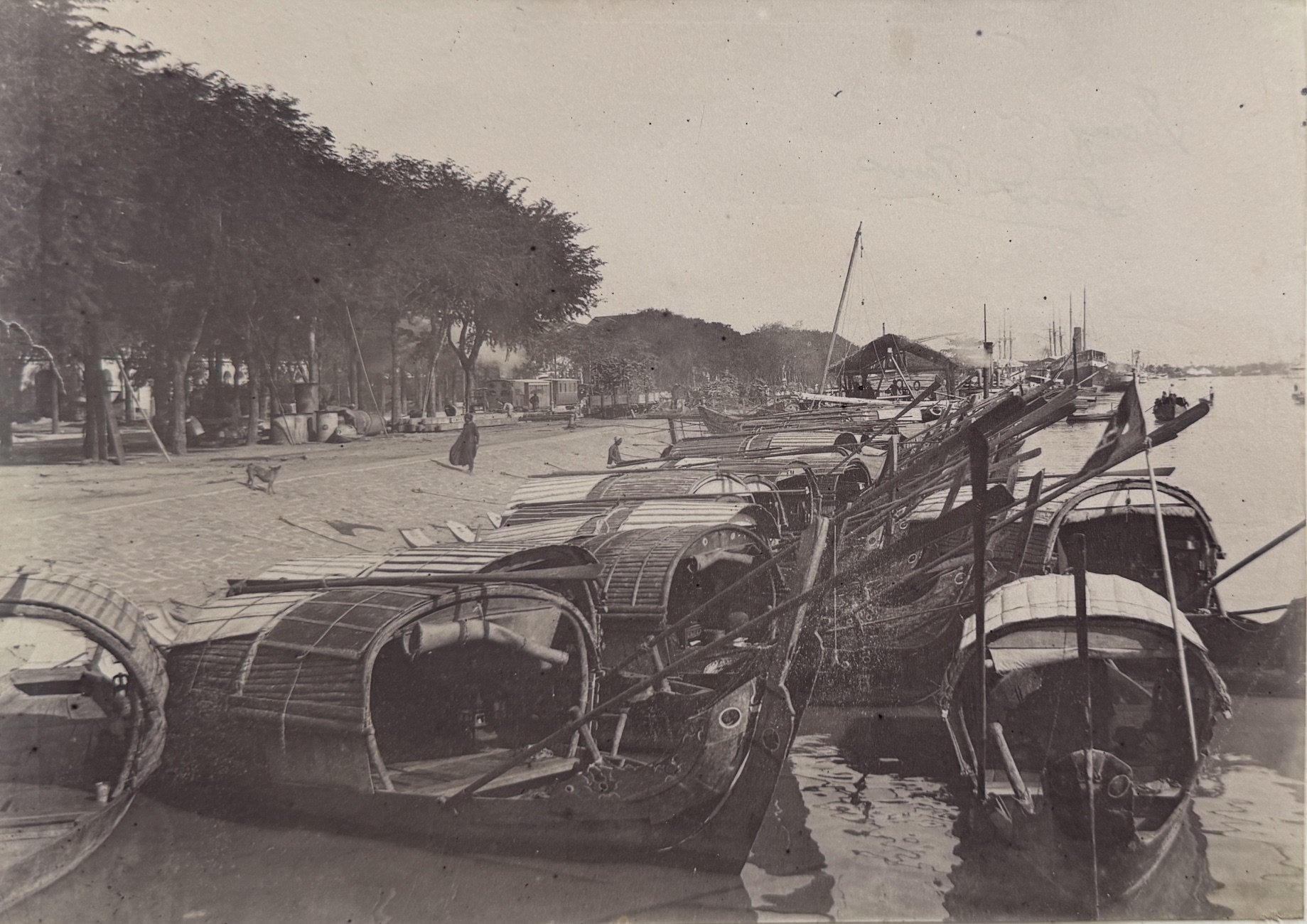
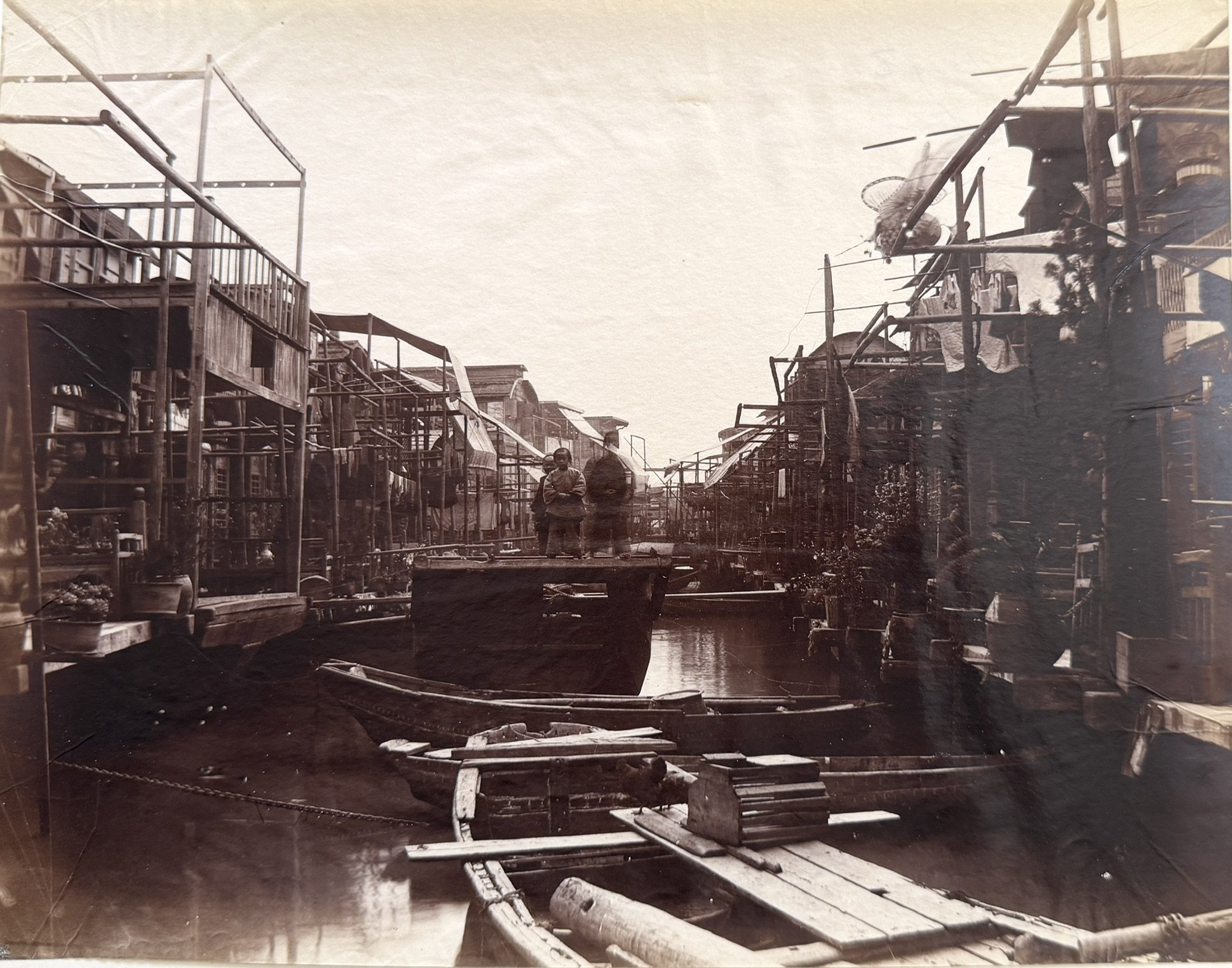
Of particular interest are the several original albumen photos capturing Saigon, French Indochina, or Cochin China, and surrounding areas with images shot by Emile Gsell (1838-1879), noted French military photographer, and his successor Otto Wegener (1849-1922), noted Swedish photographer who continued to sell Gsell’s prints, as well as Vidal/Salin-Vidal. These images include views of a “Native House, Saigon,” “Native Street, Saigon,” French “Military Hospital Ship” docked in Saigon, “Monkey Palms, Saigon,” “French Settlement, Saigon” along some railroad tracks, and traditional sampans boats along a canal in Cholon, Saigon. In our experience, this many French Indochina, Vietnam photographs included for travel in and around Saigon, are quite uncommon. Nine of the original albumen photographs capture such scenes in and around Canton (Guangzhou), China such as the 500 Mages, or interior shot of the 500 Lohan disciples of the Buddha inside the Hualin Temple in the western suburb of Canton, the “Execution Yard” in Canton, Pagoda near Canton,as well as two very nice images of the “Flower Boats” in Canton, possibly by Lai Afong, or Emil Rumsfield, visually capturing these multi-tiered wooden houseboats, or pleasure boats operating as exclusive floating brothels, featuring music, dining and socializing, and essential to the Pearl River’s social economy into the 20th Century. A couple others include prisoners in wooden stocks in Canton, China, taken from a cracked glass negative, and well-dressed Mandarin Chinese official.
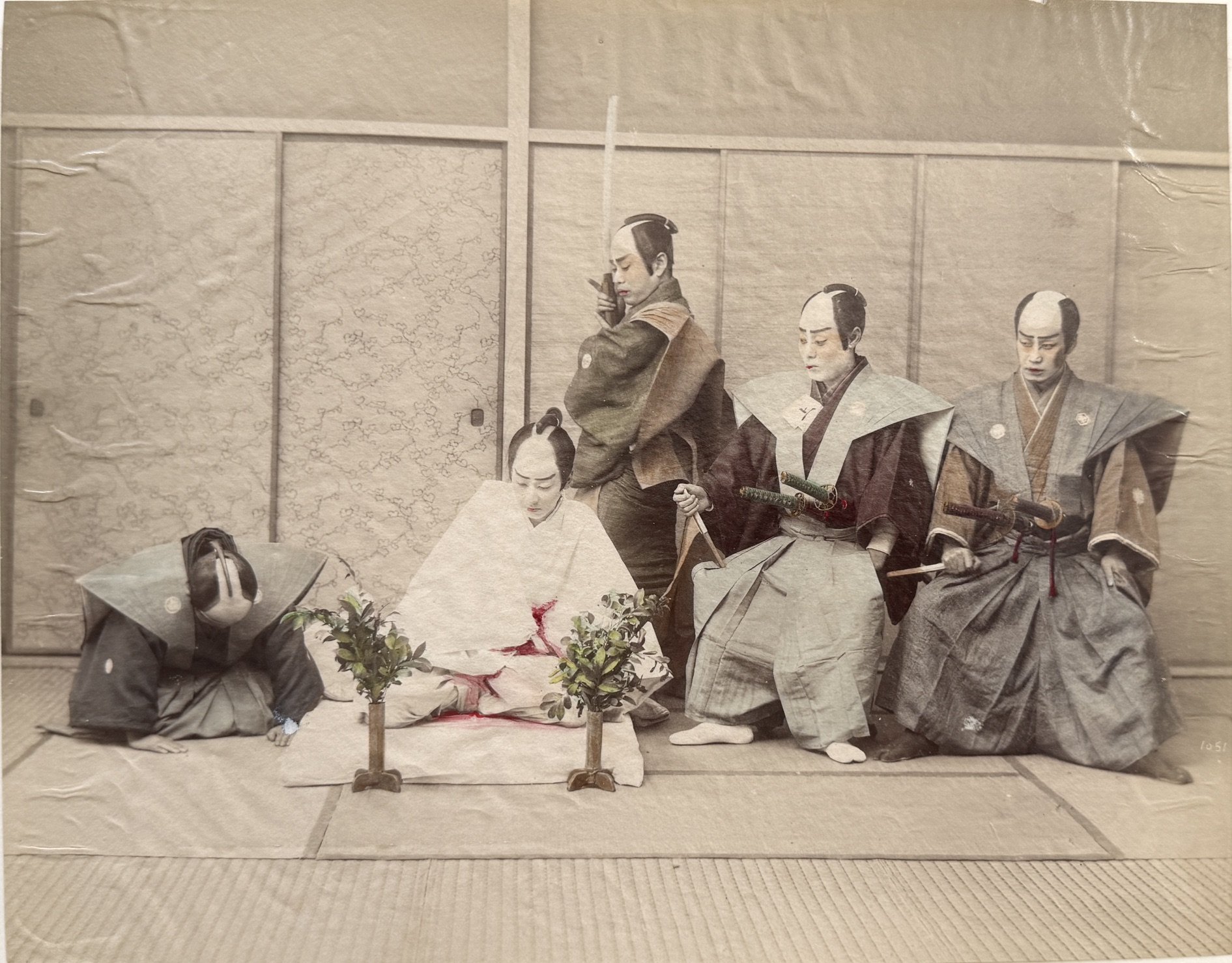
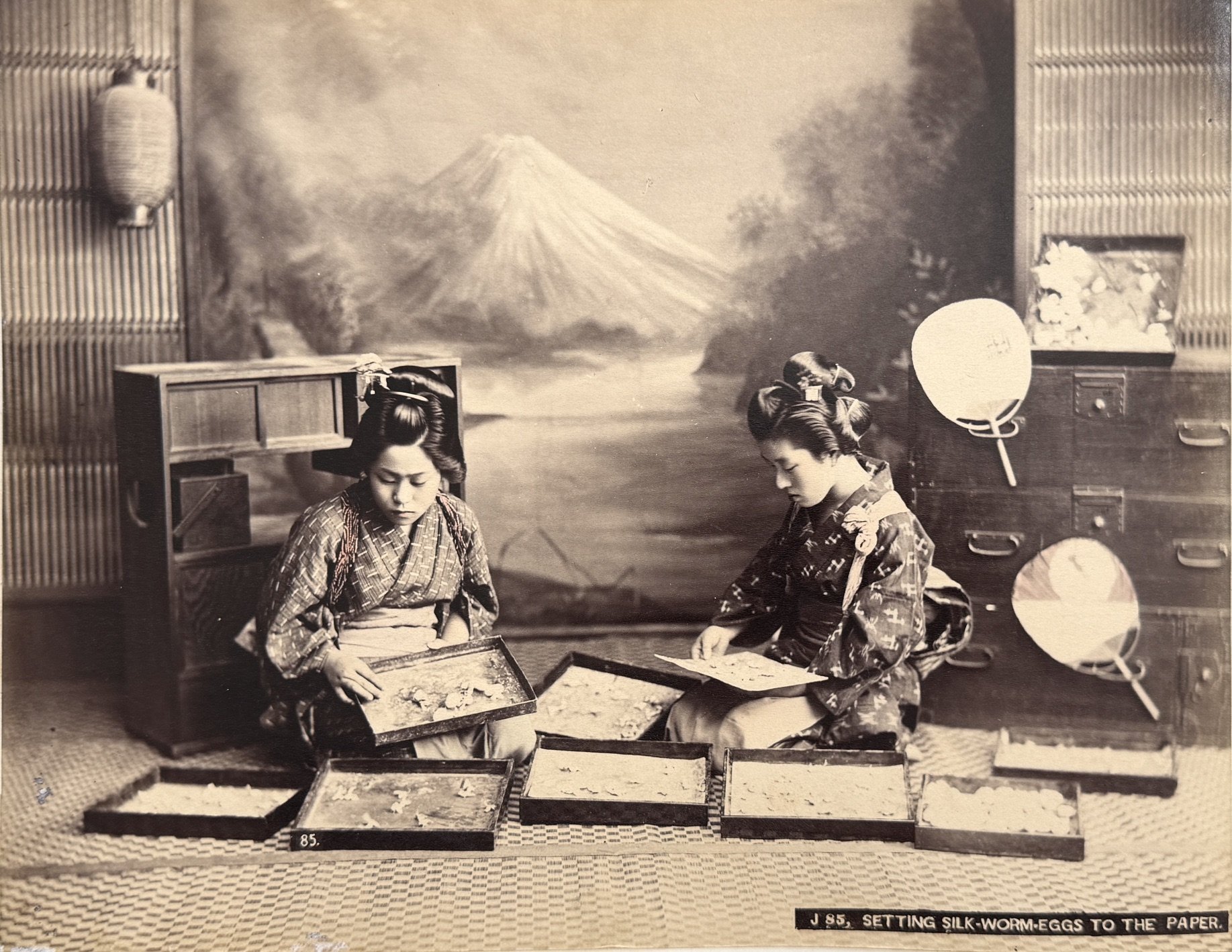
The remainder of the albumen photographs sprinkled through the album encompass a hand-coloured albumen of Japanese rickshaw pulling kimono-clad Japanese women; the Yokohama Hataba, or English/French treaty pier; Yokohama Park with cherry blossoms viewing & rickshaws; the famed view of the staged seppuku scene with nearby kaishakunin Samurai assistant standing with drawn sword for beheading, and beautiful Kamakura Temple shot by Felice Beato. Other Beato photos include a fine Palanquin photo of young geisha and porters; and a very nice “Setting Silk-Worm-Eggs to the Paper” with young silkworm women workers carefully extracting the threads. Adolfo Farsari (1841-1898) photos include one of the No. 9 House in Yokohama, Japan, as well as two shots of the Grand Hotel in Yokohama. See: Terry Bennett, History of Photography in China, Chinese Photographers 1844-1879; Metadata Database of Japanese Old Photographs in Bakumatsu-Meiji Period, Nagasaki University Library Collection (2006); Early Photography of Japan, Harvard College Library; Bennett, Photography in Japan 1853-1912 (2006); Old Photos of Japan. A Photo Blog of Japan in the Meiji, Laisho and Showa Periods.
Zephyr Used & Rare Books

Kol Shaver
P.O. Box 55
Vancouver, WA, 98666
United States
Phone: (360) 695-7767
Cell: (360) 606-7735
Featured Catalogue
Visit Website
Specialities
Trade Catalogues, Western Americana, Photographs
More Information
Booth 26
Shipping and Returns
All offers subject to prior sale. Payment and discount terms are available for institutions and usual discounts apply. We accept Visa, MasterCard & Amex, PayPal, and payment by check. All books are in fine condition unless otherwise stated. Postage will be added to all shipments. We hold books for 7 days pending receipt of payment, once we have received confirmed order (duplicate orders will be replied to in order). All books can only be returned if not as described within 7 days and receive refund of original price, if the purchaser has TELEPHONED to (360) 695-7767 and notified us first, and if the book has been returned in condition shipped out (email return notification WILL NOT BE ACCEPTED, NO REFUND WILL BE ISSUED) .
Additional Information
Any further questions please refer to www.zephyrusedandrarebooks.com.