Zephyr Used & Rare Books
64727 [WESTERN AMERICANA -- WASHINGTON TERRITORY ALBUM]. [GAMBLE, Andrew Wallace (Photographer).]
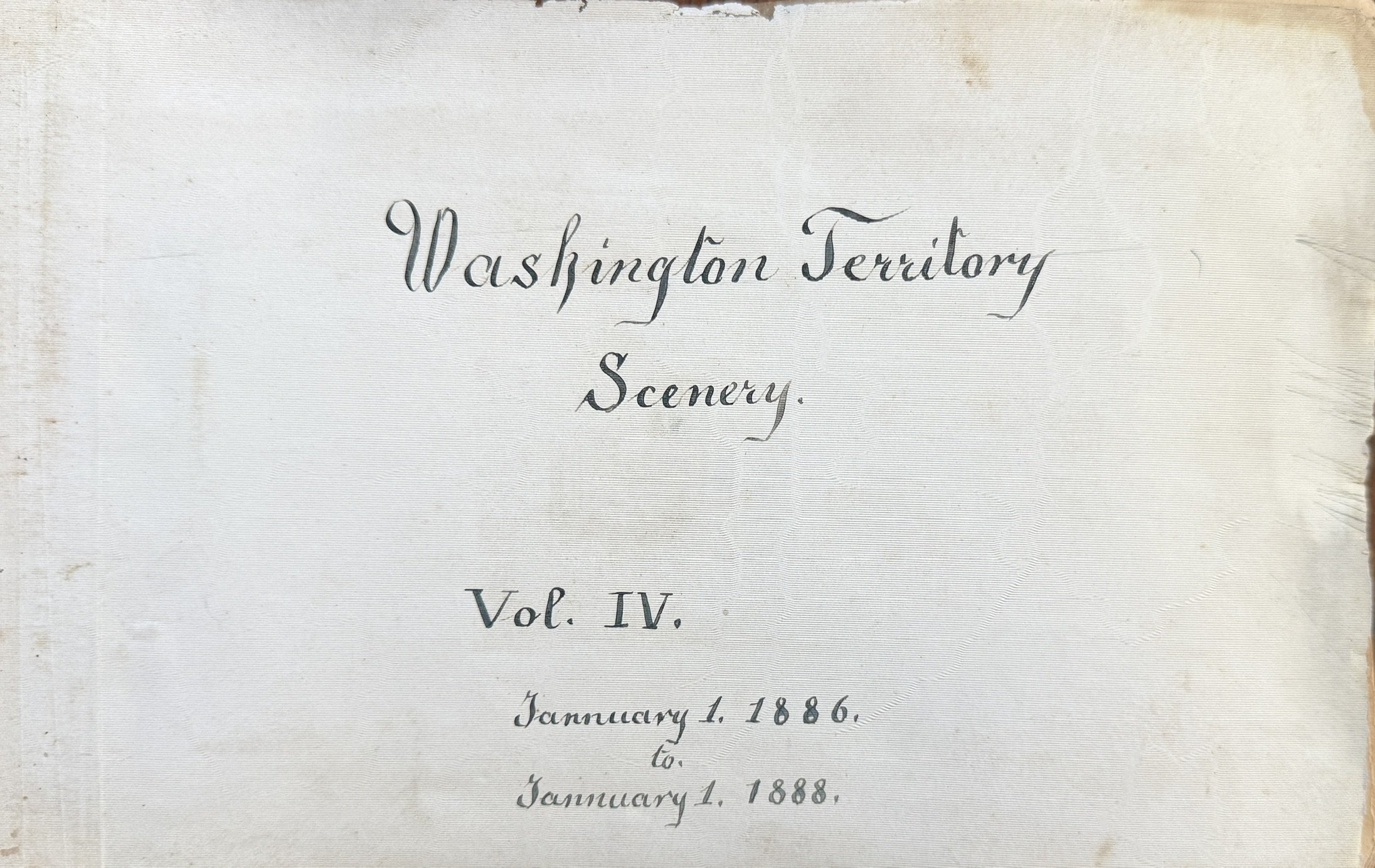
Washington Territory scenery, Vol. IV, January 1, 1886 to January 1, 1888. [An historic photo album featuring 48 original boudoir-sized albumen photographs shot and all carefully annotated in 1886-87
with 36 depicting an extended trip by Gamble to visit his relative David Gamble, an itinerant preacher in Waitsburg, Washington Territory, and the remainder on his hometown of Sidney, Ohio].
SOLD
Item Details
[Waitsburg], Washington Territory & [Sidney, OH]:, [A.W. Gamble],, 1888., Hardcover
N/A, VG
Oblong 4to. 11 x 7 in. [2, 48 pp (unpaginated).], on thick paper card stock, w/ white linen hinges at gutter margin. With 48 original boudoir-sized albumen photographs, sized 7.75 x 4.75 in., all mounted on leaves, and nearly all w/ carefully written ink manuscript captions identifying locations. Contemporary quarter-calf over black cloth, gilt lettering stamped on front cover, silk moire endpapers (rebacked & corners renewed, edgewear, some rippling to upper fore-edges of leaves, very faint tidemark in blank margin), still a VG exemplar, w/ all images retaining excellent strong contrast, and monogram trade card mounted on front pastedown for the Scovill Manufacturing Co., originally founded in 1802, and by the 1880’s manufactured and sold a wide range of photographic products for Daguerreotype photos, albumen photos, photo supplies, equipment, and more for amateur and professional photographers.
This truly incomparable photo album features original boudoir-sized albumen photographs, shot by a previously unknown photographer in the West while traveling and living in Waitsburg [Waitsburgh in the album], Washington Territory, when that area of the Pacific Northwest’s growth rate was accelerated by the completion of the Oregon Railroad & Navigation Co. (OR&N) railroad line through Waitsburg to Dayton from Walla Walla. This development proved essential in transforming the milling hub of Waitsburg, W.T. by offering a fast reliable method to export their massive wheat harvests, and fast-growing timber and sawmill operations to other markets in the Pacific Northwest. Waitsburg was founded as a small settlement at the delta of the Touchet River and Coppei Creek, Northeast of Walla Walla in 1859 on lands ceded from the Palouse, Walla Walla, Cayuse and Umatilla Indigenous Peoples following the 1855 Treaty, and subsequent Indian Wars, which opened the area to Eurocaucasian homesteaders and miners. Platted in 1869 as Wait’s Mill, or Wait’s Crossing, the OR&N extended their line and by 1881 the first municipal government was organized, and Waitsburg still operates under the original Territorial Charter.
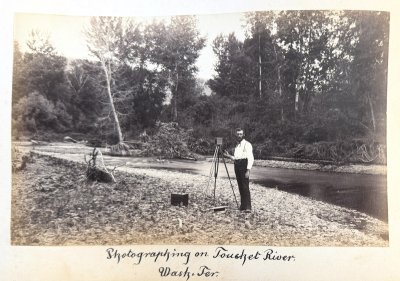
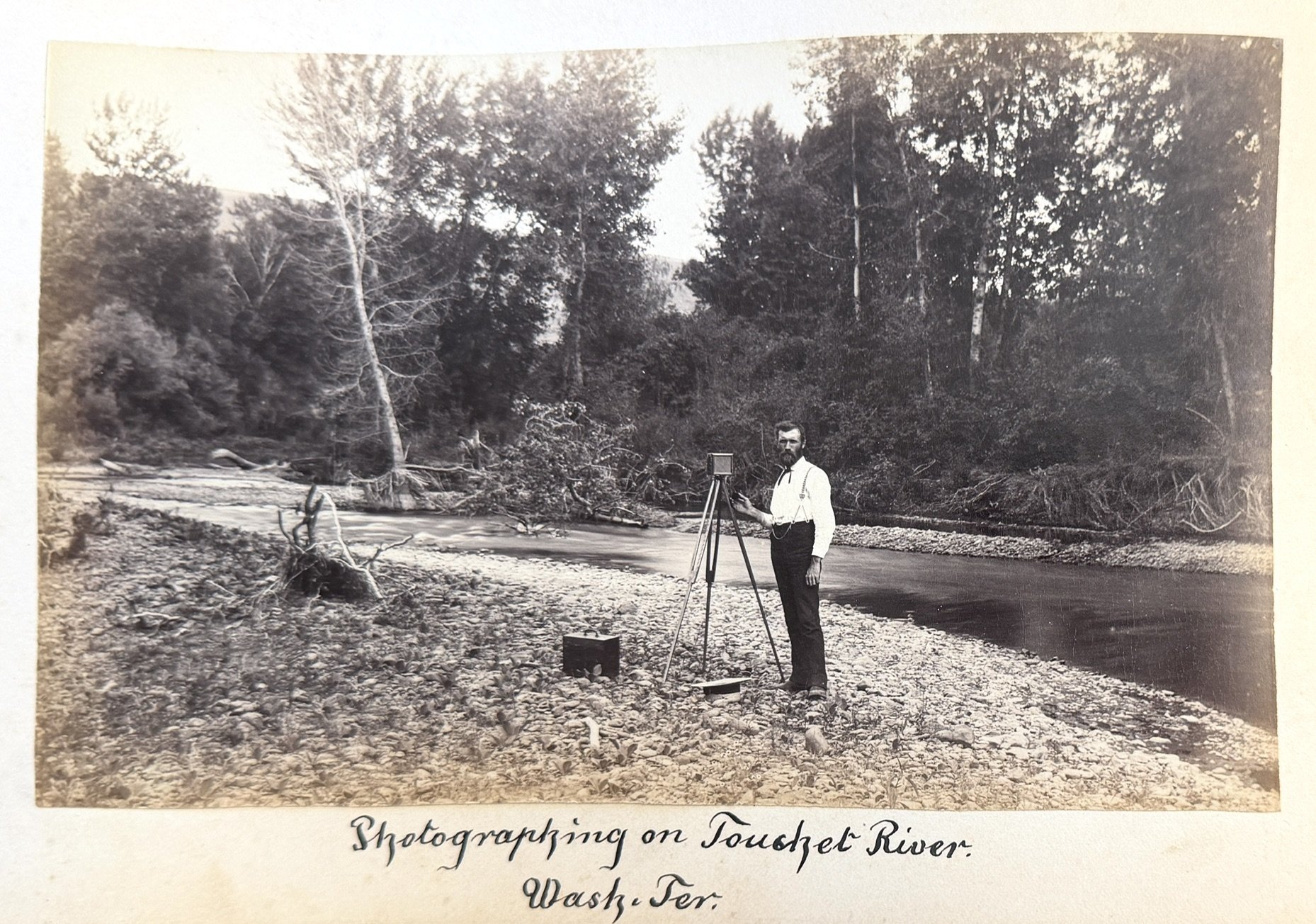
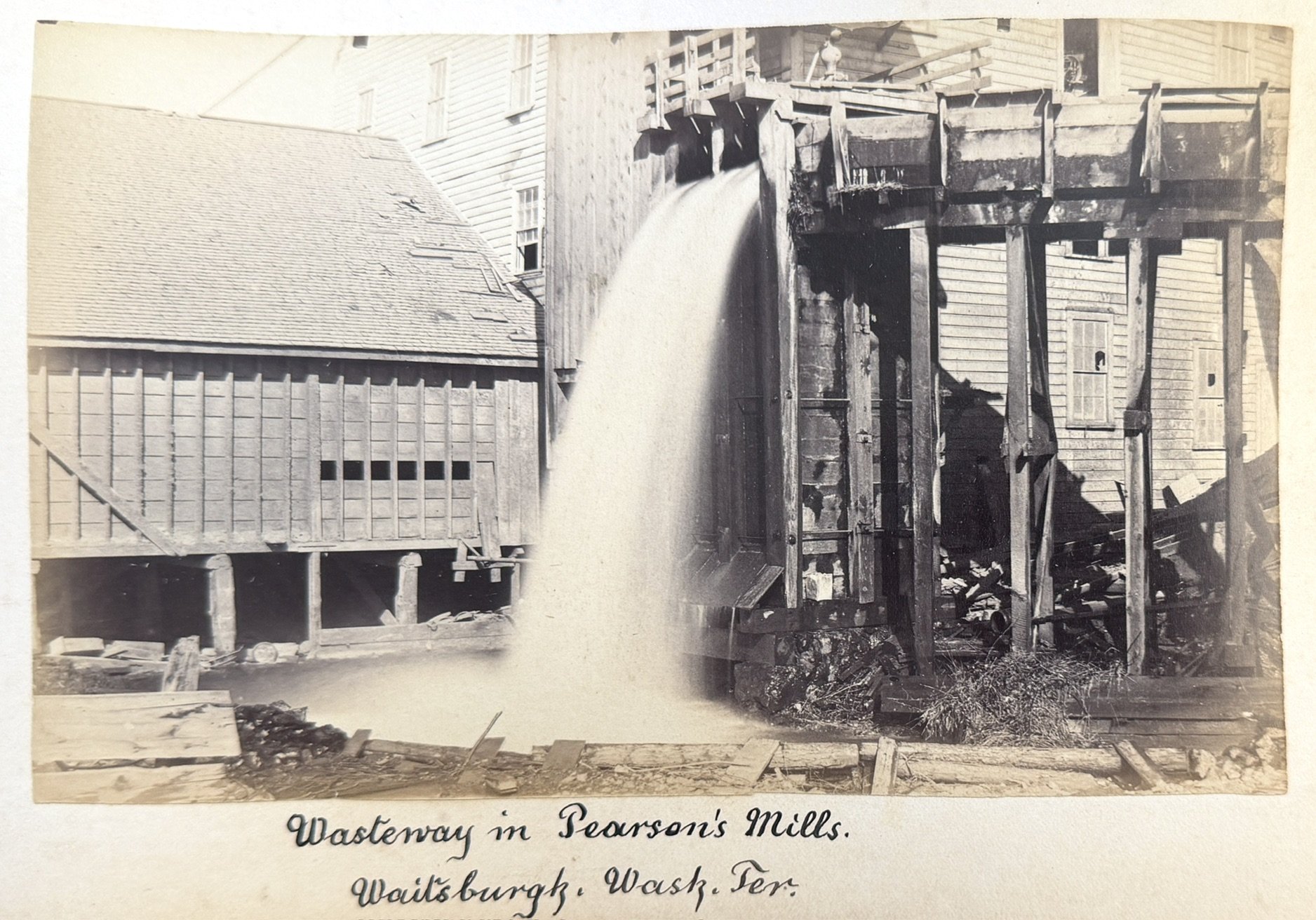
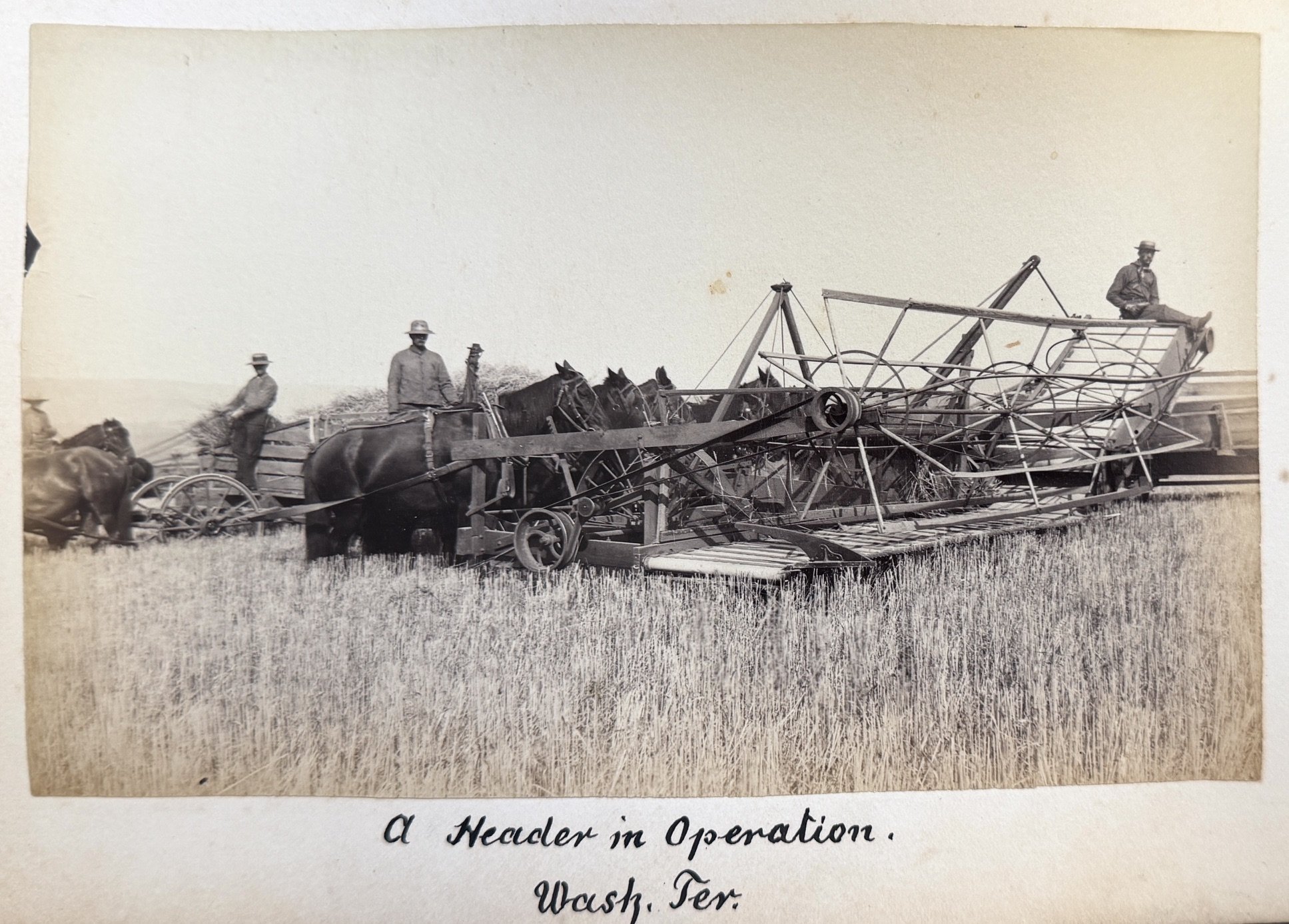
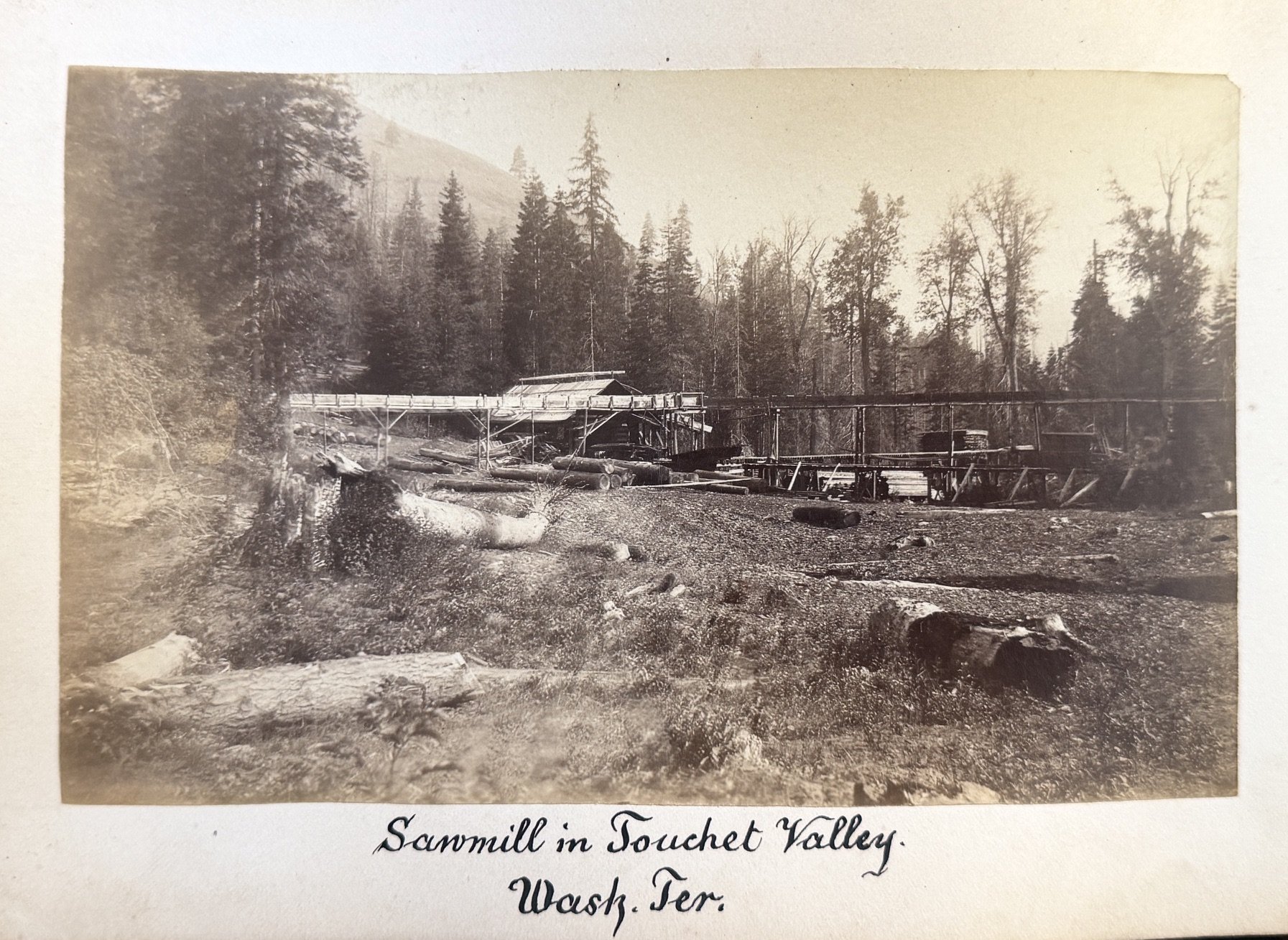
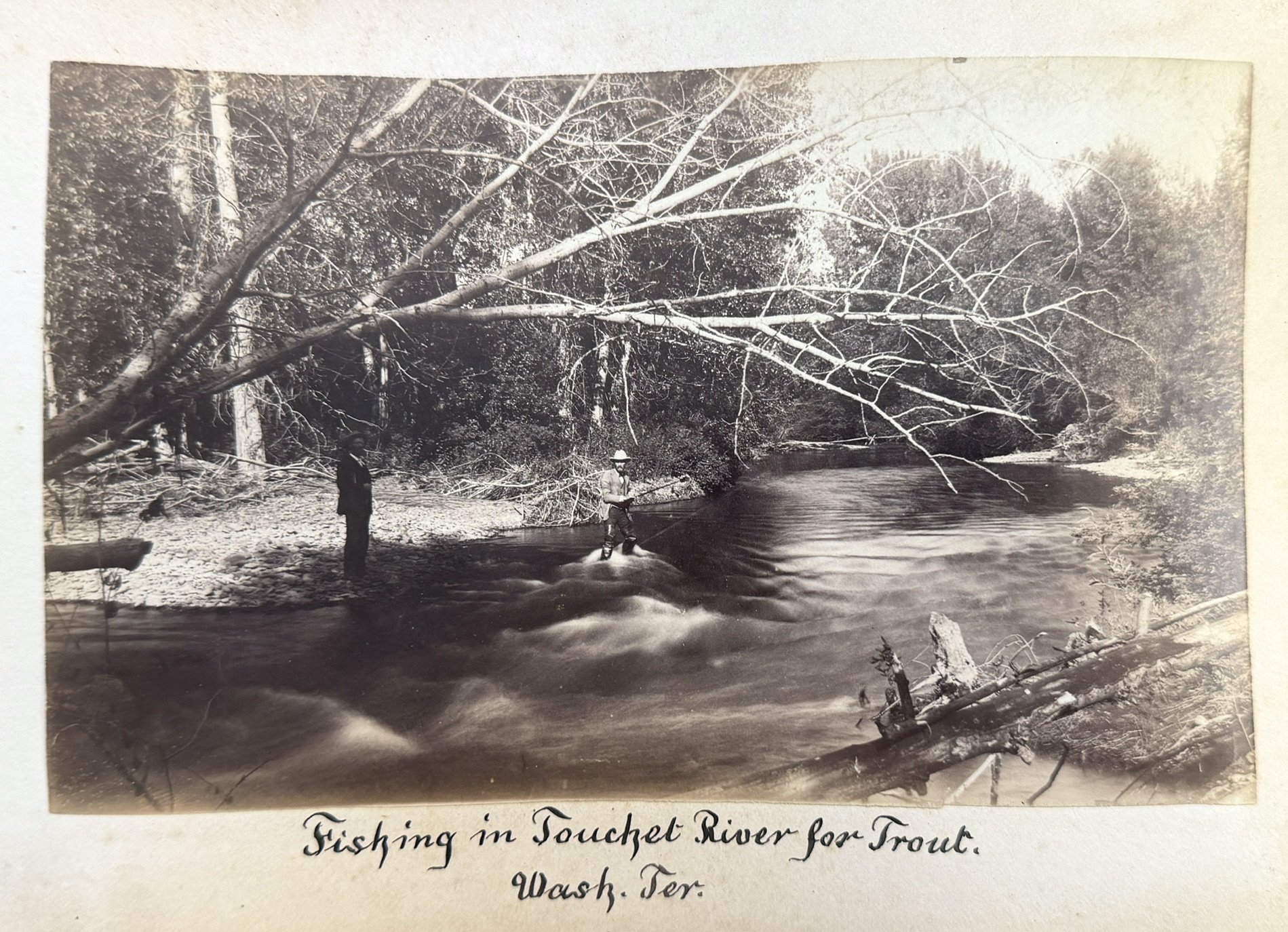
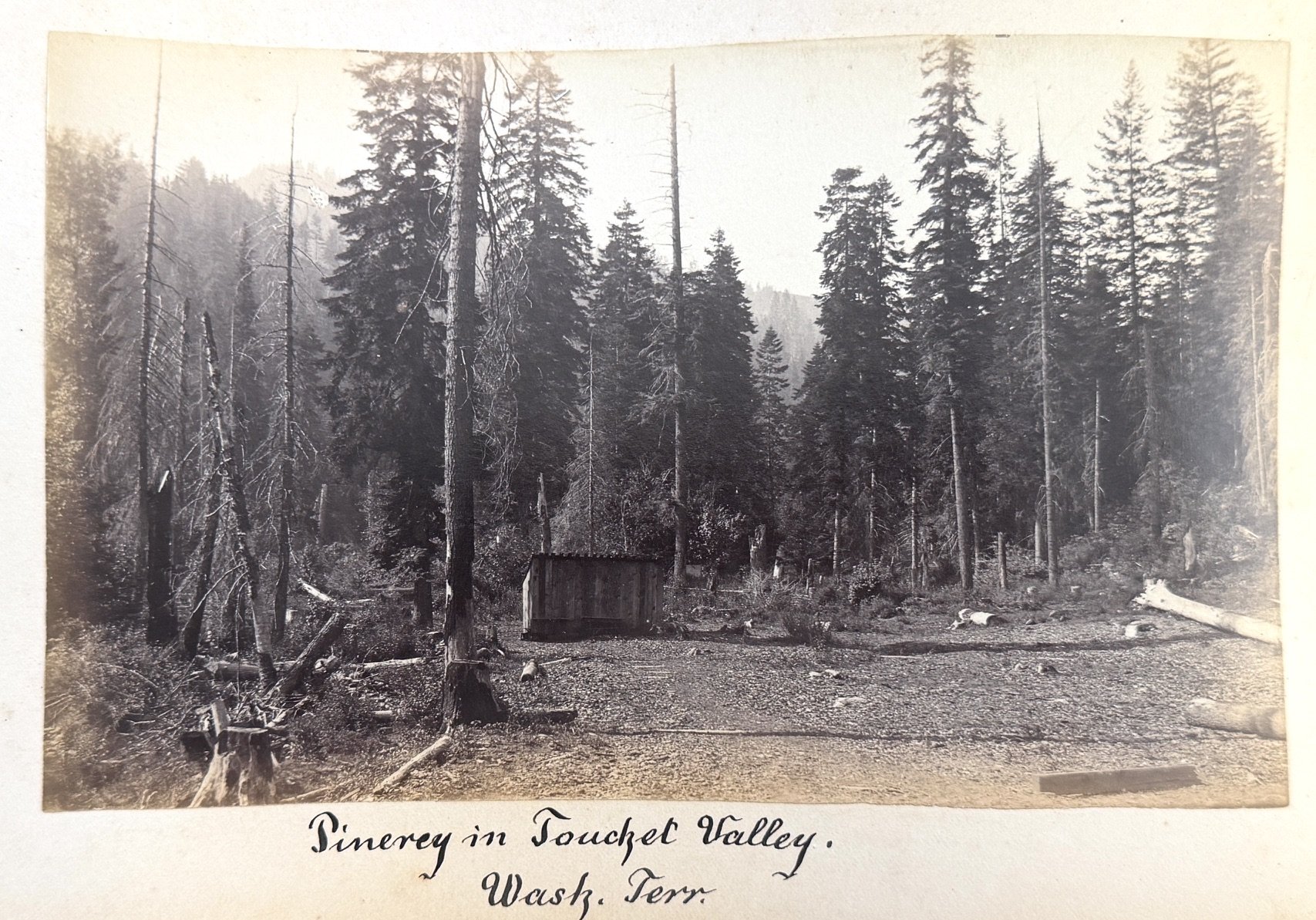
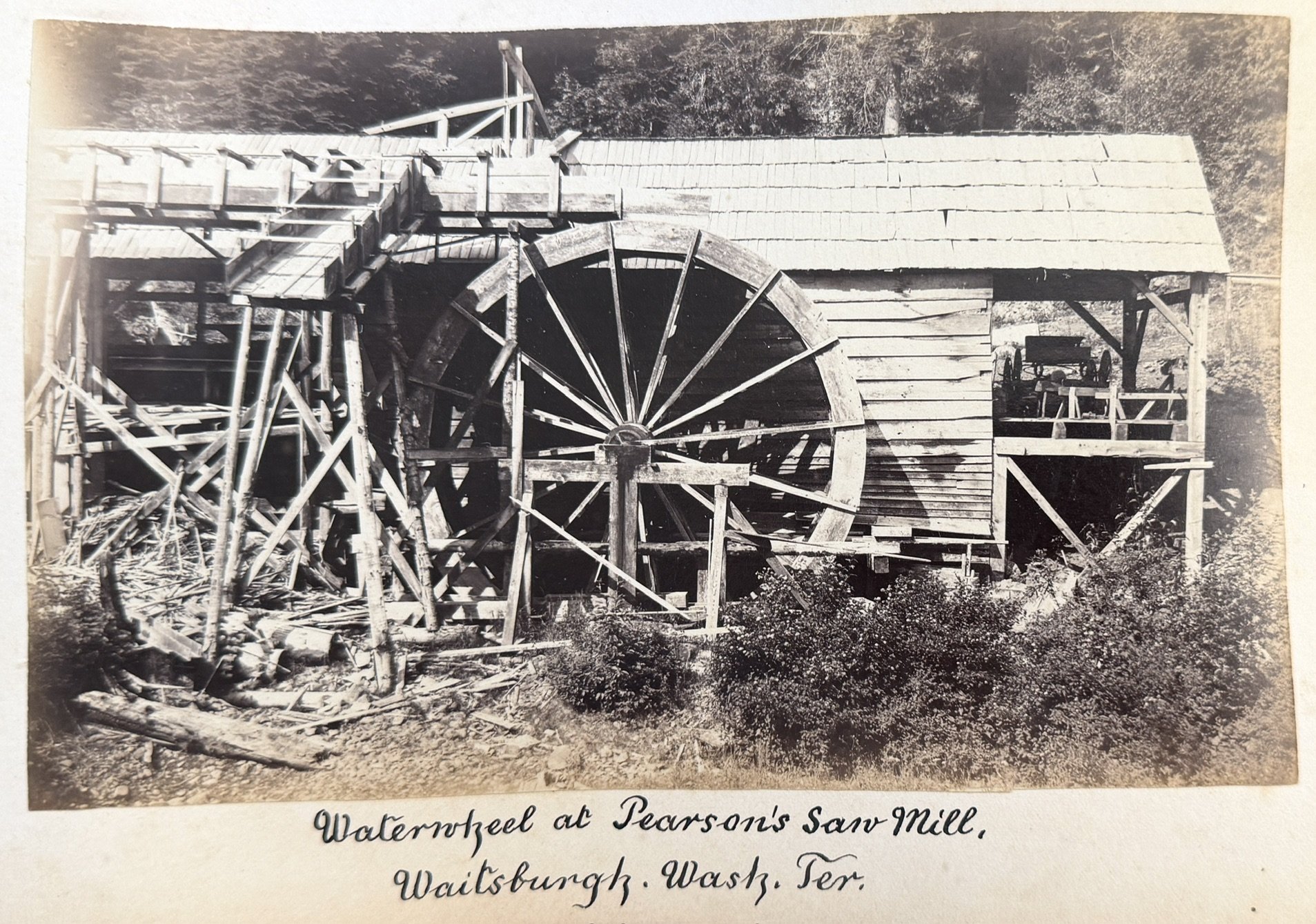
The professionally composed images capture photographer A.W. Gamble, a sawmill in the Touchet Valley, fishing for trout in the Touchet River, Gamble in Camp in the Blue Mountains in the present-day Umatilla National Forest, as well as the OR&N railroad lines to Dayton, where the historic and oldest surviving depot in Washington State still stands. A particularly sharp photograph captures a “Header in operation near Waitsburg” which in 1886 was one of the most important early pieces of equipment in wheat harvesting, especially for PNW wheat varieties. The header was the machine which cut off the heads of the wheat stalks with a device like a giant reel mower, and required 6 or more horses to push the machine through the fields, and featured a conveyor belt that catapulted the wheat heads into a wagon alongside. Subsequently the wheat heads would be run through a thresher. Also featured are photos of the water “Wasteway” in Pearson’s sawmill, and the water wheel alongside, as this sawmill produced sawn lumber for the community, and for export of pine boards to surrounding areas. Also featured are photos of the Copei River [Coppei Creek] headwaters, camping in the Blue Mountains, views of the Touchet Valley, and additional fishing images.
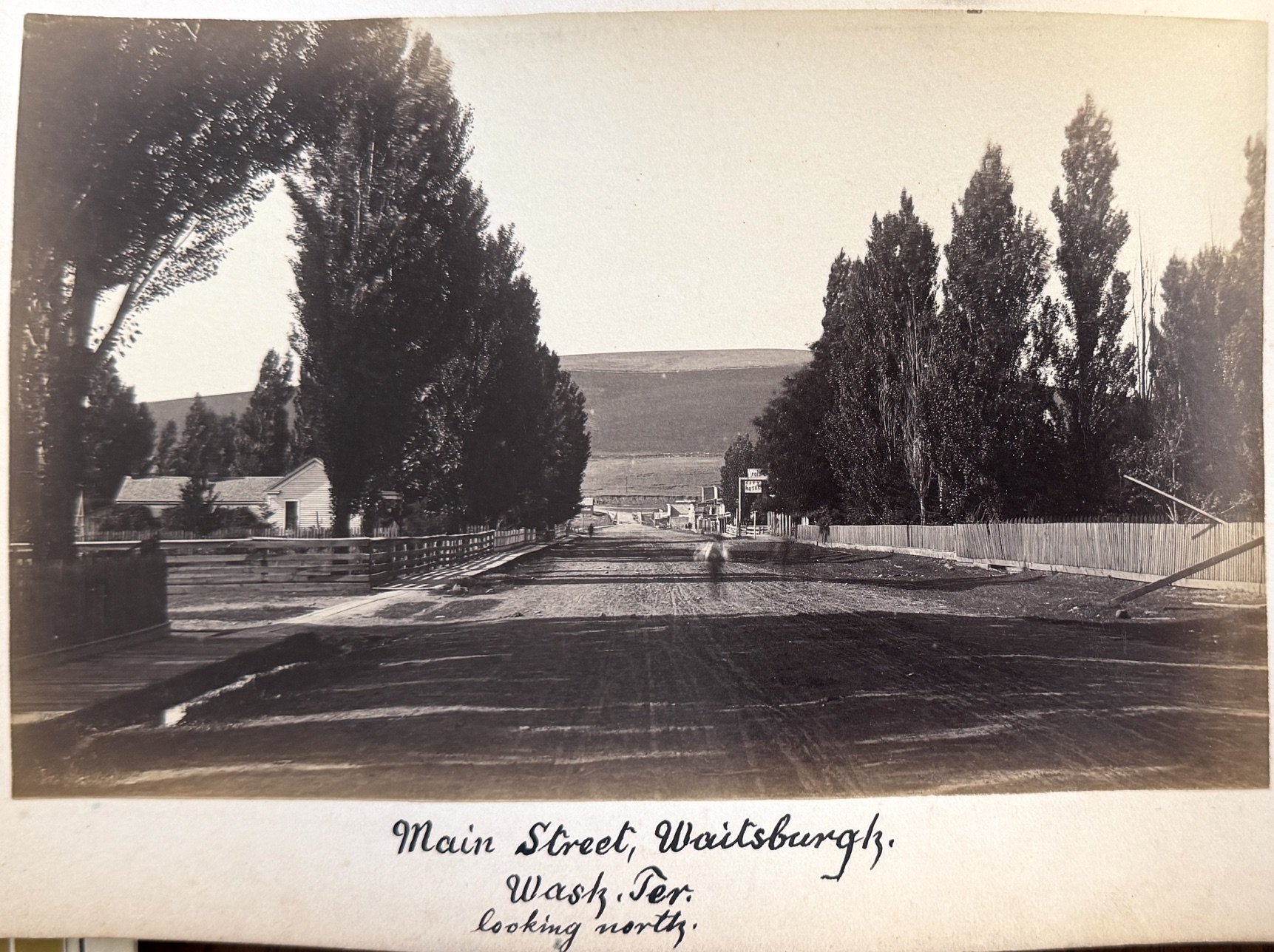
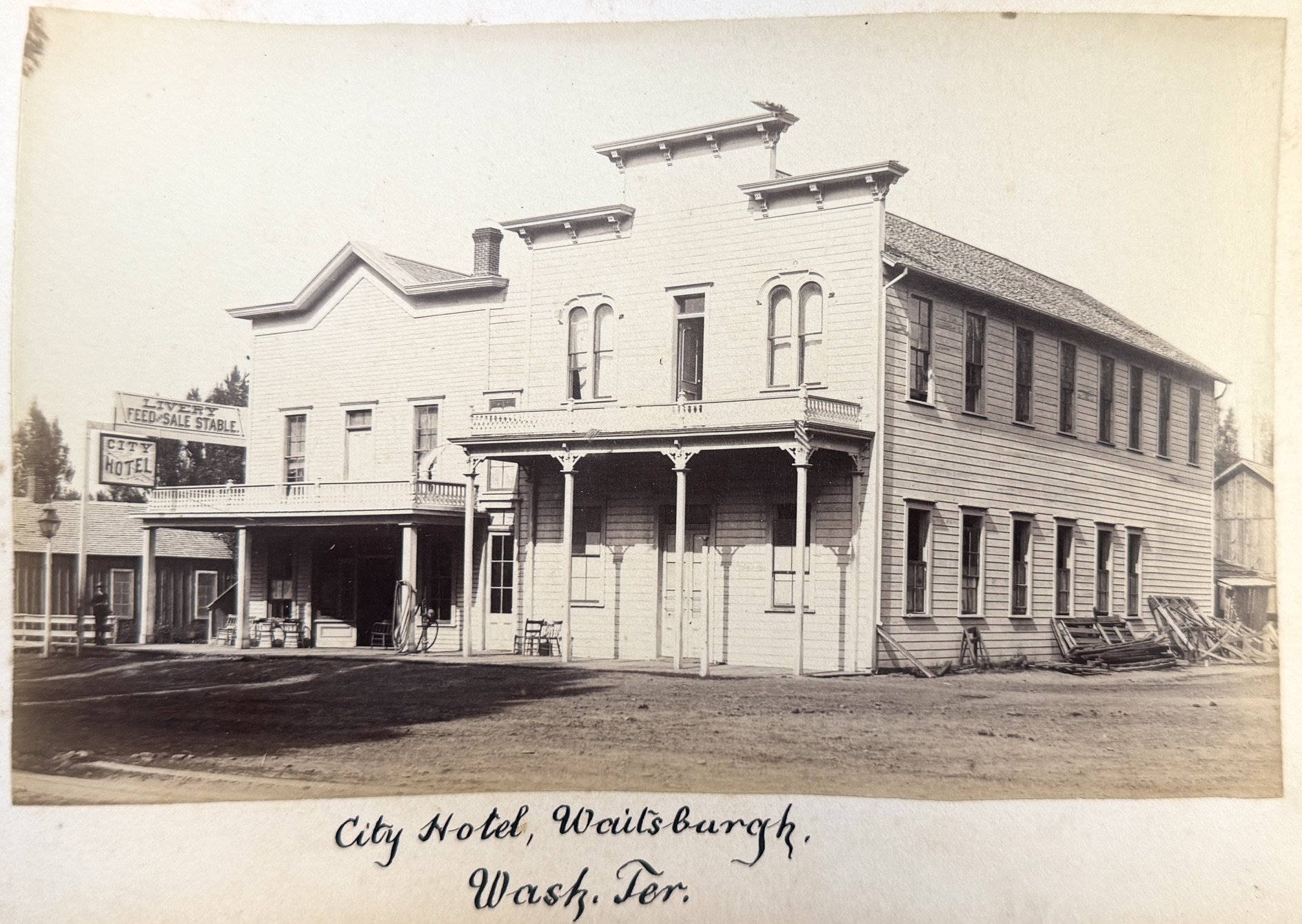
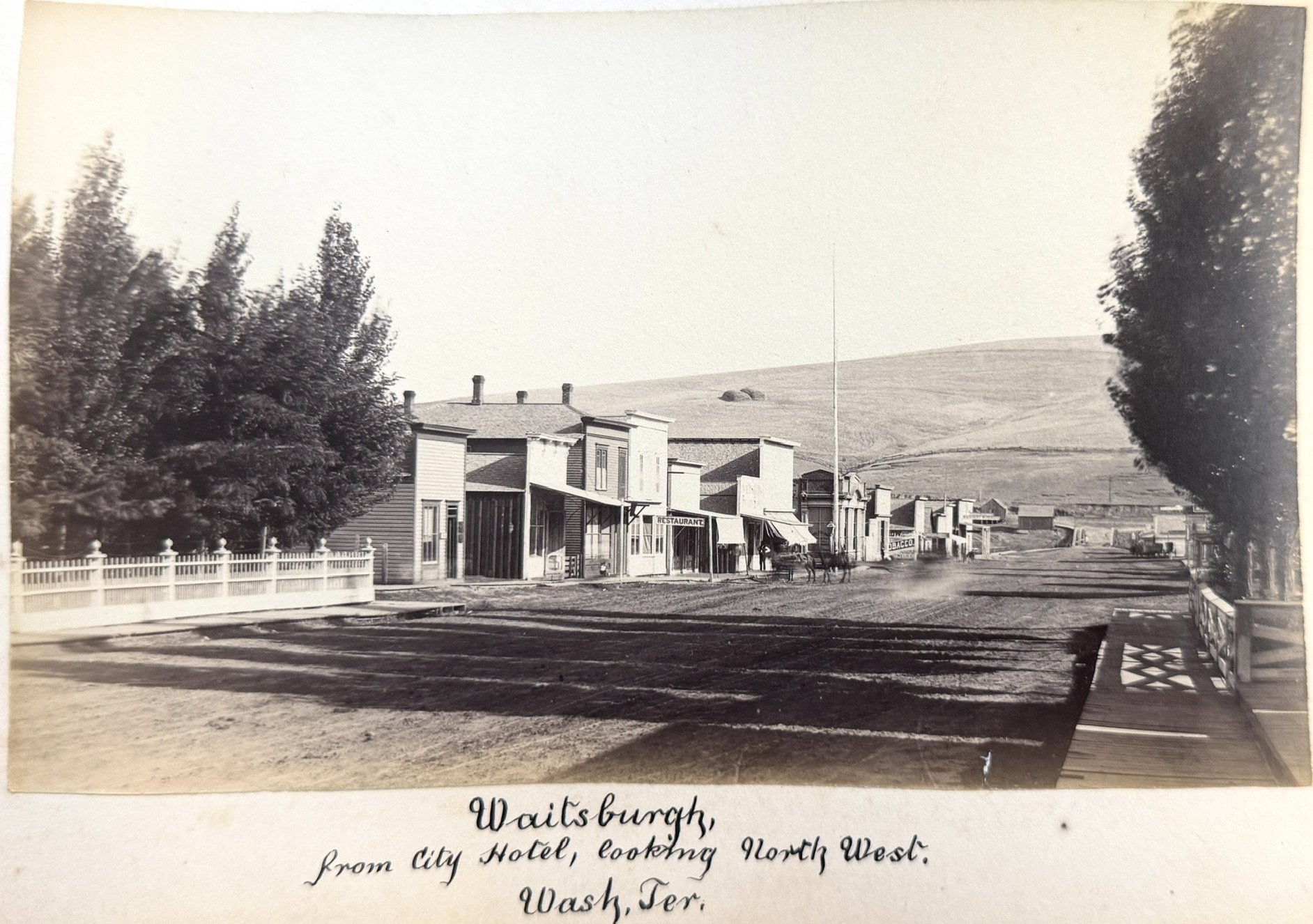
Other photographs depict Main Street in Waitsburg, W.T., view of the Copei Valley from the schoolhouse yard, the new school house, the City Hotel (believed by the Chinese-American cook at the time to be haunted), and views of East & South Waitsburg. The newly completed Presbyterian Church, known locally as the “Little Brown Church” had been founded by Reverend Thomas Boyd, and served as the main sanctuary until 1927. Another house of worship shot by Gamble, which featured his relative David Gamble as itinerant preacher is the Church of Disciples, formed originally in 1867 by W.P. Bruce, T.J. Hallowell, and J.H. Smith, as part of the Stone-Campbell Restoration Movement. The enhanced sanctuary is now recognized as the oldest place of worship in Waitsburg, WA. Another photo reveals the residence of Rev. William Gilbert McDill Hays (1853-1916) taken just after he and his wife Martha Acheson Hays had moved to Waitsburg, W.T. in 1886 to preach at the U.P. Church in Waitsburg.
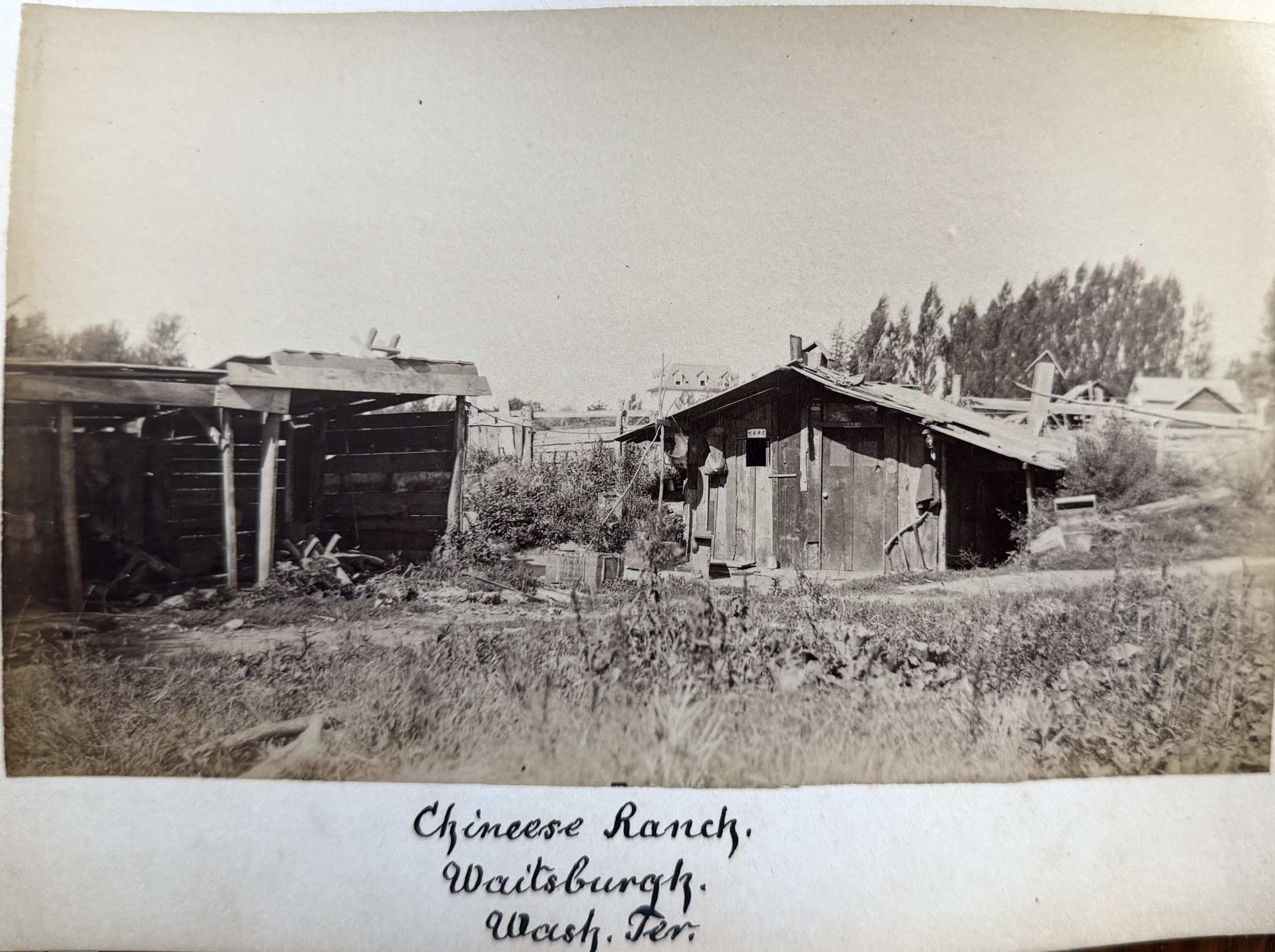
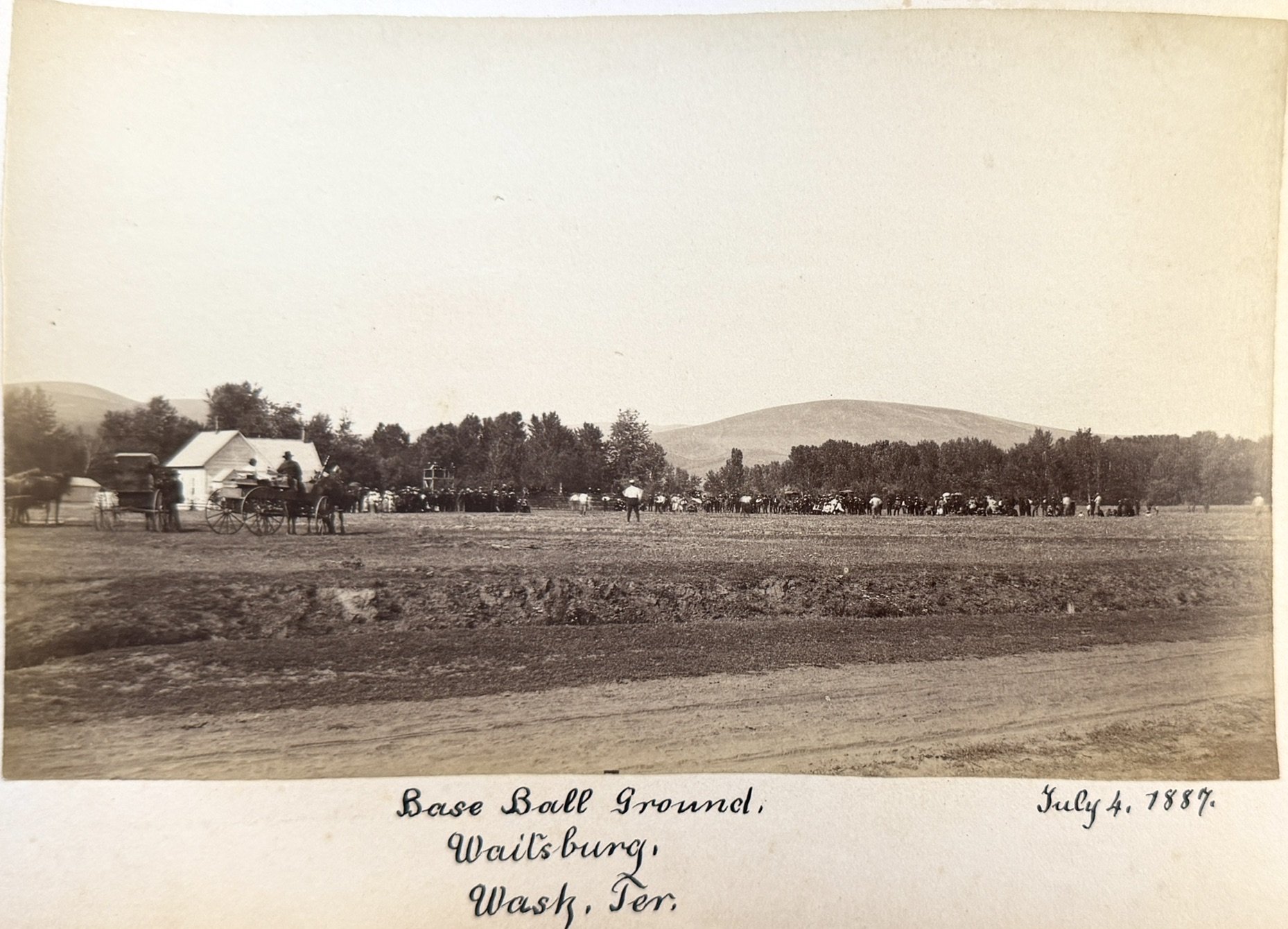
Of additional interest is the excellent photo of the “Base Ball Ground” where the local semi-professional team often played clubs in and around Walla Walla and Southeastern Washington Territory after the OR&N expansion in the 1880’s, including teams such as the “Seattle Alkis,” which later became the local fairgrounds. One historically significant image is identified as “Chineese Ranch, Waitsburgh, Washington Territory” capturing the ramshackle buildings of a local Chinese-American ranching operation. Forty Chinese-American laborers had worked to build the OR&N line from Waitsburg to Starbuck in 1881, and the continuation from there to Pomeroy brought in an additional 400 Chinese-Americans with the lines completed by 1886. Some of the Chinese-Americans remained in the area to farm and ranch, as well as operate laundry service in Waitsburg across the street from the present-day Coppei Park. A Pearl House Chinese-American cook named “Moon” was considered responsible for burning down the original wooden downtown of Waitsburg in 1880, after which they built most commercial buildings in masonry.
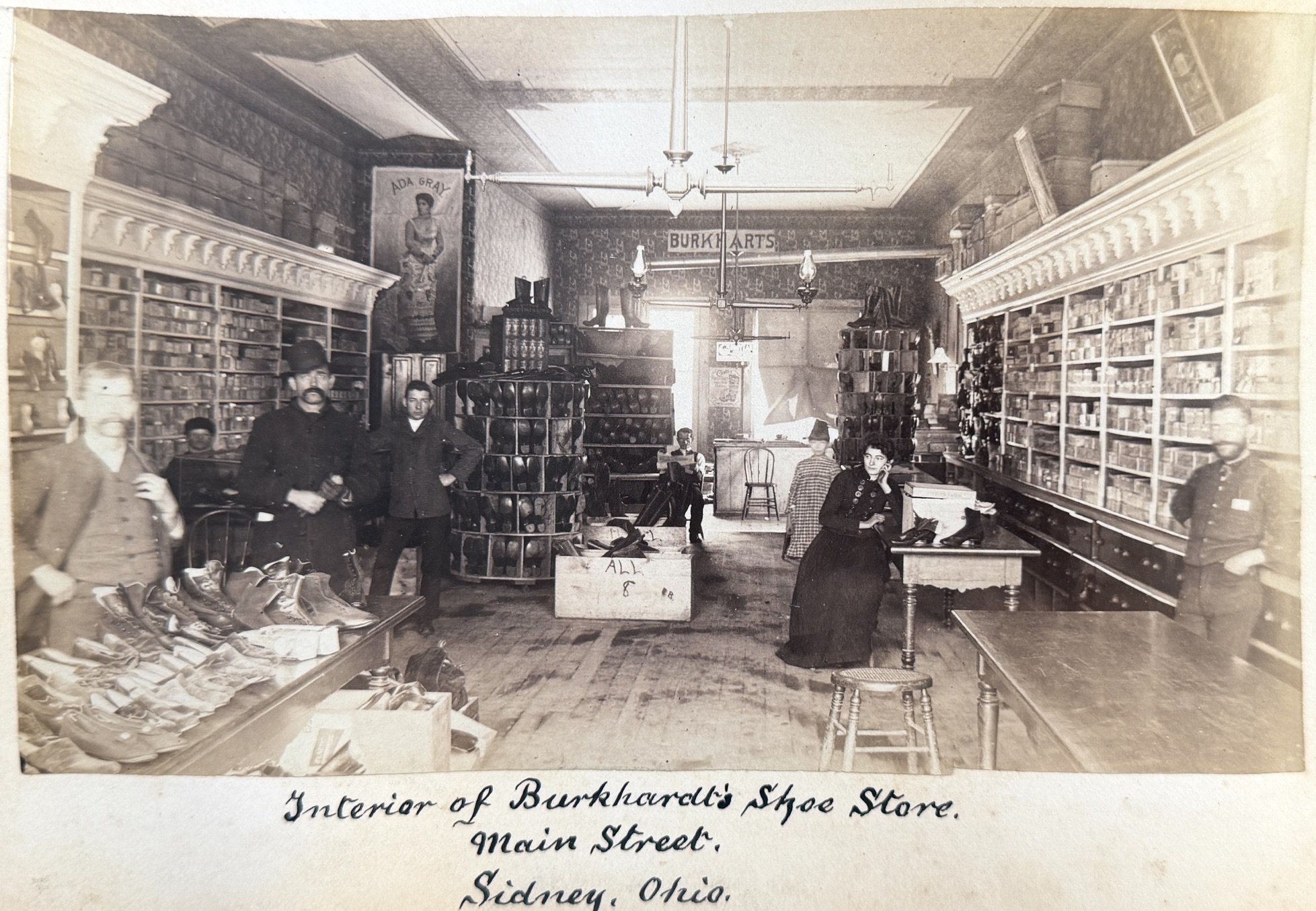
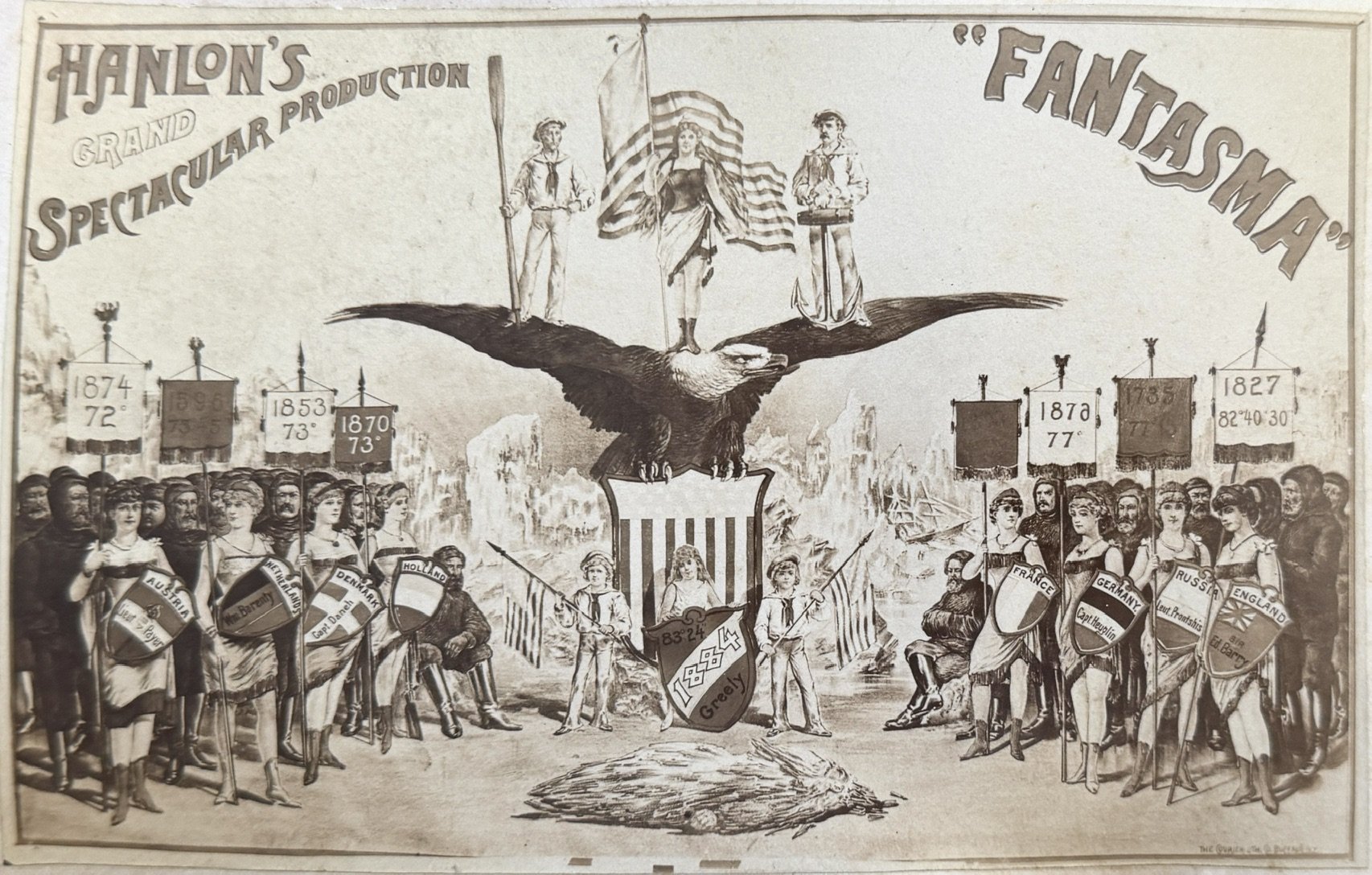
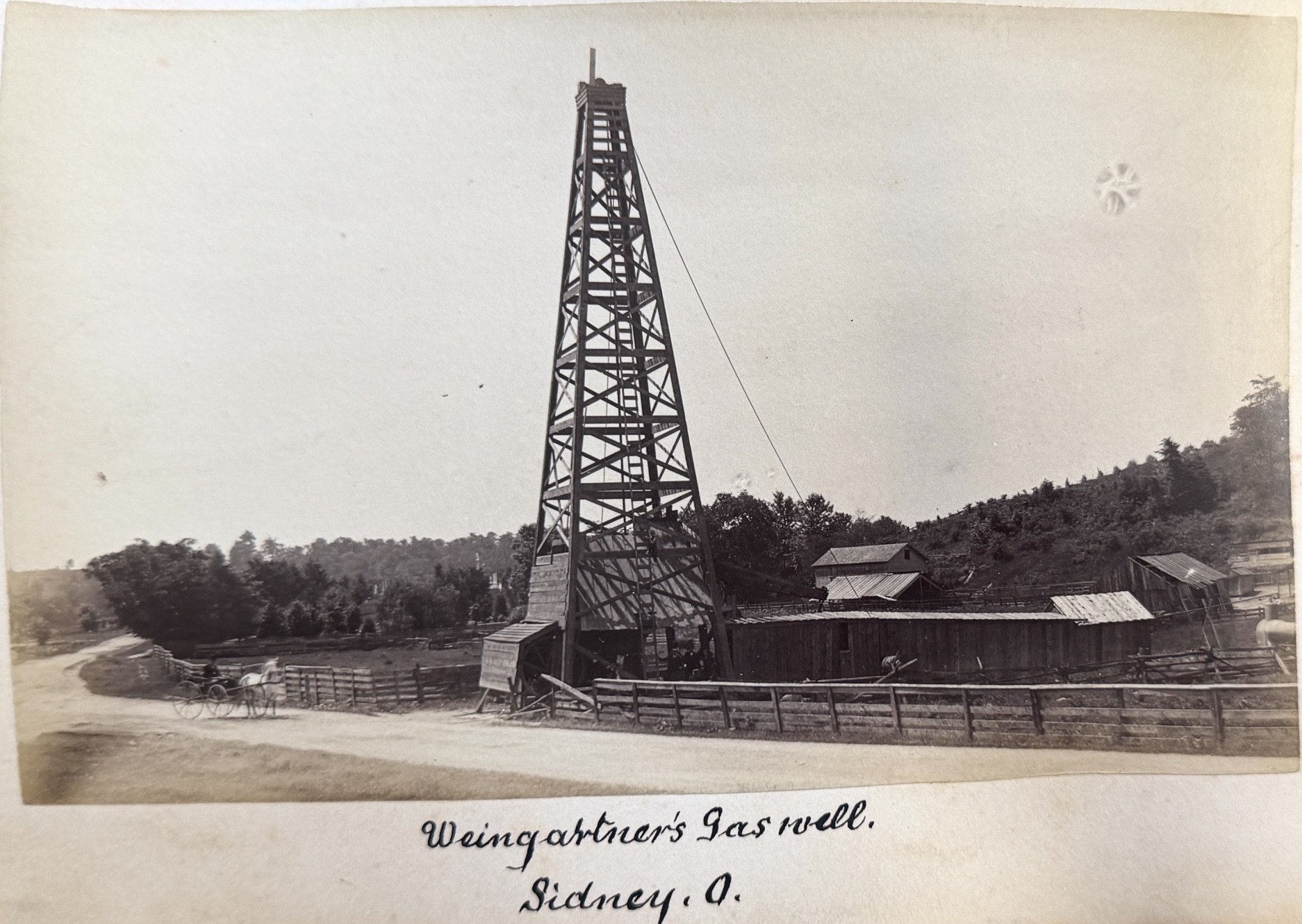
Other photos include the historic Waitsburg Flour Mill first built in 1865; a one-room school house at the summit of Mount Jasper in the Blue Mountains with teacher and young students; a “Mountainier’s Home” on Mount Jasper, as well as a particularly nice birdseye photo of Waitsburg in 1886. In 1887, Gamble returned back to Sidney, OH as evidenced by 11 of the photographs capturing scenes near the Cleveland, Columbus, Cincinnati & Indianapolis Railway line, Main Street at Port Jefferson, OH, the Stone Bridge over Mosqiuto Greek, and I. Weingartner’s gas well during the massive 1880’s Ohio boom in natural gas production. Another particularly fine photo reveals the interior of Burkchardt’s Shoe Store at the corner of Main Ave. and Court Street, built in 1880 by John Burkhart, and still standing, now home to Ron & Nita’s Shoe & Clothing Store. The final photo in the album features a Gamble advertising promotion for the Hanlon Brothers “Fantasma” which were Cohasset-designed and manufactured productions set on vast rotating stages, moved by swivelig wheels mounted on train tracks, and all desinged and built in Cohasset. Their colourful scenery was painted on lien screens and constructed from papier mache, revised and updated every year. Fantasma would later be performed for Thomas Edison and converted into an early silent film.
Gamble (1855-1945) was a photographer and teacher from Sidney, OH who fisited his relative David Gamble from 1886-1887. From 1889-1892 he served as the Versailles, OH school district, continued working as photographer while chief clerk at Longcliff State Hospital in Logansport, and eventually opened a photo studio in Lafeyette, OH in 1920 which he operated until his death. This cataloguer could find no similar surviving groups of photographs of Waitsburg, Washington Territory, or, even similar individual images. Although a few of Gamble’s later commercial photographs survive in institutional holdings, there appear to be no other survivors of his Western photographs. See: Jim Kershner, Wheat Farming in Washington, Washington Wheat Foundation (2025); See: Amanda Lane Cumming, Seattle, We Have a Base Ball Team! The Seattle Alkis and the Arrival of Competitive Base Ball in 1877, 100 years before the Mariners played their first season, NW Baseball History (Feb. 6, 2026); Mary Gaylord, Eastern Washington’s Past Chinese & Other Pioneers 1860-1910: A Self Guided Auto Tour to the State’s Diverse Heritage (1994); Richard Small, Superba! The Hanlon Brothers in Cohasset, Treasury of Cohasset History (2005), pp. 138-140.
Zephyr Used & Rare Books

Kol Shaver
P.O. Box 55
Vancouver, WA, 98666
United States
Phone: (360) 695-7767
Cell: (360) 606-7735
Featured Catalogue
Visit Website
Specialities
Trade Catalogues, Western Americana, Photographs
More Information
Booth 26
Shipping and Returns
All offers subject to prior sale. Payment and discount terms are available for institutions and usual discounts apply. We accept Visa, MasterCard & Amex, PayPal, and payment by check. All books are in fine condition unless otherwise stated. Postage will be added to all shipments. We hold books for 7 days pending receipt of payment, once we have received confirmed order (duplicate orders will be replied to in order). All books can only be returned if not as described within 7 days and receive refund of original price, if the purchaser has TELEPHONED to (360) 695-7767 and notified us first, and if the book has been returned in condition shipped out (email return notification WILL NOT BE ACCEPTED, NO REFUND WILL BE ISSUED) .
Additional Information
Any further questions please refer to www.zephyrusedandrarebooks.com.