Blind Horse Books ABAA
![Manikins for Modern Home Physicians [Original Male & Female Anatomical Sectional Models]](https://bookandpaperfairsonline.us-east-1.linodeobjects.com/thumbs/1783619694Picture100.jpg)
Robinson, Victor (1886–1947)
Manikins for Modern Home Physicians [Original Male & Female Anatomical Sectional Models]
PAPER DISSECTION FOR THE HOME
$45
Item Details
New York :, W.H. Wise,, [1934], anatomical sectional models
Near Fine
AN INTERACTIVE ANATOMY LESSON FROM THE GOLDEN AGE OF HOME MEDICAL PUBLISHING. WHEN THE FAMILY DOCTOR CAME WITH MOVABLE PARTS.
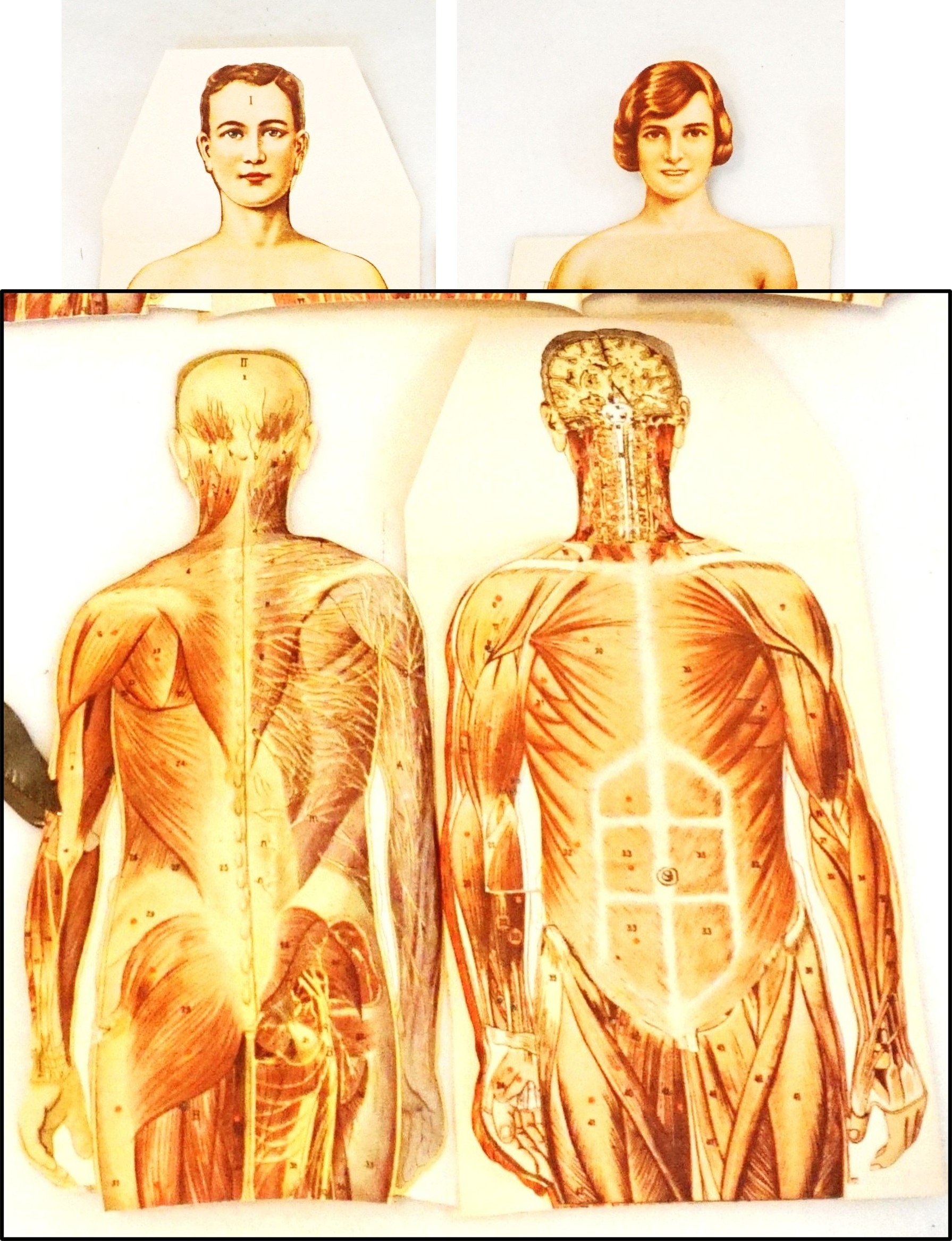
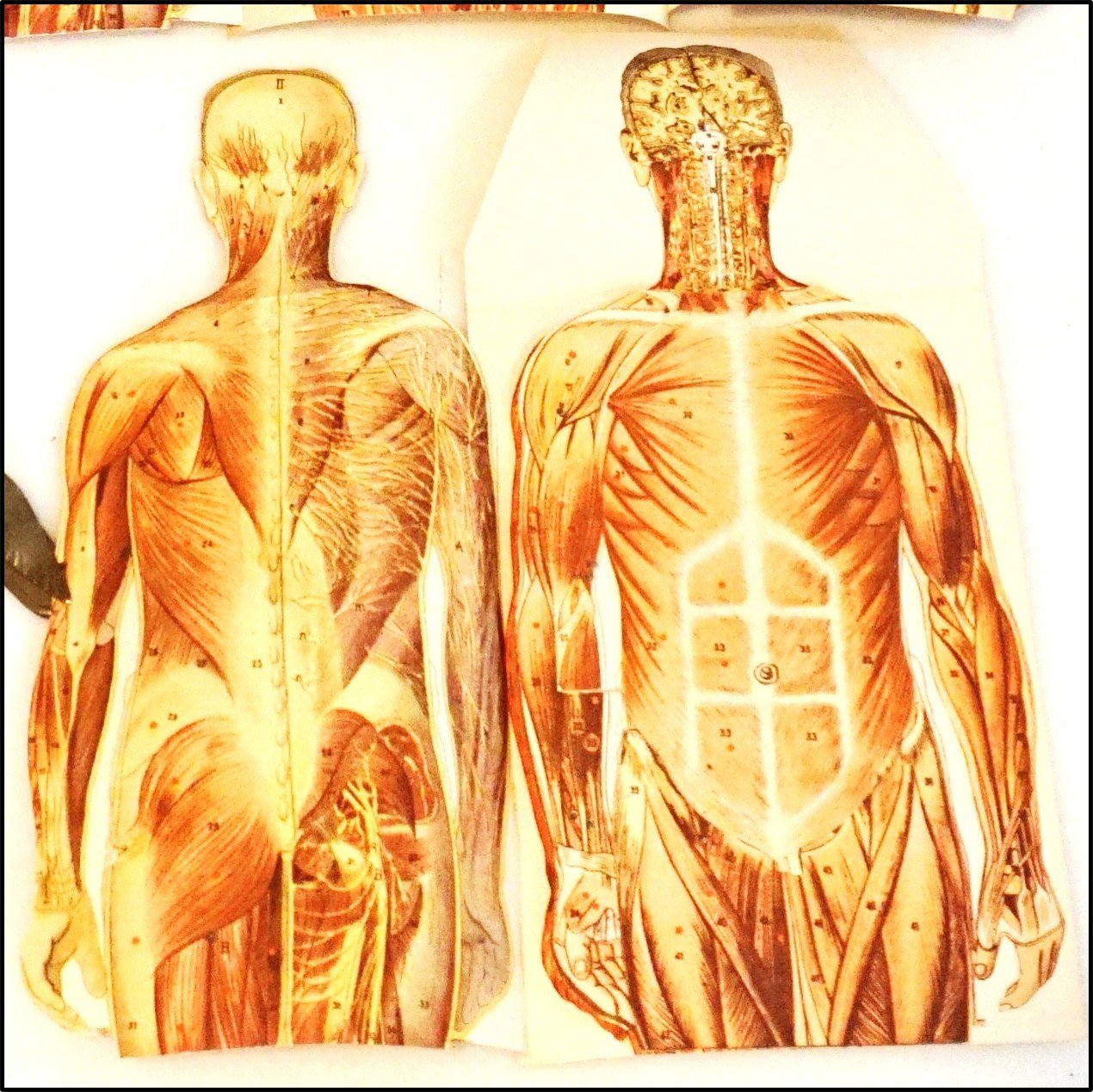
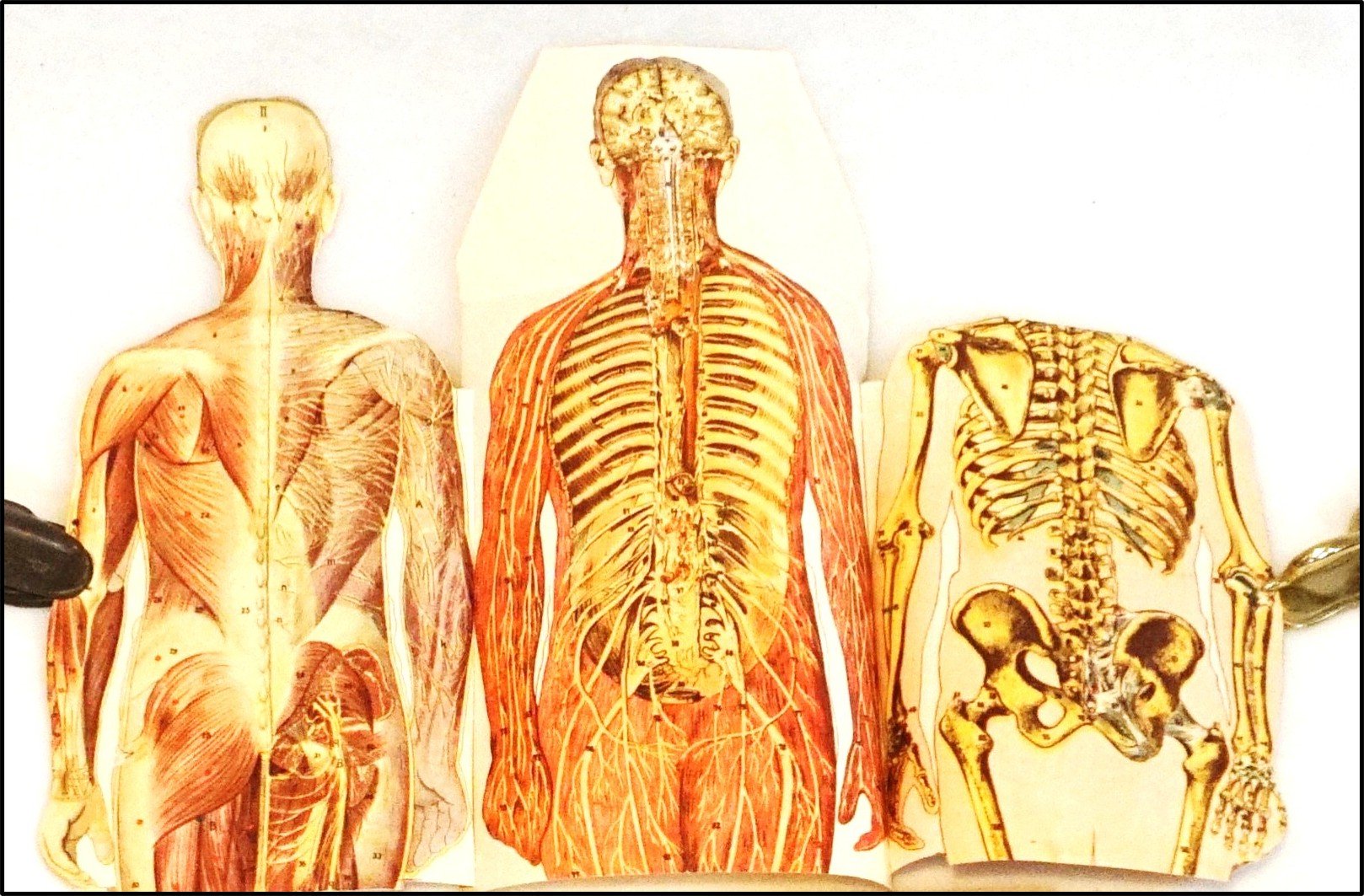
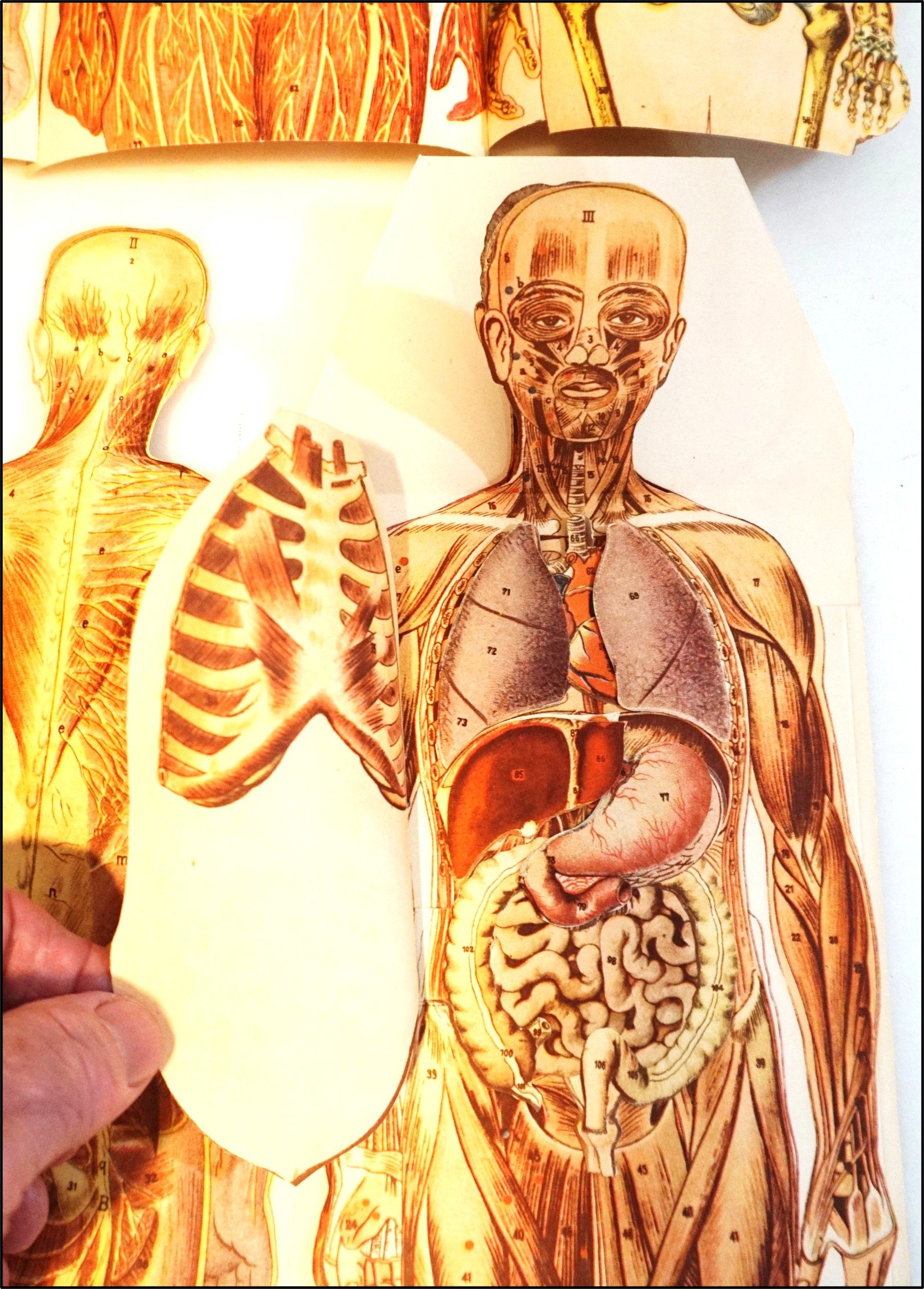
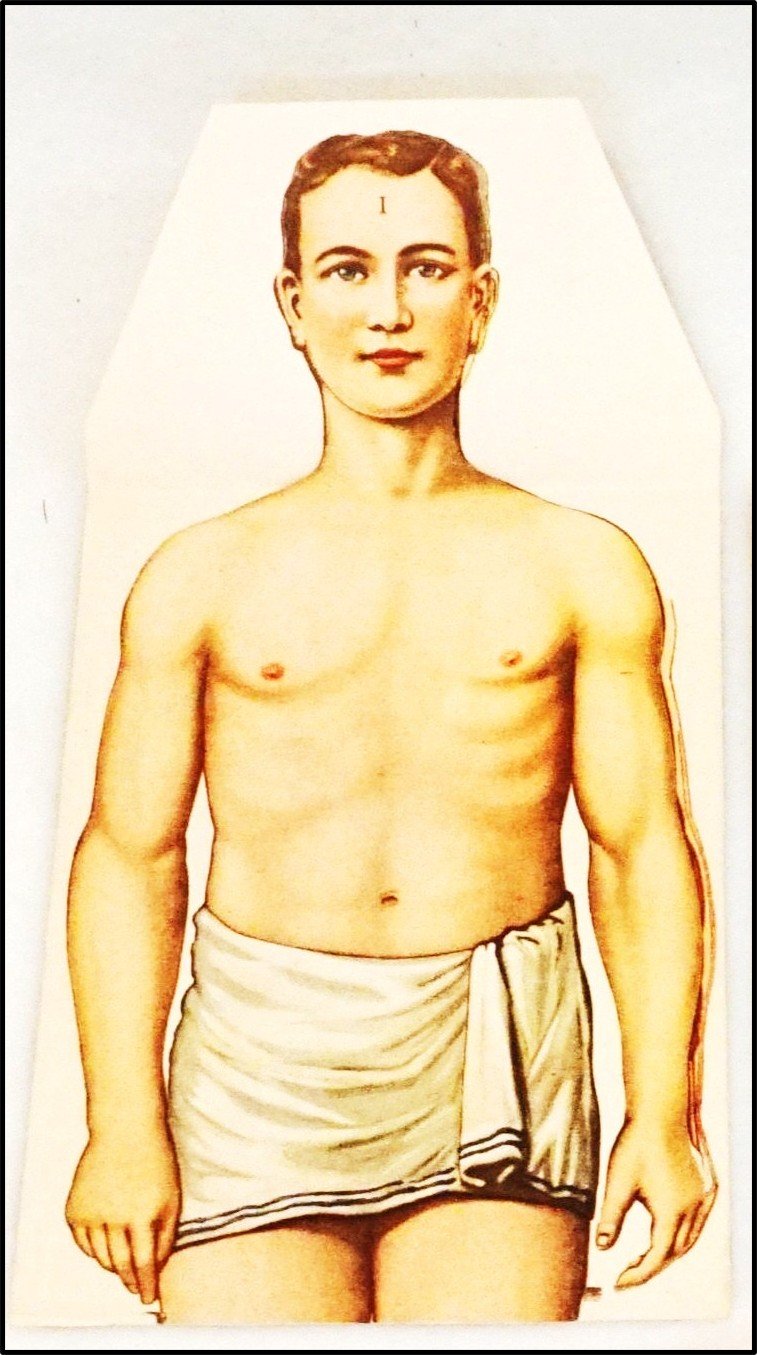
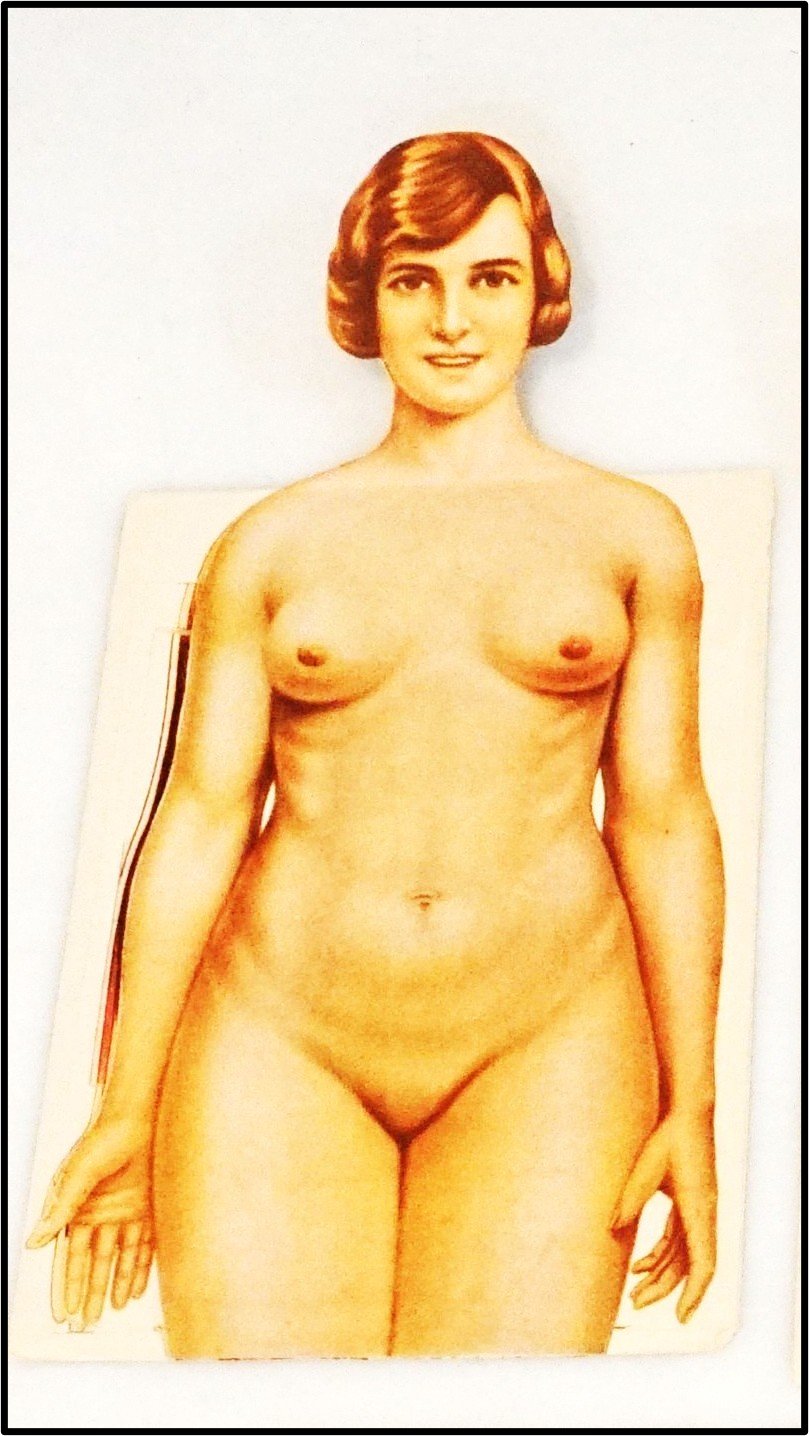
An unusually complete survival of Victor Robinson's Manikins for Modern Home Physicians, issued as a companion teaching aid to The Modern Home Physician (1934). Rather than relying upon static anatomical charts, Robinson employed ingenious layered paper models that allow the viewer to peel away successive anatomical systems—from the external figure through muscles, skeleton, nerves, blood vessels, and internal organs—creating an engaging three-dimensional lesson in human anatomy.
Produced during a period when comprehensive home medical libraries sought to bring professional knowledge into American households, these movable models combined accurate medical illustration with innovative paper engineering decades before molded plastic anatomical models became commonplace.
PHYSICAL DESCRIPTION —
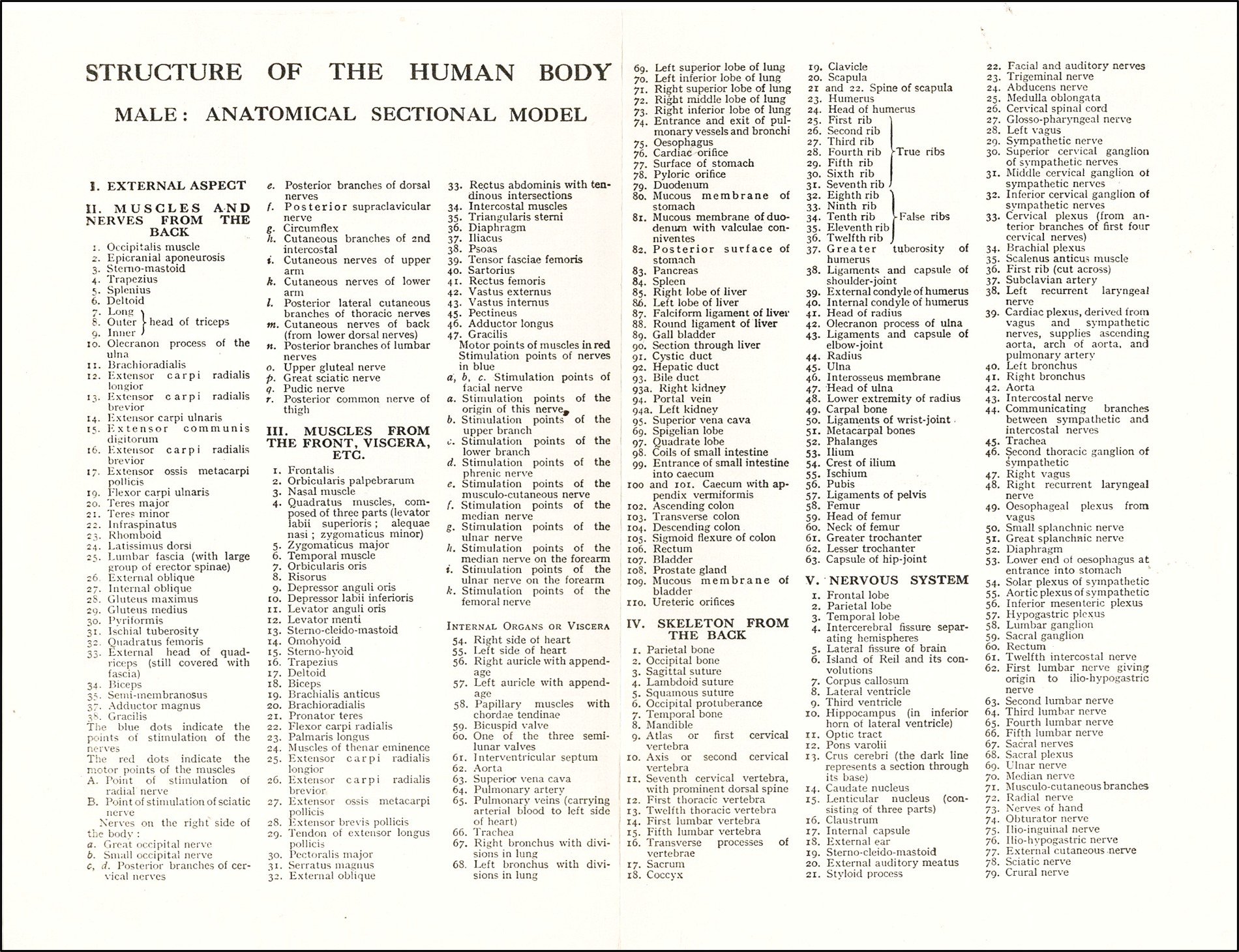
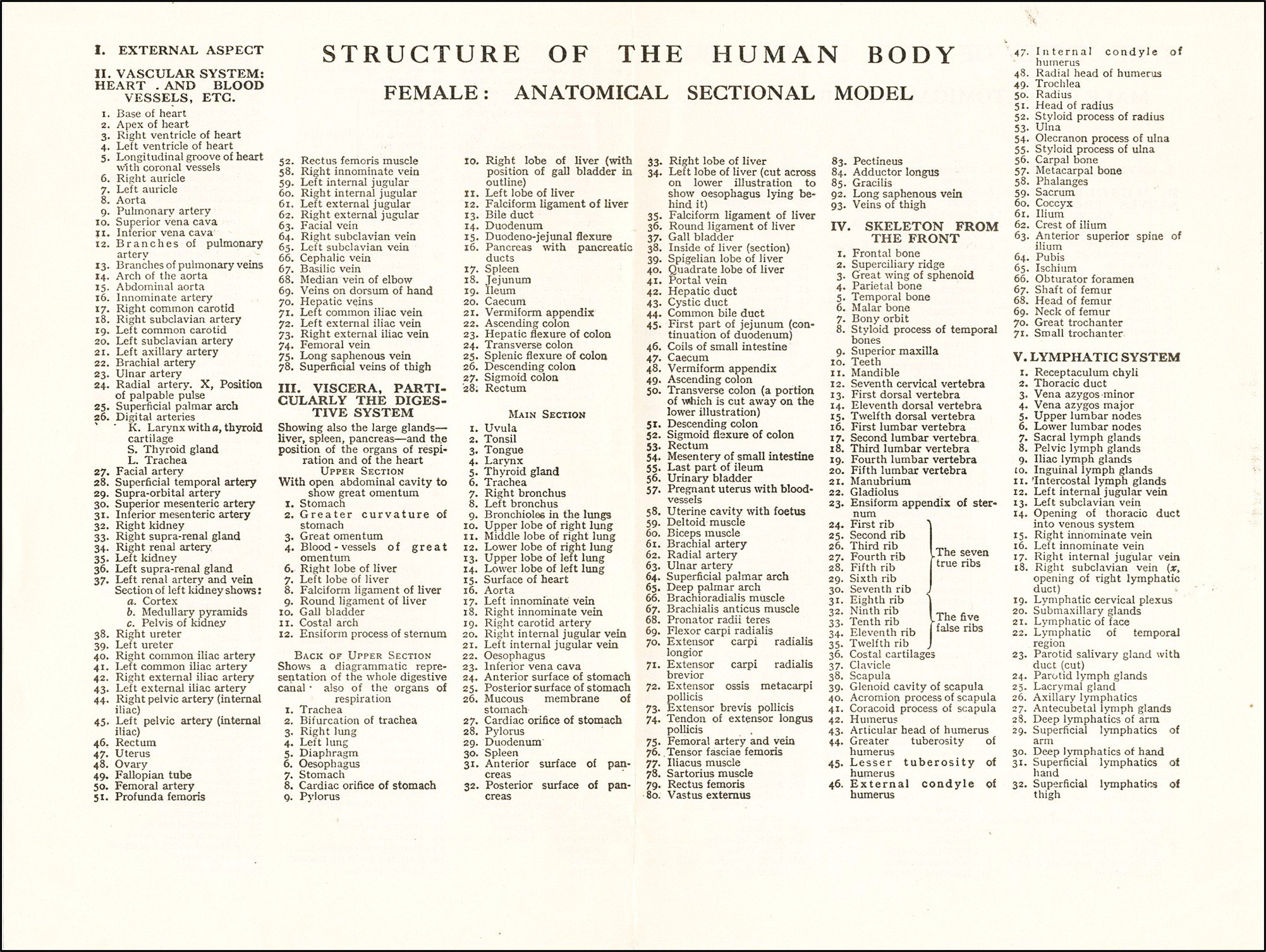
Complete instructional set consisting of a male and female color-printed anatomical sectional models, each approximately 11½ by 5 inches, accompanied by the original explanatory key sheets identifying the numbered anatomical structures. Housed in the original printed envelope titled 'Manikins. Supplement to The New Modern Home Physician. Not to be Sold Separately'.
Each model features multiple articulated lift-away sections revealing successive anatomical systems, including musculature, skeleton, nervous system, vascular system, and internal organs.
CONDITION: The articulated figures remain bright and remarkably well preserved with the movable sections functioning as intended. Original explanatory sheets present. Original envelopes retained; Light age toning consistent with age. An unusually complete surviving instructional set.
HISTORICAL SIGNIFICANCE:
HOME MEDICINE IN THREE DIMENSIONS.
Issued as a companion supplement to Victor Robinson's The Modern Home Physician (1934), these sectional paper manikins reflect an era when comprehensive medical knowledge was increasingly directed toward ordinary households rather than exclusively to physicians. By combining layered anatomical illustrations with explanatory keys, the models transformed anatomy from a flat printed diagram into an interactive educational experience.
They also belong to a publishing tradition extending back to Renaissance anatomical books with movable flaps that revealed progressively deeper structures of the human body. Refined by Victorian educational publishers and made affordable through twentieth-century color lithography, these manikins represent one of the last widely distributed expressions of that centuries-old tradition before molded plastic teaching models gradually replaced paper construction. Because the movable flaps were intended for repeated handling, complete surviving sets are considerably less common than originally issued.
SCIENCE, GRAPHIC DESIGN, AND PAPER ENGINEERING.
Beyond their medical purpose, the models are elegant examples of functional paper engineering. Each carefully die-cut layer balances durability, instructional clarity, and precise sequencing, while the accompanying reference sheets guide the viewer through increasingly complex anatomical systems. Their success depended equally upon skilled medical illustration, thoughtful graphic design, and economical printing.
Together the models illustrate an inventive moment in educational publishing when medical knowledge, illustration, and paper engineering combined to make the structure of the human body accessible to the general public.
Subjects: Medical History; Anatomy; Anatomical Models; Medical Illustration; Educational Publishing; Interactive Paper Models; The New Modern Home Physician; Human Anatomy; Science Education; Paper Engineering; Medical Ephemera; Early Twentieth-Century Printing.
Genres: Educational Ephemera; Anatomical Model; Movable Paper Model; Medical Teaching Aid; Die-Cut Paper Construction; Color Lithography.
PURCHASE DIRECTLY HERE
Please call with questions or to purchase 305.766.8270 [8:00 am to 8:00 pm EST]. Email [email protected]
We are pleased to work with Institutions according to their specific fiscal-year procurement requirements to facilitate acquisition.
Blind Horse Books ABAA

Richard Oates
816 Hanover Road
DeLand, Florida, 32724
United States
Phone: 3057668270
Cell: 3057668270
Featured Catalogue
Visit Website
Specialities
Travel, Exploration, Fine and Private Press



More Information
Booth 8
Shipping and Returns
Shipping: $6.00 flat-rate shipping within the United States. International shipping at cost.
Returns: Items may be returned within 30 days of receipt if not as described. We stand behind all descriptions, edition statements, and attributions.
Open Times
Please call or text with questions during the fair: 7:00am–7:00pm (Eastern). Links Provided to Purchase Directly in Listings.Additional Information
Blind Horse Books is a member of the Antiquarian Booksellers’ Association of America (ABAA) and adheres to its Code of Ethics.
We specialize in travel, exploration, fine press, and documentary material, with particular emphasis on printed ephemera, maps, photographic archives, and institutional publications from the nineteenth and twentieth centuries. Our inventory regularly includes material appropriate for academic, library, and museum collections.
We work carefully with provenance, condition, and bibliographic accuracy, and stand fully behind all descriptions and attributions. Items are selected with long-term research and collecting value in mind.
Blind Horse Books is operated by Richard and Dottie Oates and based in DeLand, Florida. We have been active in the antiquarian book trade since 1999 and are members of the ABAA, FABA, IOBA, and the Ephemera Society of America.
Building Your Great Collection, One Fine Book at a Time.